
The company that built its name on software and drones is about to make parts for the most complicated machine the United States Navy builds. Anduril has won a Navy contract worth up to $2.9 billion to produce key components for Virginia-class submarines, according to CNBC and Reuters, and it is putting $3.7 billion of its own money into a new Maryland shipyard to do the work, a bet that a Silicon Valley-style defense firm can crack a supply chain long dominated by a few industrial giants.
The two figures together amount to roughly $6.6 billion, and they mark Anduril’s first entry into the manufacturing base for a major traditional defense program. The shipyard, called Arsenal-2, will rise in Baltimore County on more than two million square feet of space, with production targeted for 2030.
Anduril’s origins are far from shipbuilding. Founded in 2017 by Palmer Luckey, the company made its name selling autonomous systems and the Lattice software that ties sensors and drones together, and it has grown quickly on the argument that software can make weapons cheaper and faster to field. Submarines are the opposite of that world: vessels that take years to build, with thousands of parts and tolerances measured in thousandths of an inch.
That contrast is part of the point. The Navy has watched the industrial base that builds its submarines strain to keep up with demand, and it has signaled for years that it wants new suppliers to ease the bottleneck. Anduril’s bid is built on the claim that its approach to manufacturing, which borrows from the speed of consumer electronics, can do for a submarine part what it has done for a drone.
The company is staking its own capital on that claim. A $3.7 billion self-funded factory is an unusual commitment for a defense startup, and it signals that Anduril intends to become a manufacturer in its own right rather than a designer that hands work to others. The decision also shifts the risk: if the submarine work does not materialize at the scale promised, the company has already spent heavily on the plant meant to do it.
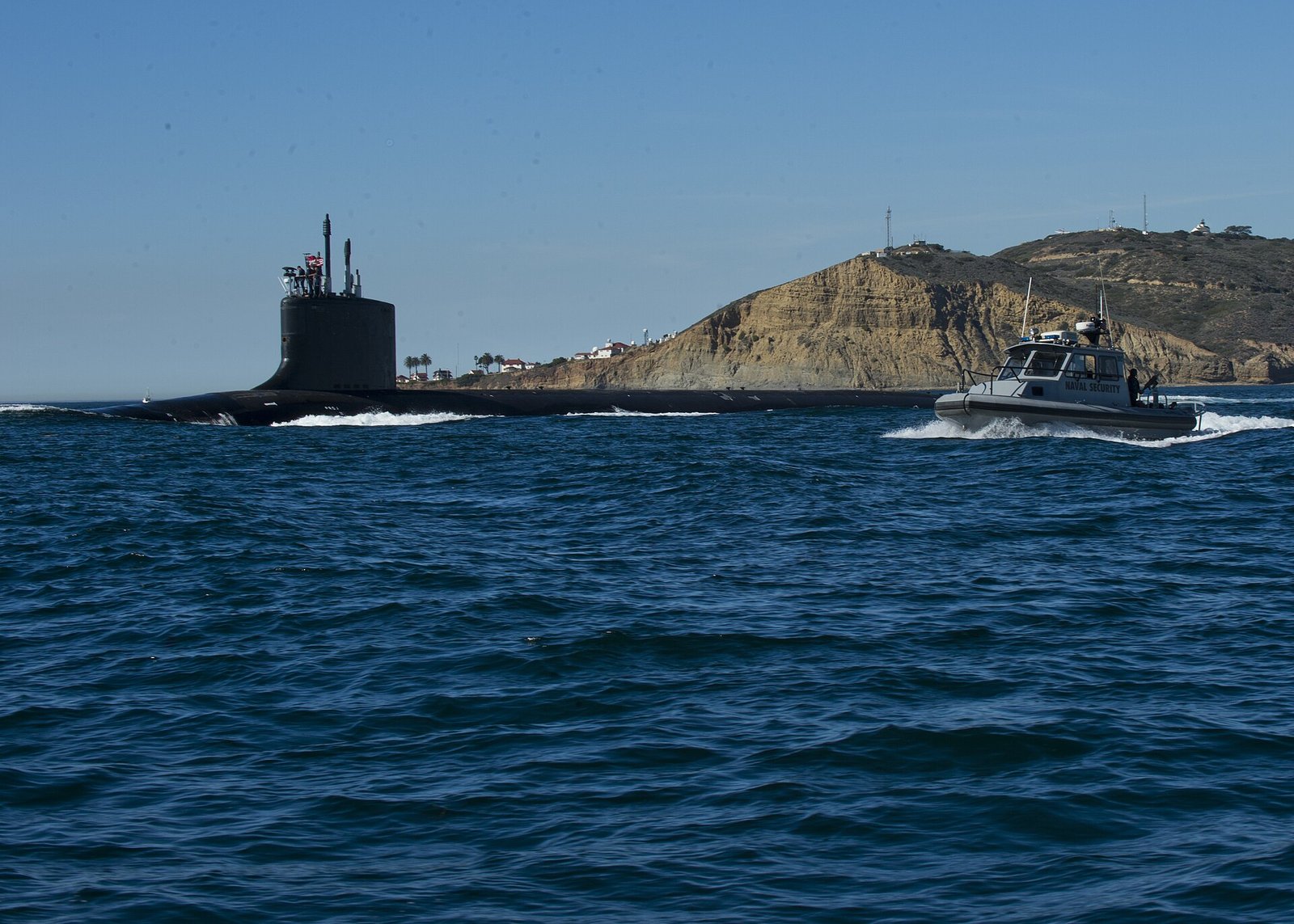
The Virginia-class program is one of the Navy’s highest priorities. The fast-attack submarines are built by General Dynamics Electric Boat and Huntington Ingalls Industries, and the service has pushed to raise the production rate as it contends with a fleet that is aging and a threat from China’s expanding navy. Adding a new supplier to that line is a deliberate attempt to break the dependence on a small circle of builders.
Anduril is not walking in alone. The company has hired experienced shipbuilders and formed ties across the defense supply chain, and it has argued that its factory will use modern manufacturing techniques that the older yards have been slower to adopt. Whether that translates into parts that meet the Navy’s standards on schedule is the question the contract will answer over the next several years.
The award also marks a shift in how the Pentagon buys. For decades, the biggest shipbuilding contracts flowed to a handful of companies with decades of history and the facilities to match. Anduril’s win is evidence that the department is now willing to pay new entrants to build the capacity the old guard cannot supply fast enough, a change with consequences far beyond one contract.
Skeptics note that the distance between a prototype and a production line for submarines is vast, and that software firms have stumbled before when they entered hardware at scale. The Navy’s own history is full of programs that overran on cost and schedule when new builders took on work they had never done. Anduril’s response is that the old way is the problem, and that the service has already accepted the trade-off.
The timing suits a Navy that needs more submarines than its current suppliers can build. The service has set a goal of raising the Virginia-class production rate, and the yards that build the boats have warned that expanding output requires investment in workers, tooling and facilities that has been slow to arrive. A well-capitalized newcomer willing to spend its own money on a factory is exactly the kind of pressure the Navy has said it wants on its established suppliers.
For Anduril, the payoff is a foothold in the largest and most durable part of the defense budget. Submarines are bought in small numbers but over decades, and a supplier that earns a place in that line gains revenue that outlasts any single product. That is the prize behind the $3.7 billion factory, and it explains why a software company is pouring concrete in Baltimore County.
The Navy gets something in return: a second source of parts at a moment when it needs more submarines faster. Whether Anduril delivers will not be known until the factory opens near the end of the decade. What the contract already shows is that the defense industry’s most ambitious newcomer has decided its future lies in steel as much as in code.



