
The number that moved through Morgan Stanley’s latest note was not a revenue forecast or a margin target. It was a line on Nvidia’s balance sheet: $279 billion, the sum the company has promised its suppliers, a figure that more than doubled from $119 billion in a single quarter. Most of the new money is tied to one input, and it happens to be the one the entire industry is fighting over.
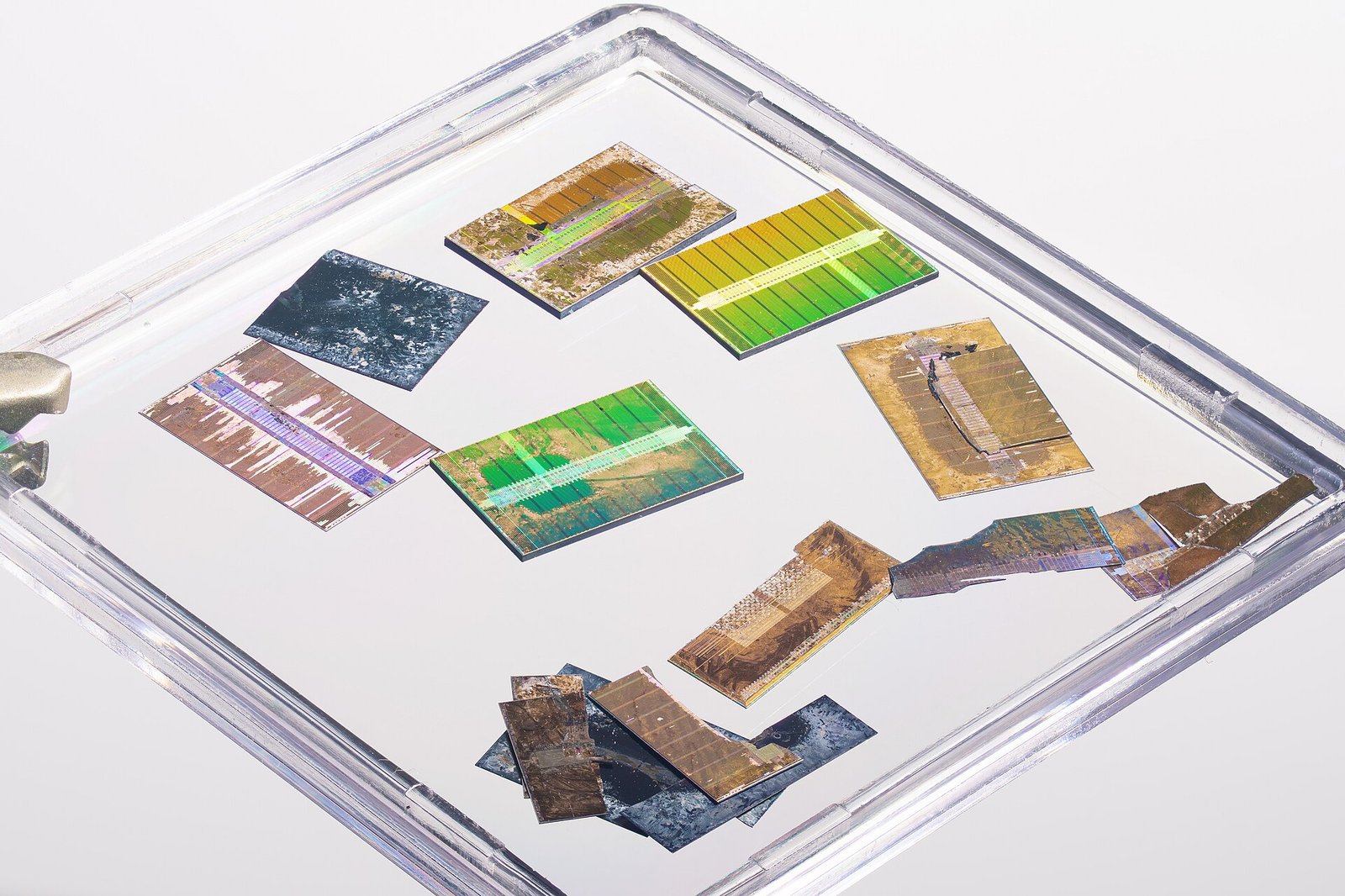
That input is high-bandwidth memory, the stacked chips that sit beside AI processors and move data at the speed the models demand. Morgan Stanley estimates that Nvidia has now secured about 37.3% of global HBM supply for 2027, based on supplier checks rather than any official allocation. Nvidia has not published its own number. The broker’s split reads like a map of who owns the build-out: Nvidia at 37.3%, Alphabet at roughly 36%, AMD at 12.1%. Three companies hold about 85% of projected capacity; everyone else shares the remainder.
HBM has become the scarcest link in the AI supply chain because there is no substitute for it. A data-center processor without enough memory is an expensive ornament, and the newest generation of the chips, HBM4, is arriving at a sharply higher price. Morgan Stanley puts HBM4 at about $31 to $32 per gigabyte, against $17 to $18 for the prior HBM3e standard. For the memory makers, that near-doubling is a windfall. For Nvidia, it is a cost that presses against gross margin until the company can pass it through.
Nvidia has been candid about the pressure. Colette Kress, its chief financial officer, told analysts that memory price increases had exceeded the company’s expectations and were heading higher into next year. She guided margins lower, saying they would bottom in the fourth quarter around 71% to 72% before settling at 72% to 73% in fiscal 2028, once the price increases the company has already pushed through take effect.
The schedule of the commitments shows how concentrated the buying is. Of the $279 billion, about $267 billion comes due by the end of fiscal 2029, with roughly $92 billion maturing in the remainder of fiscal 2027 and $87 billion and $88 billion in the following two fiscal years. A company does not sign that schedule unless it is certain the demand will still be there when the bill arrives.
The scale of the commitment makes sense only against the size of the business behind it. Nvidia reported revenue of $96.2 billion for its fiscal second quarter, more than double the prior year, with data center revenue up 117% to $89 billion. The company has stopped being a chipmaker in the narrow sense and become the tollbooth for the AI build-out, and a tollbooth has to buy in bulk.
Nvidia’s certainty rests on a promise its chief executive made in September. Jensen Huang said the company would sell twice as many chips next year as it does this year. Twice the chips means twice the memory, bought in advance at a fixed price before the market tightens further. The balance sheet is filling up in the meantime: inventory rose to $31.6 billion from $25.8 billion a quarter earlier as Nvidia prepared to introduce its next-generation Vera Rubin platform.
The bet carries an obvious risk, and it is easy to state. If the AI boom slows, a $279 billion pipeline of memory becomes a burden rather than an advantage. The counterargument is that the boom would have to slow sharply before Nvidia regrets locking in supply, and that the true danger is the opposite one, being shut out. A company that cannot buy HBM cannot build the systems its customers are already ordering.
That is the signal the memory makers are sending. SK Hynix, Micron and Samsung have sold out their HBM capacity for the period in question, according to analysts, and the squeeze is beginning to spill into other corners of the memory market. Standard DDR5 prices are already feeling the pull as production shifts toward the higher-margin HBM lines that Nvidia and its rivals have booked.
For the memory suppliers, the read-through is the cleanest in the sector. Sold-out capacity plus a price step of nearly double per gigabyte flows almost directly into their margins, and Micron in particular is seen by analysts as the clearest beneficiary. The flip side sits on Nvidia’s own income statement, where the rising cost of memory is the quiet headwind the company must offset with higher prices on the systems it sells.
The pattern is familiar to anyone who has watched Nvidia through the past two years. The company repeatedly places itself at the front of the supply queue and absorbs the upfront cost, wagering that customers will pay for the certainty of delivery. The $279 billion figure is the largest version of that trade yet, and it converts a procurement problem into something closer to a moat. The remaining question is the one no balance-sheet line can answer: how much AI the world will actually build, and whether the memory already spoken for matches the demand that shows up when the next earnings call arrives.



