
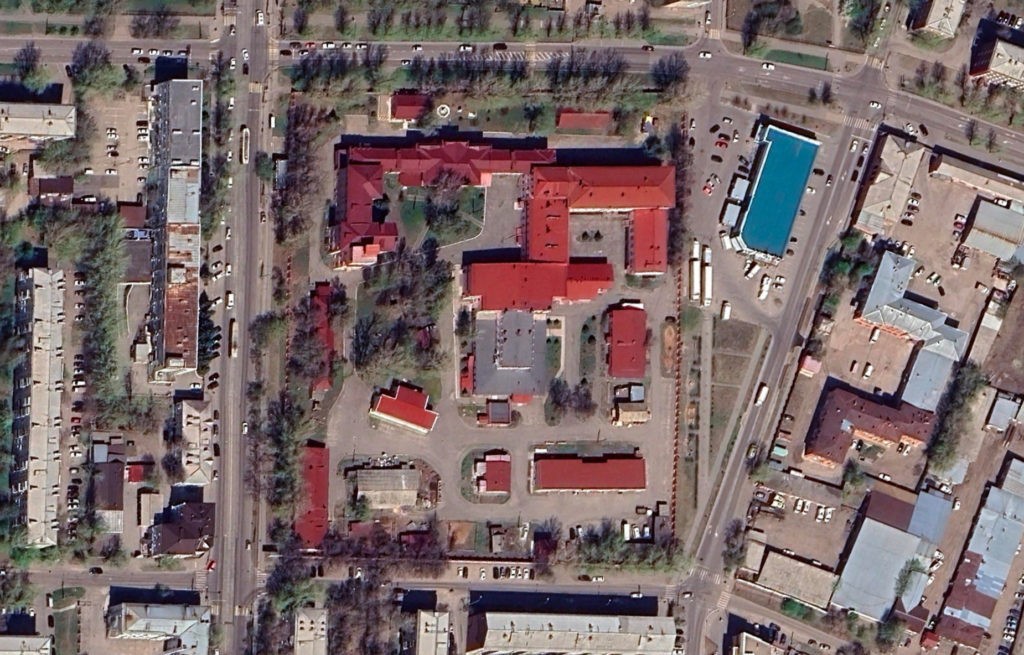
The woman who died was 28 years old, a laboratory technician at an institute built to study plague and other dangerous pathogens. She fell ill and died on October 2 with severe pneumonia, and by the time Russian authorities confirmed the death, the cause was already a matter of conflicting accounts and international scrutiny.
The World Health Organization is now investigating the death of Darya Shipilova, who worked at the Irkutsk Research Anti-Plague Institute of Siberia and the Far East, a facility in the town of Shelekhov that handles the bacteria behind plague and other high-threat infections. Russian authorities described her illness as pneumonia of unknown origin. Local media reported it as pneumonic plague, the form of the disease that attacks the lungs.
The WHO, acting under the International Health Regulations, has asked Russia for more information: the laboratory tests conducted on the woman who died and on her contacts, the reasoning behind the public-health measures taken, and the health status of the people who came into contact with her. It has also asked Russia to verify media reports of a second employee with pneumonia of an undetermined cause.
Russia’s answer so far has been that there is no outbreak. The public-health agency Rospotrebnadzor said no plague had been reported in the Irkutsk region and that no microorganisms tied to the woman’s work were found in her samples. About 200 contacts were placed in quarantine, and roughly 5,000 tests turned up no high-threat pathogens. The Kremlin has denied reports of a second suspected plague case.
The gap between those assurances and the WHO’s questions is the crux of the matter. The agency says it cannot complete a full risk assessment because it does not yet have the complete picture. Timely, complete and transparent information sharing under the International Health Regulations is essential to clarify conflicting reports, the WHO’s director-general said in remarks on October 7.
The requests are specific, and that specificity matters. The WHO is not asking for assurances; it is asking for the underlying data: the results of the tests run on the woman and her contacts, the basis for the quarantine decisions, and the condition of everyone who was isolated. Without those, the agency says, it cannot tell whether the event was a contained death unrelated to the lab’s work or something that requires a wider response.
The WHO has put the risk to the general population as low to moderate for the area around the lab, low for Russia, and very low for the wider European region. The assessment is provisional, and the agency said it will revise it once more information arrives. The cautious language reflects both the limits of what is known and the memory of how quickly uncertainty around a laboratory and a respiratory illness can alarm the world.
The institute itself is part of the story. The Irkutsk facility belongs to Russia’s anti-plague network, laboratories that keep samples of dangerous bacteria for study and for defense. An unexplained respiratory death inside such a lab raises a question that public-health officials have learned not to dismiss: whether the work itself was the source.
The case also touches the delicate politics of laboratory transparency. Russia’s anti-plague network is a legacy of the Soviet era, built to defend against biological threats, and its work has long been treated as sensitive. The WHO’s approach, framed under the rules every member state signed, is to treat the request as a matter of public health rather than geopolitics, even as the answers arrive through a government that has been sparing with detail.
Russia has framed the death as unrelated to the woman’s duties, and no plague has been found among her contacts. But the absence of a pathogen in the tests is not the same as an explanation of what killed her, and the WHO’s repeated requests suggest the agency is not yet satisfied that the case is closed.
The timing matters because of how the information has traveled. Early reports, echoed across social media, said the death followed an accidental laboratory exposure, a claim that spread well before any official explanation. The WHO’s requests are aimed at replacing those rumors with test results, contact-tracing data and a clear account of what prompted the measures Russia took.
What happens next depends on Russia’s response. The WHO has offered technical support on plague and on laboratory biosafety, and it will update its risk assessment once it has a fuller account. Until then, a single unexplained death inside a high-security laboratory will keep the question open, and the agency’s patience, measured in unanswered requests, will be the thing to watch.
The episode is a test of a system built for exactly this moment. The International Health Regulations exist so that a death in a distant laboratory is reported, investigated and explained before rumor fills the gap. A week after the woman’s death, the facts remain incomplete, and the agency’s questions are still waiting for answers.



