
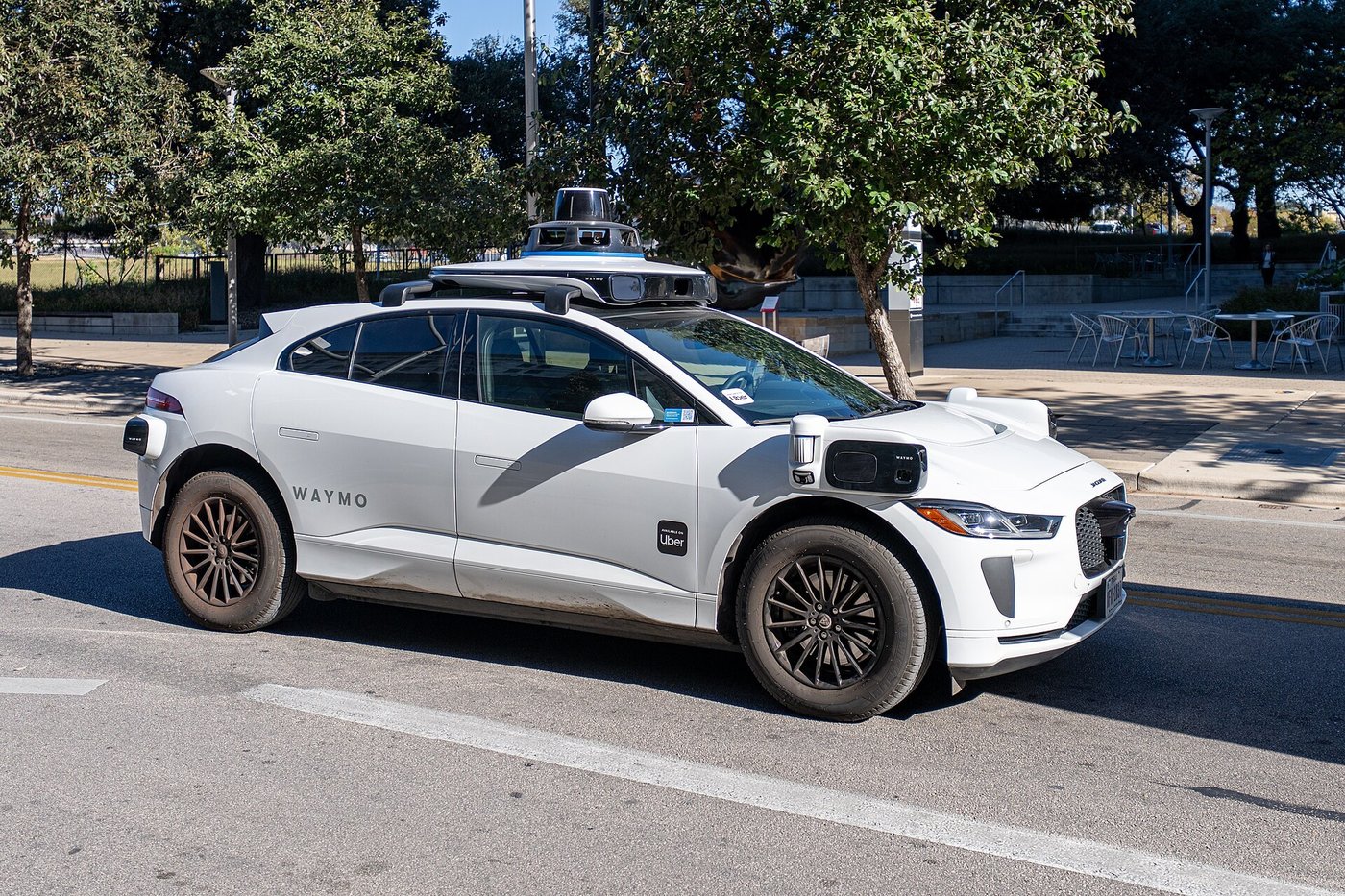
Google spent Wednesday making the same argument twice: that its AI is ready to go to work. At a cloud event, the company showed a unified Gemini agent that takes goals rather than instructions and plans its own tasks. On the same day, Waymo, its self-driving unit, closed a $5 billion loan to keep expanding.
The agent is the more striking of the two. It carries its own Workspace account and email address, and it can call on tools and skills the way an employee would, connecting to Workspace, Microsoft 365, Slack, Jira, Git, BigQuery and Snowflake, along with servers built on the MCP standard. Google’s pitch is that the agent behaves like a colleague rather than a chatbot.
Sundar Pichai, Google’s chief executive, put the numbers behind the ambition. Gemini now has more than one billion monthly active users, he said, and nearly nine in ten of the Fortune 100 use Gemini Enterprise. The company plans to roll the agent out to businesses first, then to consumers.
The strategy is a shift in emphasis. Google has spent the past two years chasing rivals in raw model performance. The new agent is a bet that the next contest will be won not on benchmarks but on whether an AI can actually do a job, from drafting a report to moving a ticket through a workflow.
The rollout carries risk. Giving an autonomous agent its own account and the ability to act across a company’s systems raises the stakes on every mistake it might make. Google is moving carefully, starting with enterprises where a human can still watch the work and review what the agent has done.
The competitive context is unforgiving. OpenAI, Anthropic and Microsoft are all pushing their own versions of agents that act inside the workplace, and each is racing to be the layer through which companies run their daily operations. Google is betting that its reach, through Gmail, Docs and Workspace, gives it the easiest on-ramp.
The agent raises questions Google has not fully answered. An AI with its own account and the freedom to act across a company’s systems is, by definition, a new kind of security risk, and one wrong action can carry real consequences. Google’s answer, for now, is to start slow, keep humans in the loop, and let enterprises set the boundaries of what the agent is allowed to do.
Pichai’s framing, that the agent is like a colleague, is the clearest statement yet of where Google thinks the market is heading. The next product customers pay for, in this view, is not a smarter answer but a finished piece of work.
Waymo’s loan, reported the same day, tells a parallel story about spending. The $5 billion term loan is the company’s first debt financing, with PIMCO, Blackstone and Sixth Street as lead lenders and Goldman Sachs as the sole bookrunner. Capital Group, Loomis Sayles and T. Rowe Price joined as significant lenders, alongside Apollo, Blue Owl and others.
The loan also marks a step change in how the company funds itself. Until now Waymo has relied on equity from Alphabet and outside investors. Borrowing against its future means lenders have looked at its ride volumes, its safety data and its unit economics and decided the cash flows are real enough to underwrite, a view that even two years ago would have seemed premature.
The money will fund expansion of Waymo’s robotaxi service across the United States, Europe and Japan. The company launched service in its fifteenth US city last month and announced a move into Singapore, and it closed a $16 billion equity round earlier this year at a $126 billion valuation.
The pairing of the two announcements is no accident. Google is signaling that its AI can do two things at once: run the software layer of the enterprise and drive the physical world. Few companies are trying to own both ends of that spectrum.
Waymo’s move to debt is also a sign of maturity. A company that can borrow $5 billion from the world’s largest credit investors is one that lenders now treat as a real business with predictable cash flows, not a research project. The loan was negotiated upward from an initial target of more than $3 billion, and it closed within days, with lenders taking a spread of more than 500 basis points over the benchmark rate.
Both moves reflect the same underlying pressure. Google’s search business faces the first credible challenge in years, and the company is betting its future on being the place where AI does real work, in the office and on the road.
The two bets are expensive and long-dated. The agent has to prove it can be trusted with a company’s systems, and Waymo has to prove its robotaxis can scale without burning through cash. For Google, Wednesday was a statement of intent: the company is done showing off its AI and is now putting it to work.



