
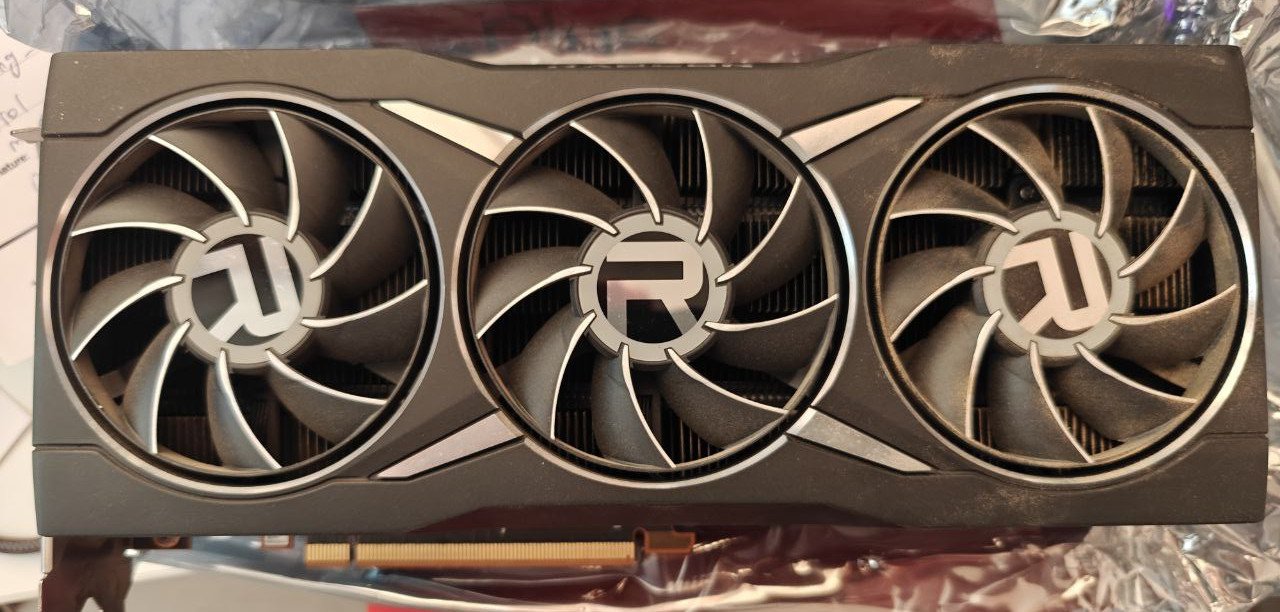
The next increase in graphics-card prices may come not from the chip at the center of the card but from the memory around it. AMD has raised the price of the GDDR6 memory it supplies to its board partners, with the new prices taking effect October 1, according to a report from the Taiwanese hardware outlet BenchLife.
The size of the increase has not been disclosed, and AMD has made no public announcement. The report, published October 10 and echoed by industry channels, describes a price revision to a component AMD does not itself manufacture. AMD buys memory and bundles it with its GPUs, then sells the package to partners such as ASUS and Sapphire, which assemble the finished cards.
That bundling is why the increase matters. A price rise on the kit tends to pass through to the retail shelf, because the partners who build Radeon cards cannot simply substitute a cheaper part without AMD’s sign-off. When memory gets more expensive upstream, the cost shows up in the card the customer buys, even if the exact pass-through takes time.
This is the third signal of rising Radeon costs this year. In late July, AMD told partners that Radeon kits would rise by at least 10 percent, according to reports at the time. In September, separate reports pointed to an across-the-board increase of roughly 10 percent tied to higher wafer prices from TSMC, which manufactures the GPUs. A memory increase on top of those makes the cumulative squeeze on card prices harder to dismiss as a one-off.
The underlying pressure comes from the memory market itself. Spot prices for memory have roughly doubled since late 2025, as supply shifts toward newer, more profitable standards and toward the AI demand that is soaking up fabrication capacity. GDDR6, the older standard still used across much of the current Radeon lineup, is being produced in shrinking volumes, which makes it harder to source cheaply.
The sting is concentrated on the cards that carry the most memory. On some high-memory models, the memory now accounts for more than 80 percent of the card’s bill of materials, by industry estimates. When the dominant cost component rises, the total rises with it, whatever the GPU itself costs.
The exposure is broad. AMD’s current desktop line runs on GDDR6, including mainstream cards such as the Radeon RX 9060 XT, which ships in a 16-gigabyte configuration built on that standard. A price move on GDDR6 therefore touches the part of the market where volume, and price sensitivity, are highest, rather than only the expensive enthusiast cards.
The dynamic also says something about the economics of the graphics business. Memory has quietly become the lever that moves card prices, as GPU makers pass along component costs that sit outside their own factories. For a company competing with Nvidia partly on price, a memory-driven increase is unwelcome, because it narrows the discount that has been one of AMD’s main weapons in the mid-range.
Nvidia’s newer cards moved to the faster GDDR7 standard, which insulates them from the specific GDDR6 squeeze but exposes them to GDDR7’s own supply limits. Both companies are caught in the same current: memory is scarce, demand from AI is bidding up every tier of it, and the cost of a card is now set as much by the parts around the GPU as by the GPU itself.
The squeeze has a structural cause beyond any single price move. Memory makers have redirected wafer capacity toward high-bandwidth memory for AI accelerators and toward DDR5 for servers, leaving older standards like GDDR6 to compete for what remains. When the most profitable output is elsewhere, the older, lower-margin product becomes scarce and its price drifts upward, a dynamic the industry has seen before in past memory cycles.
For board partners, the arithmetic is unforgiving. They buy the GPU-and-memory kit from AMD at one price and sell the finished card into a market where customers remember last year’s sticker. Absorbing a memory increase means eating margin; passing it on means a higher shelf price and, potentially, a quieter checkout.
What is not yet known is how much of the increase will reach store shelves, and when. Partners holding inventory bought at older prices can absorb the change for a time, and their margins will decide how much they shield the customer. The retail price, the manufacturer’s suggested price, and AMD’s supply price each move on their own clock.
The larger question is whether this is a temporary squeeze or a durable shift. Memory prices are being pulled upward by AI demand that shows no sign of easing, and GDDR6’s shrinking role in the supply chain makes the older standard more expensive even as it becomes less central. For consumers waiting for card prices to fall, the message from the memory market points the other way: the cost of the parts around the GPU is now the thing to watch.



