
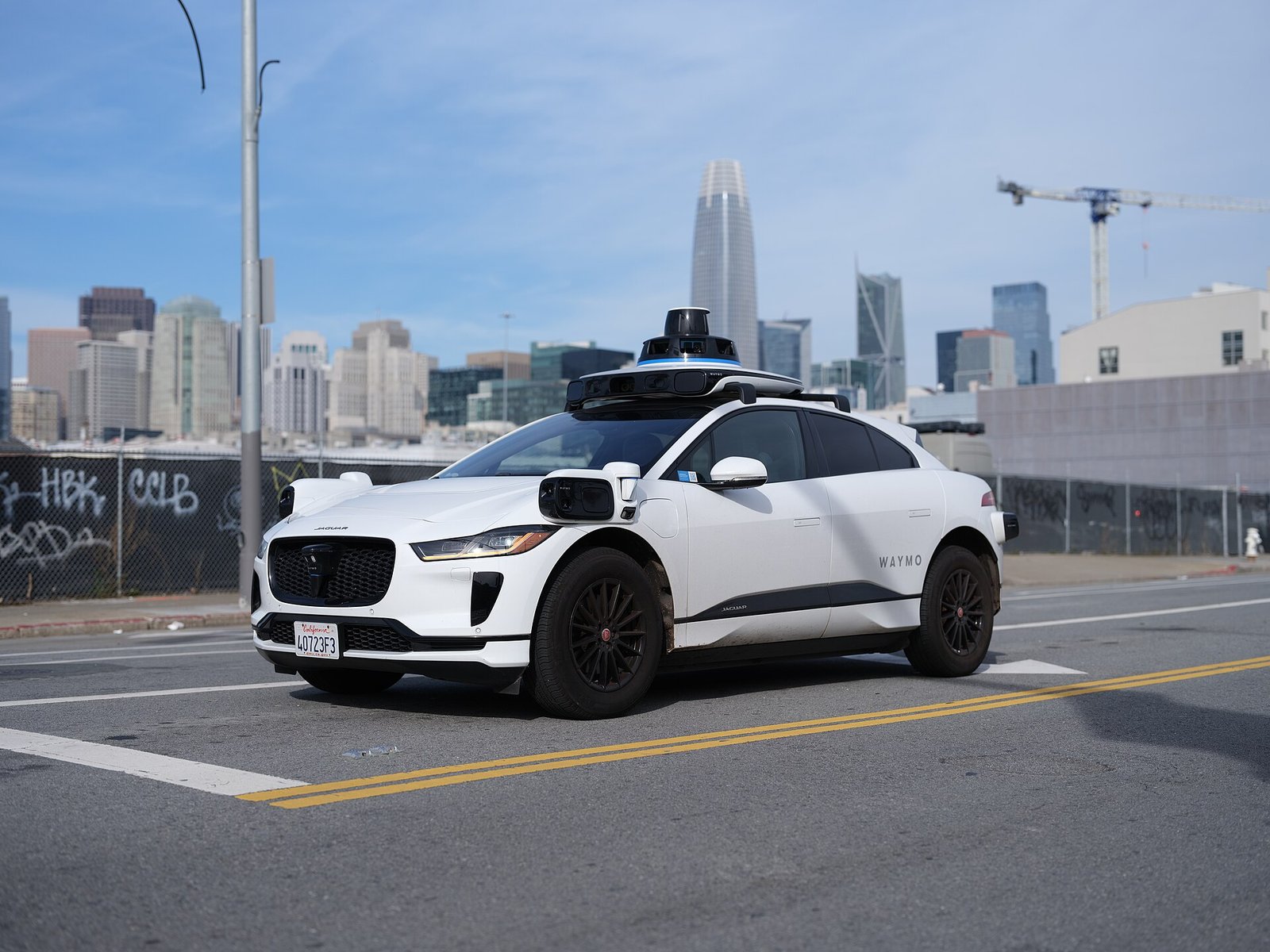
Waymo released safety statistics on October 11 showing that its driverless taxis are involved in collisions at a rate lower than human drivers in the cities where it operates, including Austin and Phoenix, presenting the figures as an answer to critics who question whether robotaxis belong on public roads.
The comparison is built on a per-mile basis, the standard the industry uses to measure a machine against the driver it is meant to replace. Waymo has long leaned on such data as its strongest argument, and the company framed the new release as a direct response to outside skepticism about the safety of its growing fleet.
The timing is deliberate. A week earlier, Alphabet, Waymo’s parent, locked in a $5 billion credit facility for the company to finance the expansion of its robotaxi operations. The safety figures arrive just as that money begins to translate into more cars on the street, and just as the public questions that always accompany an expansion start to sharpen.
Waymo runs a commercial ride service in Phoenix, San Francisco, Los Angeles, and Austin, and it has been adding vehicles and cities at a steady clip. Each new market brings a fresh round of scrutiny, and the company’s safety claims are the first line of its defense before regulators, riders, and the drivers whose jobs the technology threatens.
Waymo’s safety argument rests on a body of work built over years. The company has published research on its collision rates and has reported incidents to state and federal regulators as required. Those filings give outsiders a partial window into how the cars perform, and the company has used them to argue that its vehicles are involved in fewer crashes that matter than the human drivers around them.
Not everyone is persuaded. Municipal officials in several U.S. cities have moved to set conditions on where and when driverless cars may operate, and Washington, D.C., has seen protests by drivers who argue that the vehicles put their livelihoods at risk. The dispute is less about whether the technology works and more about whether its benefits are shared fairly and its risks are managed transparently.
The safety numbers themselves are hard for outsiders to audit. Waymo reports incidents to federal regulators and has published its own studies, but the comparison of a robotaxi’s crash rate to a human driver’s depends on definitions: what counts as a collision, how miles are counted, and how the human baseline is built. The company has described its methodology in the past, and the new release will face the same demand.
What the data does, if it holds, is shift the argument. The most common objection to robotaxis is a fear of the unknown — that a machine will make a mistake a human would not. A lower crash rate across millions of miles is the company’s way of saying that the unknown, measured properly, is safer than the alternative. The claim is a strong one, and it invites a strong test.
For Alphabet, Waymo is one of its most watched bets outside its core advertising and cloud businesses. The company has spent more than a decade and many billions of dollars building the service, and it has begun talking about Waymo as a business that can eventually stand on its own. The $5 billion loan is a statement that the company is willing to fund that ambition, and the safety data is a statement that the ambition is justified.
Waymo is not making the safety argument alone. Tesla has pressed its own robotaxi plans, and the two companies have staked out different positions on how much data and how much hardware a safe driverless car requires. The rivalry raises the stakes of every safety claim, because investors and cities are effectively choosing which approach to believe.
The safety record is also a commercial asset. Insurers price driverless fleets partly on their crash history, and regulators condition expansion on reported performance. A clean record lowers the cost of each additional car and eases the path into each new city; a weaker one raises both.
The expansion will not be smooth. Cities retain the power to slow or block the service, and the protests in Washington show that the political fight is as live as the technical one. Waymo’s challenge is to grow fast enough to matter while moving slowly enough to keep the trust of the places it enters.
Left unanswered is how the company will convince the remaining skeptics. A safety statistic, no matter how favorable, does not settle a political argument. Waymo has made its case in numbers for years, and it is making it again. Whether the numbers finally carry the day will be decided less by the data than by the cities that have to live with the cars.



