
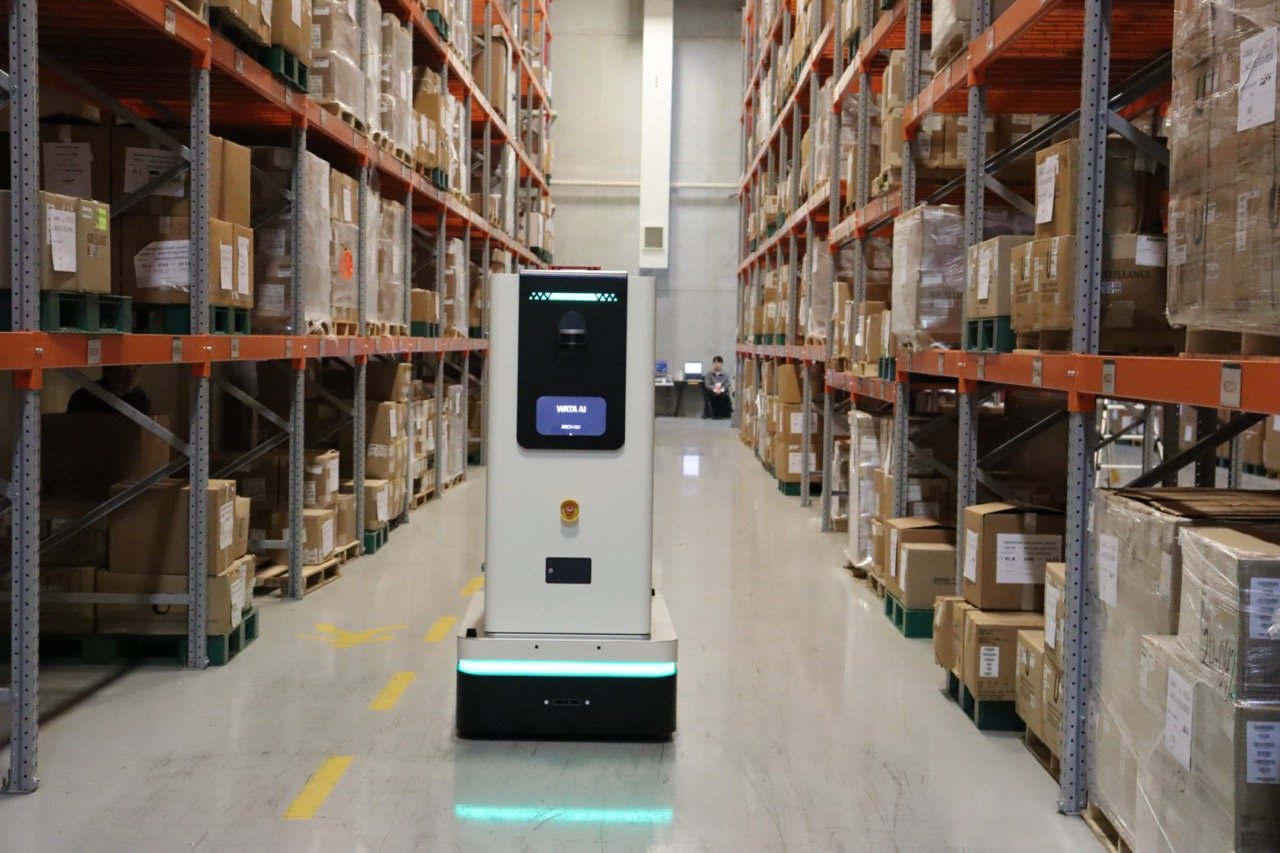
Amazon has run more than a million robots in its warehouses for years. On October 11, its cloud division started giving away the tools it built to train them.
Amazon Web Services released an open-source development stack that packages the data and software Amazon accumulated on warehouse robotics and makes it available to outside companies. The goal is to help others train robots that can perceive and act in real environments, the company said. Interesting Engineering reported the release.
The size of the fleet behind those tools is the reason the release is notable. Amazon’s warehouse robots number more than 1 million, and they have spent years doing repetitive physical work under conditions a research lab cannot easily reproduce: cluttered floors, moving obstacles, damaged packaging, machines and people sharing the same aisles. That volume of real-world operation produces training data that synthetic simulations alone do not generate.
Opening that material to outsiders is a familiar move for Amazon, and it is not charity. Releasing a development stack creates a standard, and a standard creates demand for the services that surround it. Companies that build robots on Amazon’s tools will need somewhere to store the data, run the training jobs and serve the models. That somewhere is, by default, AWS.
The timing fits the wider fight over physical AI. Robotics has become the next frontier for the large labs, which have spent two years pushing models from text into the physical world. Google, Nvidia, Tesla and a crop of startups are all working on systems that can move and manipulate objects. What most of them lack is not the model architecture but the data — the long, expensive record of what happens when a machine meets a warehouse floor.
Amazon has that record in a form no competitor can match, because it did not set out to collect it. The data is a byproduct of running the largest automated logistics network in retail. Packaging it into an open stack turns an internal cost center into a product, and it turns years of operations into a position in a market where the scarce input is exactly what Amazon has in surplus.
The open-source label carries a specific meaning here. A stack released under an open license can be adopted without a contract, inspected by researchers, and extended by companies that would not build the same tools from scratch. That lowers the barrier for mid-sized firms that want to automate a factory or a fulfillment line but cannot justify a robotics research team. Amazon gets a wider pool of developers using its primitives, and it gets to shape the conventions those developers adopt.
The risk is that openness cuts both ways. Once the tools are public, Amazon’s competitors can use them too, and the advantage they represent erodes over time. The company’s answer is that the tools are the wrapper, not the engine. The model, the compute and the operational data that keeps improving remain inside Amazon, and the open stack is the on-ramp to them rather than a gift of the core asset.
This is the same play AWS ran in earlier waves of computing. It released frameworks and primitives, let the community build on them, and sold the infrastructure underneath. The model worked when the workload was web services, and it worked again when the workload was machine learning. Amazon is now betting it works a third time, when the workload is a robot deciding how to pick up a box it has never seen before.
What would make the bet pay off is adoption by manufacturers and logistics operators that are not Amazon. The company’s warehouse operation is large, but the rest of the physical economy is larger, and most of it has barely started to automate. If the open stack becomes the common starting point for that work, AWS becomes the default place to run it, and Amazon turns a robotics program it built for itself into infrastructure that others rent.
The release also answers a question competitors have pressed for years. Amazon has often been criticized for keeping its internal technology closed while selling cloud services to everyone else. Put the robotics tools in the open and that criticism loses force, at least in this corner of the business. Whether the open stack draws a real community or sits largely unused will be visible within a year or two, in the projects that cite it and the companies that build on it.
For the robotics field, the practical effect may be larger than any single model release. Training a robot in the real world is slow and costly, and most teams spend their budget collecting data rather than improving methods. A common stack with a large, real dataset behind it lets them spend that budget on the part that differentiates them. Amazon, which needs the entire field to advance for its own tools to be worth adopting, has an interest in making that easier.
The company framed the release as a contribution to the field. It is also a move in a race, and the race is over who supplies the foundation that physical AI gets built on. Amazon has staked a claim with the asset it has most of and the one that is hardest to copy: a million robots, and the record of everything they have done.



