
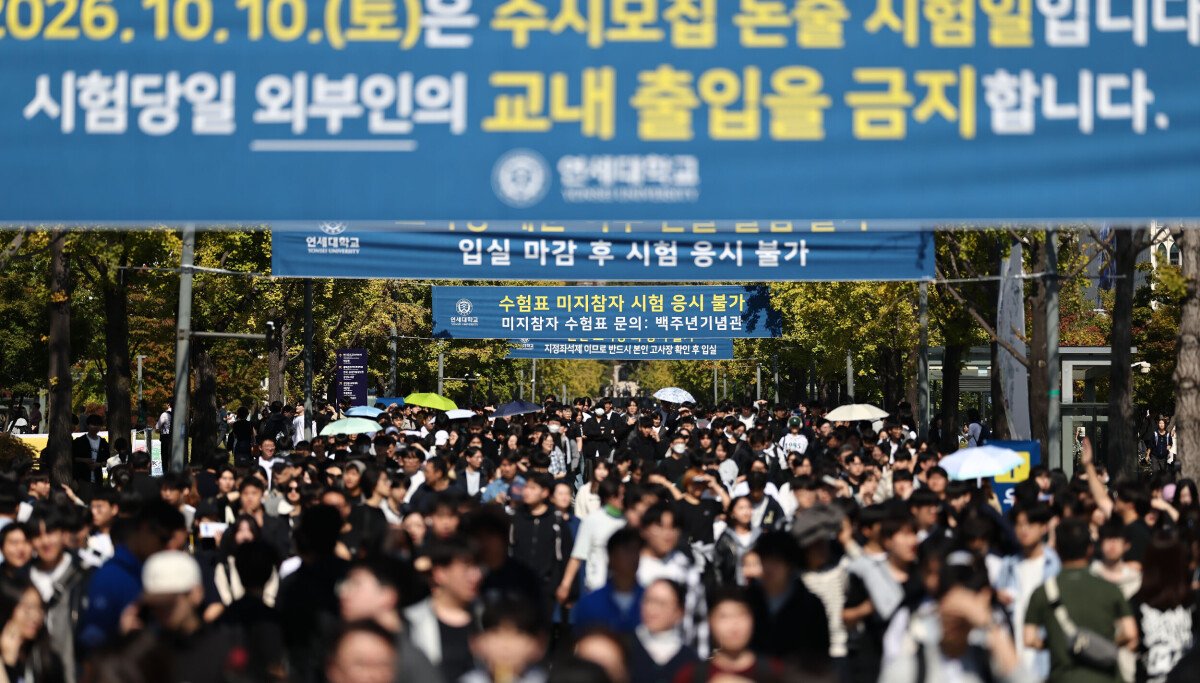
The student passed the first inspection. Before the exam began at Yonsei University, proctors checked the glasses of test-takers, as they do at every sitting, looking for frames that hide a camera or a lens that hides a screen. The student was wearing ordinary eyewear. Then the test paper arrived, and the student switched.
The case unfolded on Oct. 10 at Yonsei’s Sinchon campus in western Seoul, during the mathematics essay exam for the natural sciences and integrated tracks of the university’s 2027 early admissions process, which began at 10:30 a.m. Midway through the session a proctor noticed that the student’s glasses did not match the pair checked at the door, reported it to the test headquarters and confiscated the device. The student was allowed to finish the exam so the room would not be disturbed, and admitted afterward to wearing the glasses. Yonsei said Tuesday that it considers the act cheating and is reviewing measures that include disqualification.
The university had prepared for it. Yonsei had shown proctors photographs of the appearance of smart glasses and the positions of their cameras, and trained them to watch for the trick. That training produced the catch. It is also why the incident is being read as a warning rather than a one-off. Yonsei’s finding, and reports that criminal proceedings have begun over the matter, make it the first known case of cheating with AI glasses at a Korean university entrance exam.
The device is simple to operate. A camera in the frame captures the question, sends the image to an AI service such as ChatGPT or Gemini, and returns step-by-step solutions to a display in the lens. Mathematics and science questions suit it best, because their answers are unambiguous numbers. The hardware is no longer exotic: consumer frames with cameras and microphones sell for a few hundred dollars, and the model behind them costs a monthly subscription.
Similar attempts have surfaced elsewhere. A case was reported at the University of Seoul. Smart glasses were already banned at tests including TOEIC and national certification exams, where prosecutions have followed. For the 2027 academic year, the Korea Institute for Curriculum and Evaluation has listed smart glasses among the items prohibited at test centers for the national College Scholastic Ability Test, and authorities plan to widen the use of radio-frequency detectors able to find glasses and miniature earpieces.
Enforcement is where the difficulty sits. An exam hall controls what passes through the door, and a pair of glasses passes. A metal detector finds a phone; it does not find a frame. Inspecting every pair of glasses is slow, intrusive and imprecise, and a student who wears none can be handed a pair on the way in. Cutting the room off from networks helps only if the device needs one, and an assistant can run on a phone in a pocket.
The pressure therefore lands on exam design as much as on security. Essay exams were built to resist memorization, and they must now resist a model able to work through a problem in seconds. Universities can narrow the window by setting questions that demand a chain of justification, by changing the numbers in a problem at the last minute, or by moving part of the assessment into an interview. Each step trades cost and convenience for credibility, and none of them removes the incentive to cheat.
The incentives are easy to see from a student’s side. An admissions essay decides a place at one of the country’s three most selective universities and, with it, years of a career. The technology that can lift a score is cheap and hard to spot. A phone carried into a hall is a familiar offense with a familiar penalty; prompting a model that writes into your field of vision feels like a smaller step, which is part of why the practice spreads faster than detection does.
What the Yonsei case shows is that the same visibility that makes smart glasses attractive is what gave this one away. A device worn on the face is a device a proctor can see. The student who thought the frame blended into a room of eyeglasses was wrong about the room, and right about the trend: attempts were reported at more than one campus in the same admissions season.
What to watch over the next cycle is whether the disqualification holds and how many comparable cases appear elsewhere. The answer will say less about the ingenuity of applicants than about how quickly universities can rebuild an assessment that assumes nobody in the room has access to a model. Administrators have had a year of warnings and one confirmed case. The next national test is the one that will show whether the countermeasures were enough.



