
The two executives who sell deepest into the artificial intelligence build-out said on October 12 that its next constraint is neither silicon nor electricity but the willingness of other people’s money to keep paying for it.
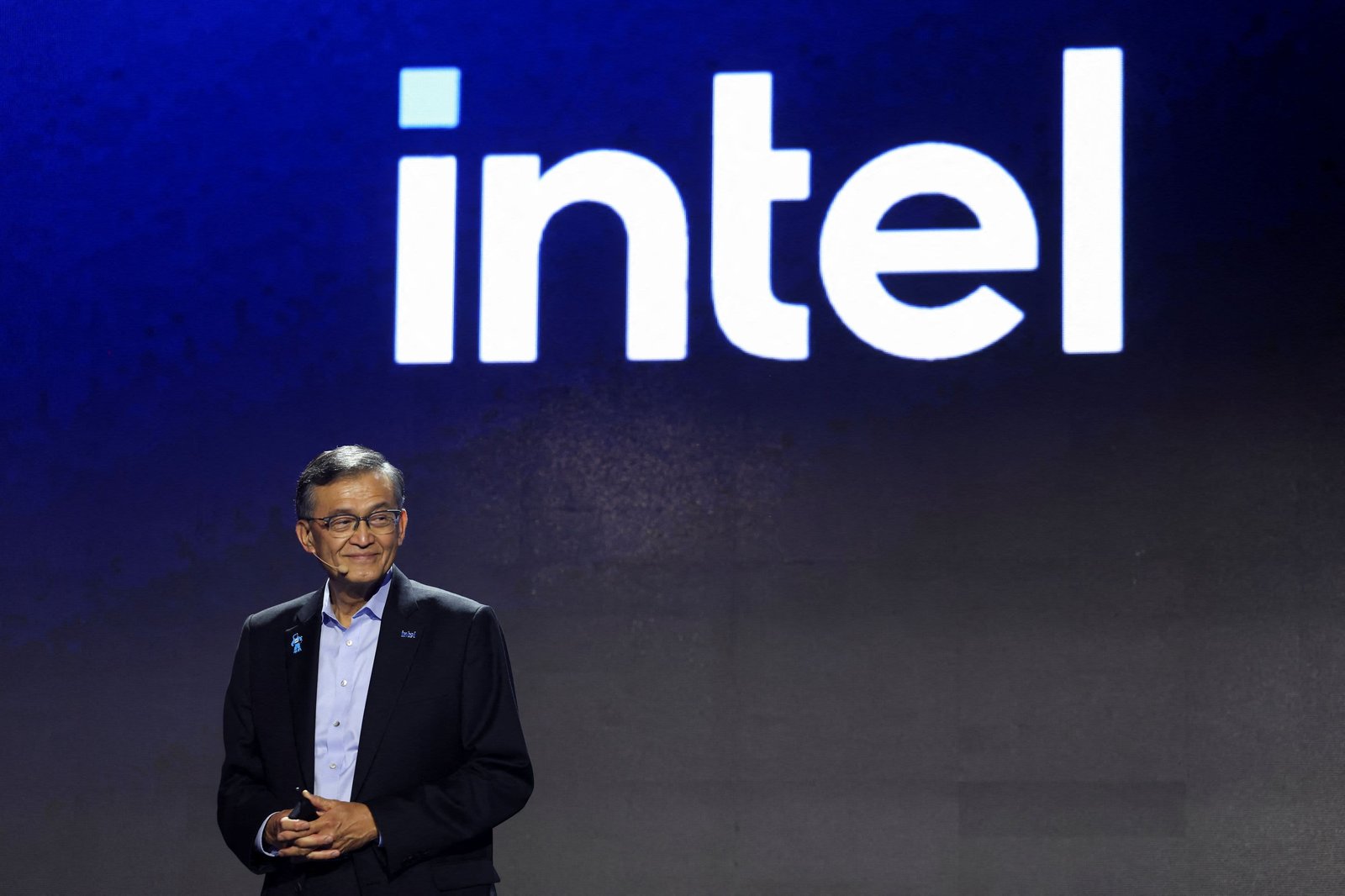
Broadcom chief executive Hock Tan told a DBS forum in Singapore that financing may slow the expansion of AI capacity more than any shortage of semiconductors, memory or power. Intel chief executive Lip-Bu Tan, on the same stage, pointed to the rising cost of capital and to a question he expects to arrive with force: when does the spending produce a return?
Both men profit from the build-out, which makes a warning about its funding awkward to deliver and easy for critics to discount. The credit market supplies the corroboration. Global debt issuance tied to AI is on track to more than double to nearly $570 billion this year, according to a Morgan Stanley forecast reported by Reuters in June, and the buyers of that paper have started to negotiate harder.
The most visible machinery is Nvidia’s. In August the chipmaker and a group of large private-capital firms announced a platform intended to mobilize $500 billion of third-party money for data center construction. The arrangement followed staff guidance the Securities and Exchange Commission issued in July that eased risk-retention requirements on some data center securitizations, a change that attorneys told CNBC could apply directly to the new platform.
Private credit has moved just as fast. In June, Apollo and Blackstone led what UBS described as the largest private-credit transaction on record, roughly $35 billion, in a structure whose repayment depends on compute that the money never technically touched.
The secondary market has begun to price the risk. Oracle’s five-year credit default swap spread reached 203 basis points, an 18-year high, after S&P cut the company’s rating to BBB-, and Meta’s most recent bond drew about a third less investor demand than a sale a year earlier, according to market participants. Analysts said lenders are working through the arithmetic the two executives described: a data center is a fixed asset with an uncertain revenue stream attached to it.
Intel’s Lip-Bu Tan put the point in terms of return on capital. A hyperscaler signs a lease or issues debt against demand it expects, not demand it has invoiced. J.P. Morgan has estimated that data center capital spending could reach $5.5 trillion between 2026 and 2030, a figure that says as much about financing needs as about computing needs.
The difference between demand and funded demand is where the trouble would appear. An operator that has ordered accelerators can defer delivery, stretch a payment schedule or renegotiate terms, and each of those moves lands on a supplier’s books before it reaches a headline. Broadcom and Intel both sit close enough to those order books to see the pattern early, which is part of what gives their caution weight.
Earlier constraints in this cycle behaved differently. Logic chips were scarce, then the high-bandwidth memory beside them, then transformers and grid connections. Each shortage had a physical answer: more wafers, more packaging capacity, more substations, higher prices. Capital has no equivalent fix. It is priced by people who can change their minds, and it is priced on expectations about cash flows that no one can yet measure.
The structure of the current deals concentrates the exposure. A chipmaker that takes a stake in a customer, a customer that signs a lease with a developer, and a lender that securitizes the lease payments all end up relying on the same forecast, and the forecast is that appetite for computing keeps compounding near the pace of the past three years. A slowdown in one link shows up in the others, usually with a lag long enough for the first link to have been paid.
Neither executive predicted a bust. Both said the technical problems that dominated the past three years have been managed well enough for now, and that the financial ones have not been addressed at all. That is a narrower claim than the bubble commentary that circulates around AI spending, and a harder one to wave off when it comes from suppliers with visibility into what customers have ordered.
There is a prudent version of this market, in which operators lock in capacity slightly ahead of demand they can already forecast, and a circular one, in which vendors finance purchases from themselves and the last buyer in the chain carries the bet. Nothing in the public record distinguishes the two. Contracts are private, and companies rarely publish utilization rates for capacity they have committed to buy, so the market is relying on the judgment of lenders rather than on any measurement of the asset.
The near-term test will show up in prices rather than in announcements. Watch the spreads on data center debt and on the securities built from it, and watch whether the terms on new leases tighten as lenders ask for more equity beneath them. Watch, too, whether the pace of new capacity announcements slows. None of that would be a verdict on AI. Together they would say that the constraint Hock Tan and Lip-Bu Tan described has stopped being theoretical.
For the labs and cloud operators signing the agreements, the message is more direct than either executive intended. The next obstacle to scale may not be a chip allocation or a power permit but the patience of the institutions funding a business that consumes cash faster than it earns it. Demand can exceed supply and still not be enough to justify the cost of serving it.
Both men have spent their careers watching orders convert into revenue. That conversion now depends on someone else’s balance sheet.



