
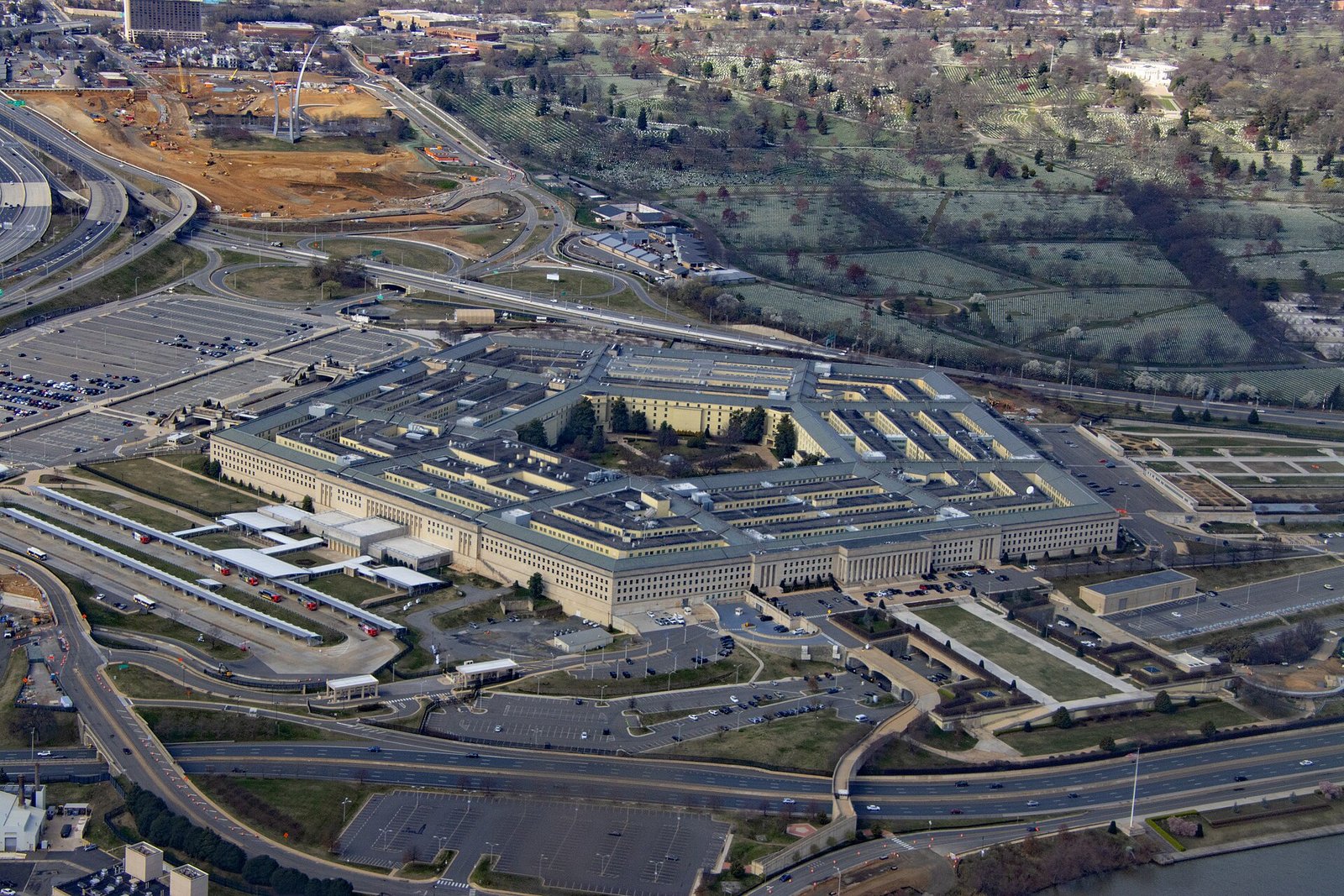
Shyam Sankar did not hesitate. Asked on CBS’s “Face the Nation” what happened at the Pentagon when Anthropic’s models were pulled, Palantir’s chief technology officer gave a one-line answer. “It’s already been replaced.”
The interview, broadcast Sunday, confirmed in public a dispute that had circulated in fragments for weeks. The Defense Department stopped using Anthropic’s products after the company would not relax restrictions on military applications of its AI. Claude had reached defense users through Maven, a Pentagon platform built on Palantir’s software.
Sankar said the change carried no operational cost. Users, he added, can choose among models from OpenAI, xAI and Google, or turn to open-weight systems released by Nvidia. The implication is that frontier models are close substitutes at the point of use, whatever the labs say about the differences between them.
Much of the interview went to a different argument. Sankar described the movement that shapes AI safety debates as a “millenarian doomsday cult” fused with a messianic complex, and named effective altruism as its doctrine. He cited Sam Bankman-Fried, the cryptocurrency executive convicted of fraud, as the best-known adherent, and said many of the roughly 2,000 AI researchers working in the United States hold that worldview. A warning from one of them that AI carries a 10% chance of ending humanity, he argued, is a theological claim that people mistake for a technical one.
He was answering a question about polling. CBS found that half of Americans believe AI will create more problems than it solves, against 29% who expect the opposite. About 45% said the government should restrict the development and use of the technology. Sankar said the burden rests on the technology industry to show concrete benefits, and that attention to risk has crowded out discussion of economic value.
The exchange exposes a widening split between the companies that sell models and the government that buys them. Anthropic’s usage rules bar mass surveillance and autonomous weapons, limits written when its main customers were software developers. Palantir earns most of its revenue from government work and has built a business on moving fast inside agencies. The Pentagon wants capability it can deploy on a schedule it controls.
Neither side can walk away cheaply. Anthropic loses a customer that carries weight as a reference, and the Defense Department loses a supplier that ranked near the top of independent evaluations. But the episode suggests the cost of switching is lower than the labs’ negotiating posture assumes. Modern systems are accessed through application programming interfaces, and once an agency has a platform that routes between models, swapping one for another is an engineering task rather than a renegotiation of the mission.
The platform in the middle of it all was built for exactly this kind of substitution. Maven, which Palantir has helped develop and operate, was designed to ingest sensor data and route it through whichever analytical tools the military wants to attach, including commercial models. When one supplier’s terms no longer fit, the architecture allows another to be fitted in without rebuilding the system around it. That design choice is the substance behind Sankar’s one-line answer, and it is the part of his argument that does not depend on anyone’s view of effective altruism.
Analysts said the dispute matters less for what it removes than for what it reveals about procurement. A defense customer that can substitute models within weeks weakens the bargaining position of any single vendor, and it gives buyers a reason to keep several suppliers qualified. Open-weight models add pressure from below, since an agency can run them on its own hardware without asking permission.
The political argument is harder to settle. Sankar’s claim that safety advocacy is a belief system rather than a scientific finding will not persuade researchers who view the same evidence as grounds for caution, and his employer has an interest in a permissive regulatory environment. He acknowledged that interest in the interview, saying the lawyers in the department keep Palantir away from projects where conflicts exist.
What the Pentagon has actually deployed in place of Claude is not public, nor are the terms under which it was chosen. Neither Anthropic nor the Defense Department has described the sequence of decisions that led to the change, and both declined to discuss the details. The most concrete fact available is the one Sankar volunteered on television.
The wider question is whether the disagreement stays where it is. Anthropic’s restrictions are corporate policy, not law, and they apply to every government buyer rather than one agency. If other departments reach the same conclusion the Pentagon did, the company will be left with a principle and a smaller addressable market. If they do not, the episode will look like a single agency taking the fastest available route.
For now the market has treated the story as a Palantir one, not an Anthropic one. That reading may be wrong, but it reflects how the debate has shifted. The argument about AI in government is no longer confined to whether the technology works. It now includes who gets to decide what it is used for, and whether the seller or the buyer holds that pen.



