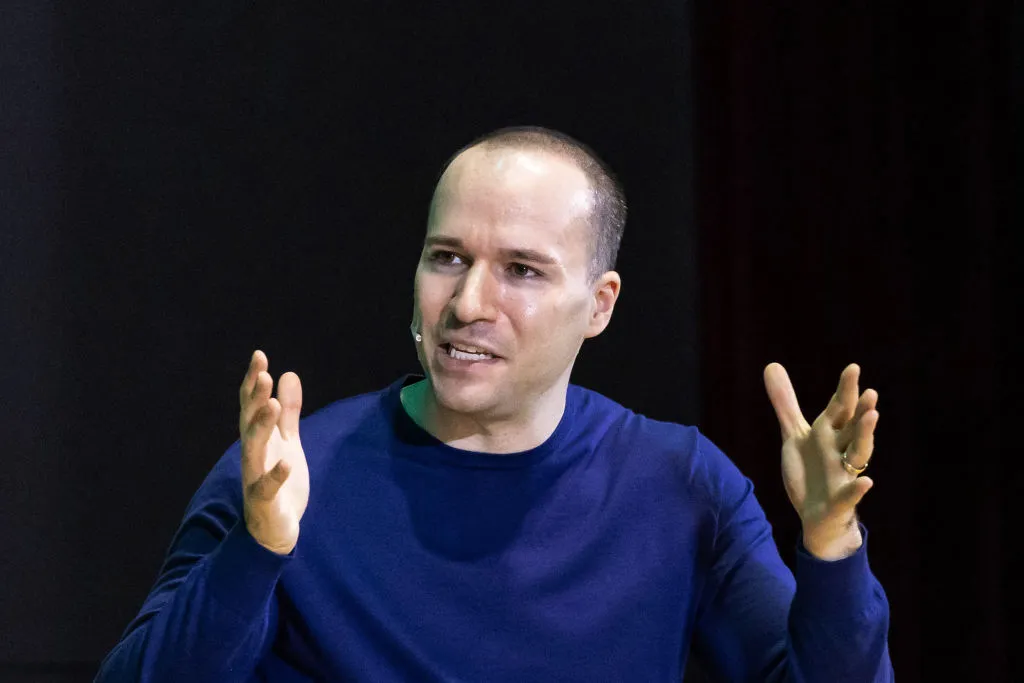
Sachin Katti, the executive who oversees OpenAI’s computing supply, will leave the company next month, according to people familiar with the matter, about a year after he arrived.
The timing is uncomfortable. OpenAI is committing to more data center capacity than at any point in its history, and the person who sets the pace of that buildout is leaving while the plans are still moving. The report did not identify a successor.
Mr. Katti ran the effort behind Stargate, the data center program OpenAI has pursued with partners, and his assignment was to control how quickly it advances. Build too fast and the company pays for land, power and buildings it cannot fill with chips. Build too slow and the models it intends to train and sell wait on capacity that is not there.
He also negotiated agreements with outside suppliers, including Amazon Web Services, to expand the computing OpenAI can draw on. The company buys capacity in two directions at once, developing some sites itself and renting the rest from cloud operators. Every contract has to be revisited as prices, power availability and chip allocations shift.
That mix is why the seat matters beyond its title. Compute is the largest cost for a developer of frontier models, and it is also the constraint that decides which products ship. A research team can plan a model it cannot serve if the capacity is not signed for months in advance.
The exit is the latest in a series of senior personnel changes inside the compute organization. Each one has arrived while the department was absorbing new responsibilities, expanding from procuring chips for training runs to negotiating power contracts, site selection and long-term supply terms with a small group of vendors.
The people who do this work are scarce. The skills overlap with finance and supply chain more than with machine learning, and the number of executives who have run procurement at this scale is small enough to fit in one conference room. Recruiters have spent much of the past two years chasing the same short list.
The customer side of the relationship matters too. Cloud providers, chip suppliers and construction partners price and schedule against commitments that OpenAI makes years ahead. When the executive who owns those commitments changes, suppliers have to re-establish terms with a new counterpart who may weigh speed and cost differently.
Mr. Katti’s hiring was itself treated as a signal when it was reported, part of an effort to bring order to a purchasing effort that had grown faster than its internal controls. His departure a year later invites the obvious question of whether the pace he was told to manage was one he could hold.
OpenAI has said little about the change, which is consistent with how it handles most personnel news. The company typically confirms departures through a brief statement, if at all, and lets the work continue under whoever remains.
Investors in the company’s suppliers will read the news through a narrower lens. Data center landlords, power developers and equipment makers have built business plans around the assumption that OpenAI’s buildout is a multiyear program with a stable counterparty. Personnel changes do not alter contracts, but they do alter the pace at which contracts turn into orders.
The industry context is a supply chain that is tight at every link. Memory prices have risen, power interconnection queues stretch for years in parts of the United States, and the builders of data halls are booked out. Whoever holds the compute seat inherits a queue rather than an open field.
There is also an internal dimension. Compute allocation is the least popular job in any AI lab, because every team believes it needs more than it gets. The person who sets those allocations absorbs complaints from researchers, product leaders and the finance team at the same time.
Analysts who follow the sector said the practical test is whether OpenAI’s stated buildout schedule slips. A slower cadence would show up first in supply orders, then in the availability of the company’s newest products, and only later in reported costs.
What the report does not establish is why Mr. Katti is leaving, whether the decision was his, or who will take over the negotiations he was running. Those questions will be answered by the next contract the company signs, and by how quickly it signs it.
The negotiating calendar explains part of the pressure. Power agreements, chip allocations and data hall leases are signed years before the capacity exists, which means the executive in the seat is buying futures in three markets at once and adjusting the pace whenever any of them moves. A delay in a substation, a shift in memory pricing or a supplier that reallocates capacity forces the whole schedule to be rebuilt.
Inside OpenAI, the compute group has also become the arbiter of which research runs get priority. Training a frontier model consumes capacity for weeks, and inference for paying customers competes for the same machines. Decisions about who waits are made by people with spreadsheets, not by researchers, and the allocation fights get settled at the top.
Whatever the reason for his exit, the practical effect for the company’s suppliers is a period of uncertainty about who signs next. Deals in this market close when a counterparty with authority agrees to terms, and authority is exactly what changes when a department head leaves.
Until then, the compute unit operates the way it has for a year: buying as much capacity as it can commit to, at prices set by suppliers who have other customers, on a schedule that nobody outside the company has been able to fully verify.