
Tesla has spent months describing an event that it kept postponing. On Thursday night it either shows the car or it does not.
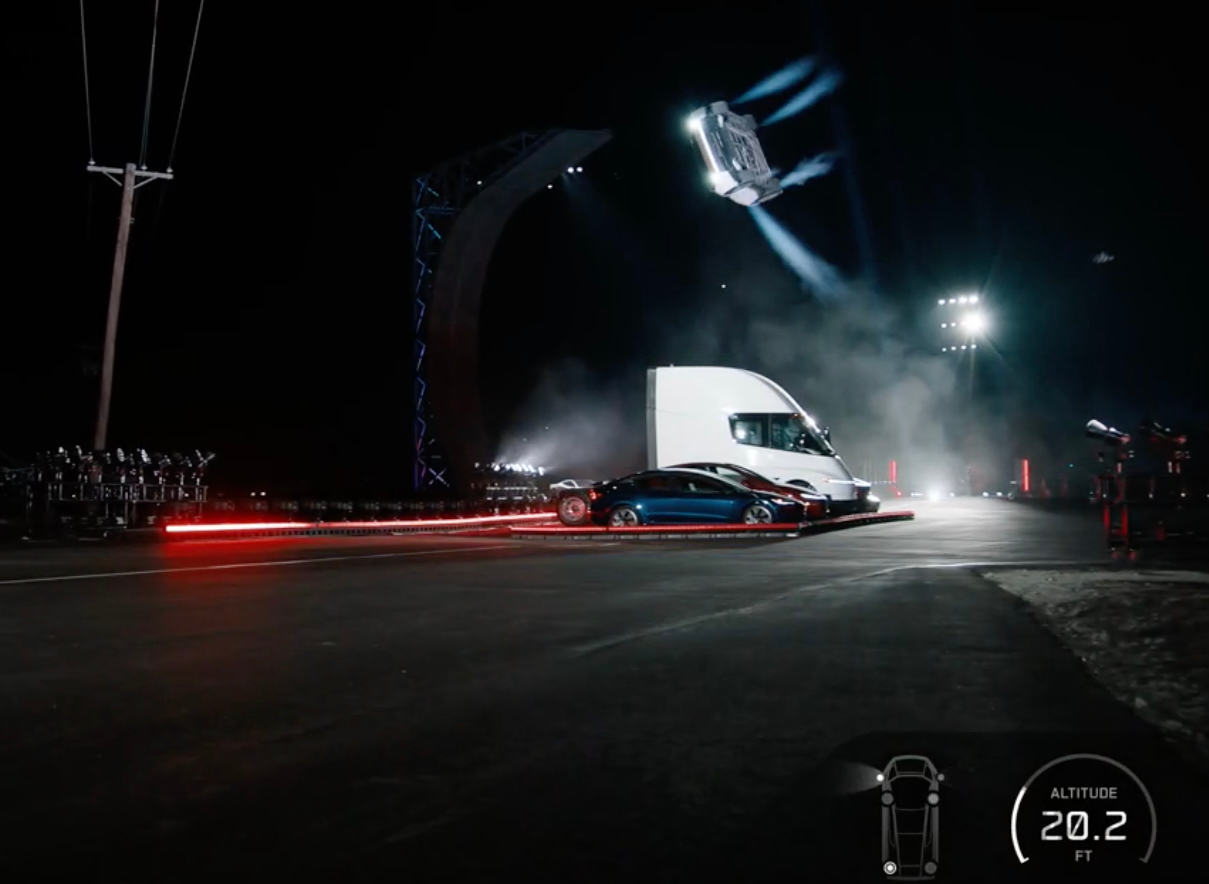
The second generation of the Roadster is scheduled to be unveiled at an event in Waco, Texas, on the evening of October 15, streamed live. The date was originally set for October 1 and was moved twice because of weather. Tesla has hinted that the presentation will include a demonstration of the car hovering.
That hint is carrying an unusual amount of weight. Elon Musk, the company’s chief executive, has warned that if the “flying” demonstration fails, the stock could fall 8 percent. A chief executive who tells investors in advance how badly a product event could go is describing a company whose valuation, at present levels, depends on the credibility of its forward promises rather than on the cars it delivers this quarter.
The Roadster is the oldest of those promises. The second-generation car was first shown as a concept in 2017, with specifications that included a claimed acceleration time under two seconds and a range beyond 600 miles, and a production date that has moved repeatedly since. This generation will be limited to 1,000 units. A limited run is easier to build than a mass-market vehicle and it does not test a manufacturing system for a volume product.
Analysts said the demonstration matters more than the specifications. Accelerating quickly is a solved problem for electric vehicles; hovering is not, and if Tesla demonstrates it, the question immediately becomes whether the capability is a stunt, a step toward a control system, or something that can be certified for use on public roads. None of those questions is answered by a stage performance, and all of them would follow the company for years.
The timing is unhelpful. Tesla’s shares have moved this year on expectations about autonomy and robots rather than on vehicle sales, and the parts of the company that generate cash have faced a harder market as competition in electric vehicles has increased. A headline product that will not ship at volume does little for the financial statements, though it does reinforce the case that the company is valued for technology rather than for cars.
A hover demonstration also raises a regulatory question that the company has not addressed. A vehicle that lifts off the ground is not governed by the rules that cover cars, and it is not governed by the rules that cover aircraft. The Federal Aviation Administration oversees flight, and the National Highway Traffic Safety Administration oversees vehicles, and no framework exists for something that is both. A car that only hovers during a presentation avoids the problem by not existing as a product.
The 1,000-unit limit may be the most concrete piece of information attached to the event. A run that small can be assembled by hand and priced without reference to manufacturing cost. It also means the model cannot affect the company’s revenue in any meaningful way, which in turn means the event is about something other than selling the car. It is about the claim that the company can still do things no other manufacturer can.
Analysts said the market’s reaction will depend on what the demonstration shows and on whether Tesla explains how the technology would reach a customer. A successful hover with a clear path to a shippable feature would be read as evidence for the broader case about the company’s engineering. A failed or absent demonstration would invite questions about why the event was announced with a warning attached.
The company has not said what will be announced beyond the car, whether the price will be disclosed, or when the first examples would be delivered. It has not said who will appear or how long the presentation will run. The event begins on Thursday evening and, as with each earlier date, the answer will arrive only when it starts.
The first Roadster occupies a specific place in the company’s history. It was the car that proved an electric vehicle could be fast and desirable, and the money it generated funded the development of the Model S. The second generation is meant to repeat that effect at a different scale, and it arrives at a moment when the company’s most valuable claims are about software rather than vehicles.
Investors have other questions in front of them. Competition in electric vehicles has increased, and the vehicle business has faced pressure on pricing and on demand at the same time that the valuation has come to rest on autonomy and robotics. A product event changes the subject, briefly, from units sold to capability demonstrated.
The evening also has a commercial purpose beyond the demonstration. A run of 1,000 cars sold at a price the company has not disclosed would generate revenue that is immaterial against a business of Tesla’s size. Deposits from reservation holders would arrive as cash before the cars are built, and the waiting list would function as evidence of demand for a brand whose newest products remain years from delivery.
What is certain is the structure of the evening. Tesla has arranged a live broadcast, a location in Texas, and a demonstration it has told its investors may not work. For a company whose share price has long reflected faith in what comes next, that is a trade it has chosen to make, and the market will price the result on Friday morning.



