At a data-center campus outside Dallas, the overnight shift begins with a handover that has changed little in decades: a clipboard, a radio check, a walk along the fence line. The officers on that shift work for Allied Universal. SoftBank Group has been exploring a purchase of the company.
Bloomberg reported on October 16, citing people familiar with the matter, that SoftBank has approached Allied Universal about a transaction that would value the equity of the largest U.S. security-services provider at as much as $18 billion. The talks are at an early stage, no price has been agreed, and neither company would comment.
The interest is easier to follow once the customer list is read closely. Allied Universal supplies guards to office towers, hospitals, stadiums, ports and corporate events, and in recent years it has taken on work at data centers, the buildings that hold the machines behind artificial intelligence.
Those sites make unusual customers. They are large, often remote, lit all night and mostly empty of people. Insurance requirements and customer contracts oblige operators to keep a human presence at the gate and to log who walks through it. A single round-the-clock post requires four to five full-time officers once shifts, weekends, holidays and turnover are counted, which is why labor is the largest line item in the business and why the business has always been priced off wages.
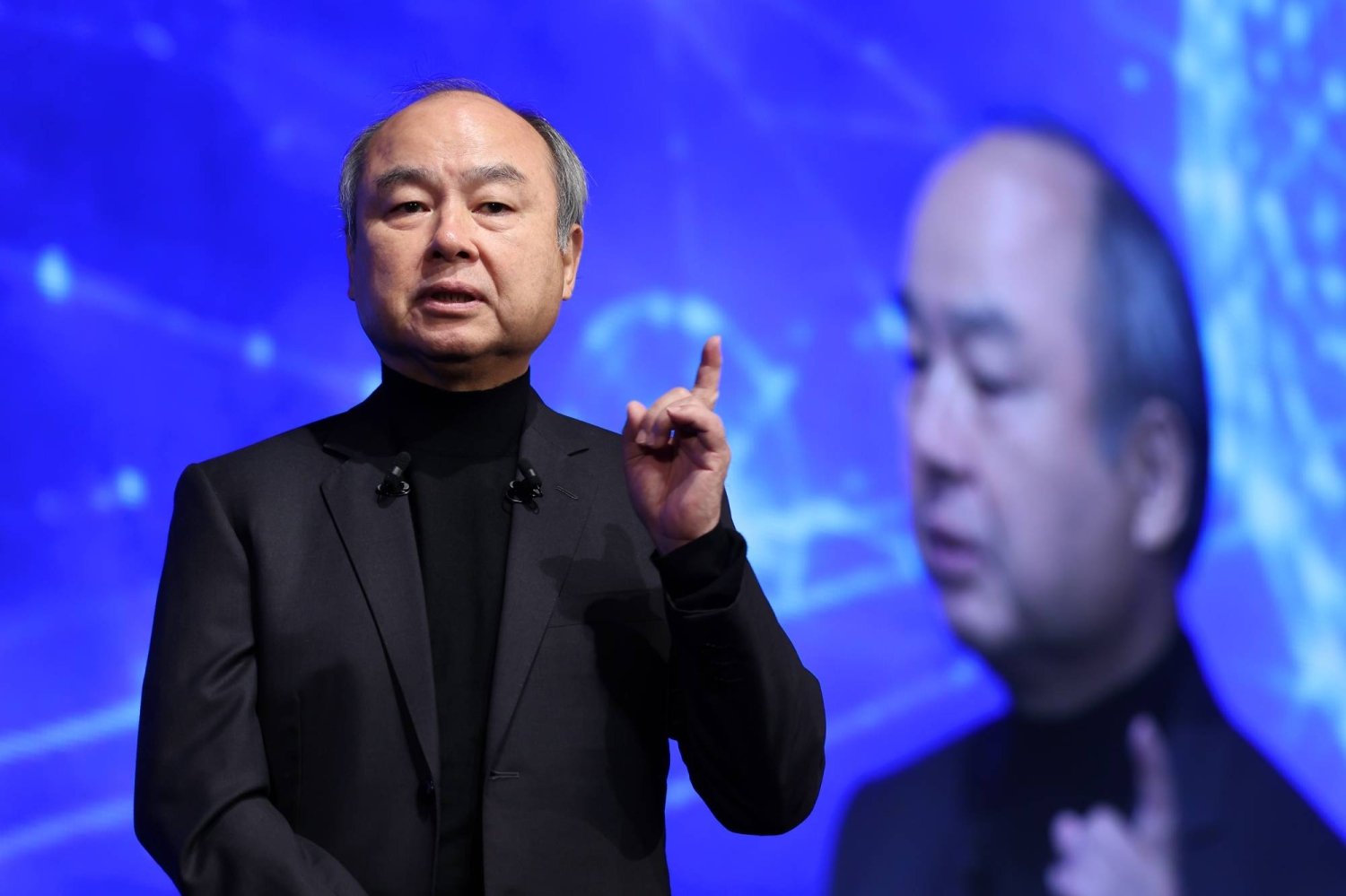
People familiar with Masayoshi Son’s thinking say the SoftBank founder envisions replacing part of that headcount with machines: cameras on masts, ground robots on patrol loops, software that watches a hundred feeds from a room in another state. That plan would move revenue from hourly labor, which scales with headcount, toward capital equipment and subscriptions, which scale with software.
It also fits the strategy Son has pursued for the past two years. SoftBank has concentrated capital in companies that build or consume computing capacity, and it has argued that the constraint on artificial intelligence is physical infrastructure rather than ideas. A security company with contracts at data centers would sit at the point where that infrastructure meets the ground.
Allied Universal was assembled by acquisition. AlliedBarton and Universal Services of America merged in 2016 under the ownership of Warburg Pincus and CVC Capital Partners, and the combined company kept buying regional guard firms, eventually employing a workforce counted in the hundreds of thousands across the United States, Canada, Britain and continental Europe.
The economics of that model are steady rather than spectacular. Contracts typically run for one to three years and renew at a high rate, revenue tracks the number of posts staffed, and margins are thin because customers treat guarding as a procurement line rather than a strategic purchase. Growth comes from winning accounts and from raising hourly bill rates when minimum wages rise, which is also the moment when customers test whether they still need a body at every door.
That history explains why buyers have paid modest multiples for guard companies and why an $18 billion valuation, if it holds, would represent a bet on something other than the existing business. SoftBank would be paying for the technology story and for the data-center contracts, not for the margin on a hospital lobby.
The obstacles are not small. Robots that patrol a perimeter on gravel at night, in rain and snow, remain expensive relative to an officer earning an hourly wage, and the guard unions and works councils that represent much of the industry in Europe have negotiated language on staffing levels. Liability is another constraint: a camera that misses an intruder produces a lawsuit, and an insurer will ask who was watching.
There is also the matter of what SoftBank would be buying with. The group’s balance sheet has been reshaped repeatedly by Son’s convictions, from the Sprint acquisition to the Vision Fund to the current push into computing. Each shift required selling assets, borrowing against holdings or bringing in co-investors, and a deal of this size would likely be structured with partners and debt rather than cash on hand.
For Allied Universal, a sale would hand its private-equity owners an exit at a moment when the company has been investing in technology it does not yet fully monetize. Warburg Pincus and CVC have held the asset for a decade, a long time by the standards of their funds, and the strategic value of data-center contracts is highest while the buildings are still being commissioned.
Customers will be watching for signals about service levels. A property manager who buys guarding cares about response time and insurance paperwork, and an owner promising automation has to show that a robot and a remote operator cover the same post without a gap. Contracts at data centers are written with penalties for exactly that kind of gap.
The deal may not happen. Talks described as early routinely collapse over price, and SoftBank has walked away from targets before. But the direction of the inquiry says something about where the money is going: the physical layer of artificial intelligence now includes the people, and the machines, that keep strangers away from the fence.
Analysts who cover the security industry said the test will be whether automation shows up in contract terms rather than in presentations. A customer who agrees to pay for monitoring and robotics as a line item, at a rate that does not fall when the guard count drops, is the evidence that the model works. Until then, the business remains what it has been for fifty years: a large number of people, standing in places where something valuable is kept.