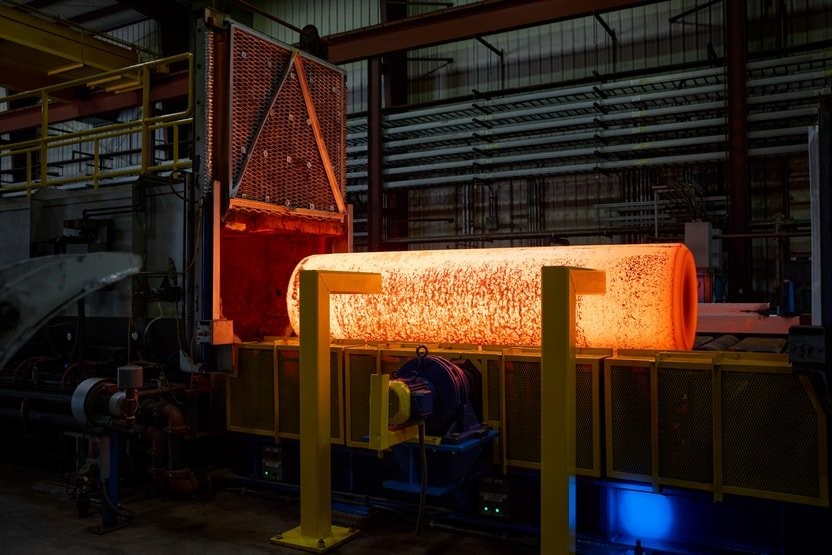
HOUSTON, Pa. — The titanium in Apple Inc.’s first folding phone begins as scrap, most of it recycled, in a mill about twenty miles south of Pittsburgh.
Perryman Company melts, forges and rolls grade 5 titanium at its plant here. On Tuesday, Apple said it will commit up to $100 million over the next three years to the family-owned supplier, which will make metal for the enclosure of the iPhone Duo and for other Apple products.
The agreement is the newest entry in the American Manufacturing Program, the supplier initiative Apple started in August 2025 as part of a $600 billion, four-year commitment to domestic manufacturing. Apple is also widening its work with Qnity Electronics, a Delaware company that joined the program in March and will produce advanced films for the variable aperture camera system on the iPhone 18 Pro.
The timing matters. The Duo reaches stores Friday, and its supply chain is already the tightest part of the launch. Online delivery estimates for some models stretched to roughly 14 weeks on the first day of preorders, according to Morgan Stanley, the longest wait the bank has recorded for a new iPhone in a decade. JPMorgan analysts expect Apple to ship 8 million to 9 million Duos this year, below an earlier estimate of about 10 million, citing supply.
Apple declined to say whether the Perryman agreement will add near-term capacity. A titanium mill is not an assembly line. Melting, forging and rolling a new alloy for a folding hinge and shell takes months of qualification before a handset maker will put the material into a product that bends. What Apple has signed is a purchase commitment, and its value depends on how much metal the company ultimately orders.
Executives described the deal in terms of capability rather than volume. “We’re thrilled to expand our work with companies producing advanced materials and components for our newest iPhone lineup right here in America,” said Sabih Khan, Apple’s chief operating officer. He said American suppliers were essential to both the titanium in the Duo and the camera work in the 18 Pro.
Perryman is a family-owned specialty metals producer whose customers have historically been in aerospace and medical implants, industries that pay for certified material and tolerate long lead times. Its Houston plant will supply titanium with at least 80% recycled content, a figure Apple has attached to its pledge to be carbon neutral across its supply chain by 2030.
The broader program now reaches further than one metal. Apple says nearly 100 components in the Duo and the 18 Pro come from American companies across more than a dozen states. Broadcom is modernizing a facility in Fort Collins, Colorado, under a $1.5 billion investment announced in July, part of a multiyear agreement the companies say will produce more than 15 billion U.S.-made chips. Corning, a supplier since the original iPhone in 2007, will make all of the cover glass for iPhone and Apple Watch sold worldwide at its Harrodsburg, Kentucky, plant by the end of this year.
Coherent supplies vertical-cavity surface-emitting lasers from Sherman, Texas, for Face ID. TSMC’s Arizona fab will produce more than 100 million chips for Apple in 2026. Amkor broke ground on a packaging and test plant in Peoria, Arizona, that the company expects to employ more than 3,500 people across its first two phases.
None of that changes where the phones are assembled. Most iPhone final assembly remains in Asia, and the components Apple is moving onshore are the ones where a domestic supplier exists or can be built: glass, lasers, radio chips, metal. The program was announced at the White House in 2025, after months of pressure from President Donald Trump’s administration on Apple to add American production, and it has been presented by the company as an answer to that pressure.
For the supply chain, the arithmetic is less dramatic than the politics. Titanium is a small share of a phone’s bill of materials. A $100 million commitment over three years is roughly what Apple spends on components in a few hours. The strategic value sits in qualification: once Perryman is approved as a source, Apple has a second option for a material that has been squeezed by aerospace demand, and a domestic route that does not depend on an ocean crossing.
Apple has been building the training layer underneath those suppliers as well. In August it opened a 20,000-square-foot Advanced Manufacturing Center in Houston, where its engineers teach small and medium-sized manufacturers the processes used to make Apple products, from assembly principles to design rules for circuit boards. The site shares a campus with the facility that builds Apple’s AI servers and will begin producing Mac mini computers this year.
Whether the Duo sells is a separate question, and one that hinges on demand rather than metal. Apple has called preorder interest extraordinary without saying whether it will raise production. The wait times suggest the constraint is real; the shipments estimates suggest it will cost the company volume in the holiday quarter.
The mill will not settle that. It settles something narrower and easier to measure: whether a material that used to arrive by ship can arrive by truck, and whether the supplier that makes it stays in business long enough to matter.