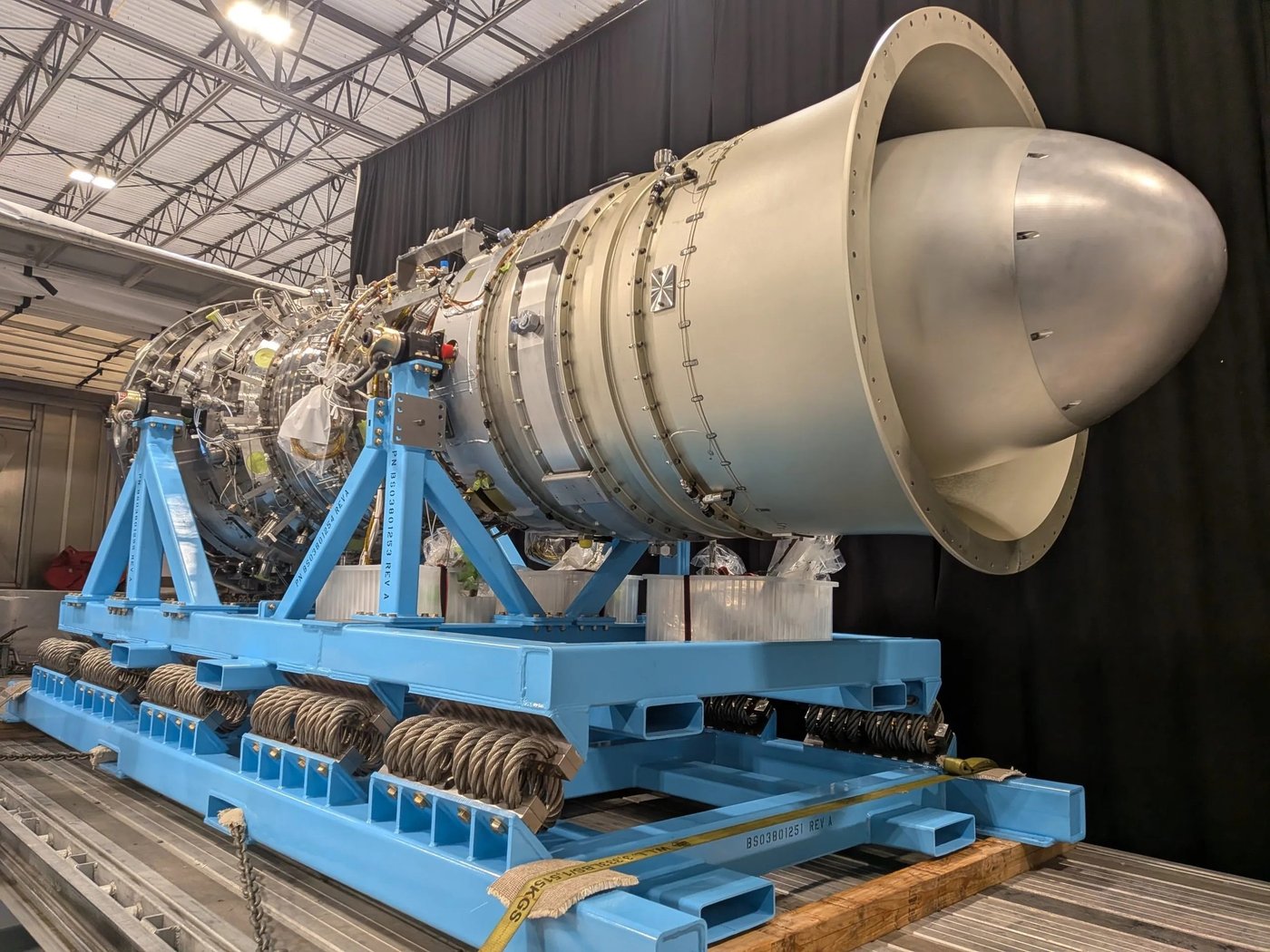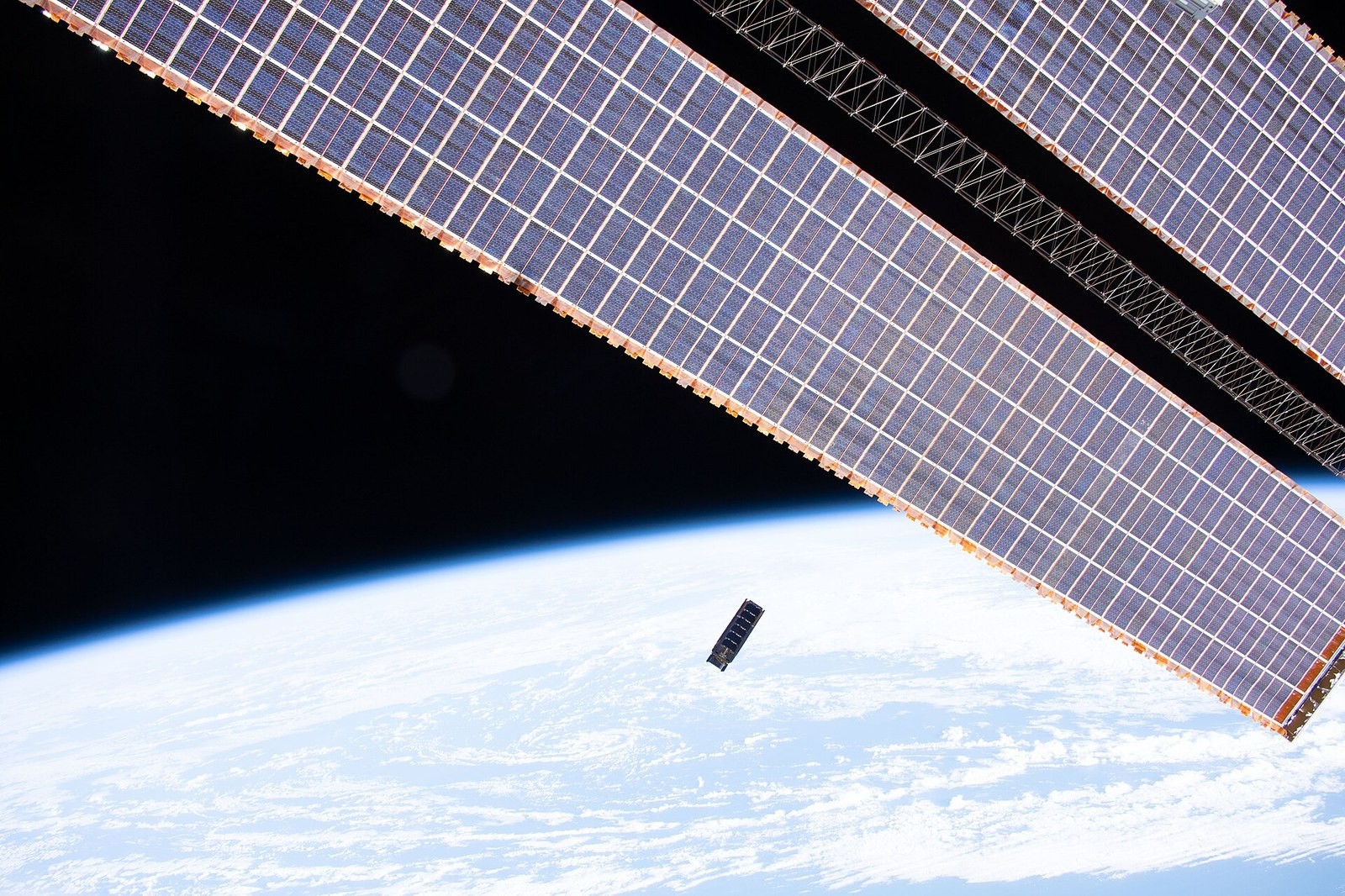
The satellite came over the horizon at Svalbard, Norway, on a ground-station pass this week. Engineers uplinked a single instruction to the Google Tensor Processing Unit aboard, asking the model stored on the spacecraft to write a haiku about being in space.
The reply came down minutes later, three lines long.
Google published the exchange on Friday and described it as the first AI response generated by a data-center-class chip in orbit. Sundar Pichai, the company’s chief executive, flagged it on social media as a “Hello World” moment, the phrase programmers use for the first output of a new system.
The poem itself was unremarkable. What mattered to Google was that a chip designed for air-conditioned halls in Iowa and Belgium had powered up in vacuum, taken a command from the ground and returned a coherent answer. The satellite launched on October 1 as part of SpaceX’s Transporter-18 rideshare mission, one of more than a hundred spacecraft on the manifest. Planet, the Earth-imaging company, built the platform.
The machine is small by the standards of the business it is meant to test. It generates up to one kilowatt of electricity, according to TechCrunch, and the power budget is tight enough that the chip can run for roughly twenty minutes at a stretch. A single rack of the hardware Google deploys on the ground draws tens of kilowatts.
That constraint shapes the experiment. Google’s team spent about three weeks on a commissioning checklist, powering up the host and the TPU trays and running early machine-learning tests before attempting a prompt. The company said it followed the haiku with space-themed limericks and telemetry questions asking the payload to report on its own condition.
The test campaign now moves to the two problems that decide whether the idea survives contact with physics. The first is heat. A processor in a vacuum has no air to carry waste heat away, so the only path out is radiation to deep space, which requires large, heavy surfaces and careful pointing. The second is radiation of a different kind. Energetic particles can flip bits in memory, corrupting a calculation without tripping the monitoring tools built into terrestrial systems.
Google has tested its chips in particle accelerators on Earth, and those runs suggested that inference would tolerate the environment better than training. The satellite exists to check that conclusion against the real thing.
Project Suncatcher is a research program, not a product line, and Google has framed it as a question about the 2030s rather than the next two years. The premise is straightforward. A satellite in low Earth orbit is in sunlight most of the time, and Google estimates that panels there can produce up to eight times the power available to a ground installation of the same size. Land, water rights, grid interconnection queues and local opposition, the four constraints that now set the pace of American data-center construction, do not apply a few hundred kilometers up.
The cost of escaping them is paid in two currencies. Dissipating heat in vacuum requires radiators that are large relative to the compute they protect, and moving results back to customers is bounded by radio bandwidth and the handful of minutes a satellite spends in view of a ground station. Google’s answer to the second problem is to fly clusters of satellites close together and link them with optical terminals, so that a job can be split across spacecraft the way it is split across racks today. The next step, planned for 2027, is a pair of interconnected satellites with more power and a demonstration of those laser links.
The economics remain unsettled. A peer-reviewed paper published by the Suncatcher team this month estimated that SpaceX would need to fly its Starship rocket about 1,800 times to reach the cost reductions the launch industry achieved with earlier vehicles, a cadence that no rocket has approached. Alphabet, Google’s parent, holds a stake in SpaceX, which ties the two companies’ fortunes together in a way that is unusual even for the launch business.
Competitors are pursuing narrower versions of the same idea. Starcloud and Cowboy Space intend to run inference on individual satellites, accepting that each spacecraft works alone. SpaceX’s orbital data centers are expected to use laser links as well, but its satellites are planned to orbit far enough apart that sharing a workload across them would be impractical. Google’s bet is that coherence, not raw capacity, is the hard part and the valuable one.
For now the program’s value is partly institutional. Google’s core advertising business is under pressure from the same AI features that are reshaping the open web, and a project aimed at the 2030s gives the company a claim on the next layer of infrastructure without committing capital at the scale its cloud division requires. The first prompt cost a satellite pass and produced a poem. The next four years will decide whether it produced an industry.