
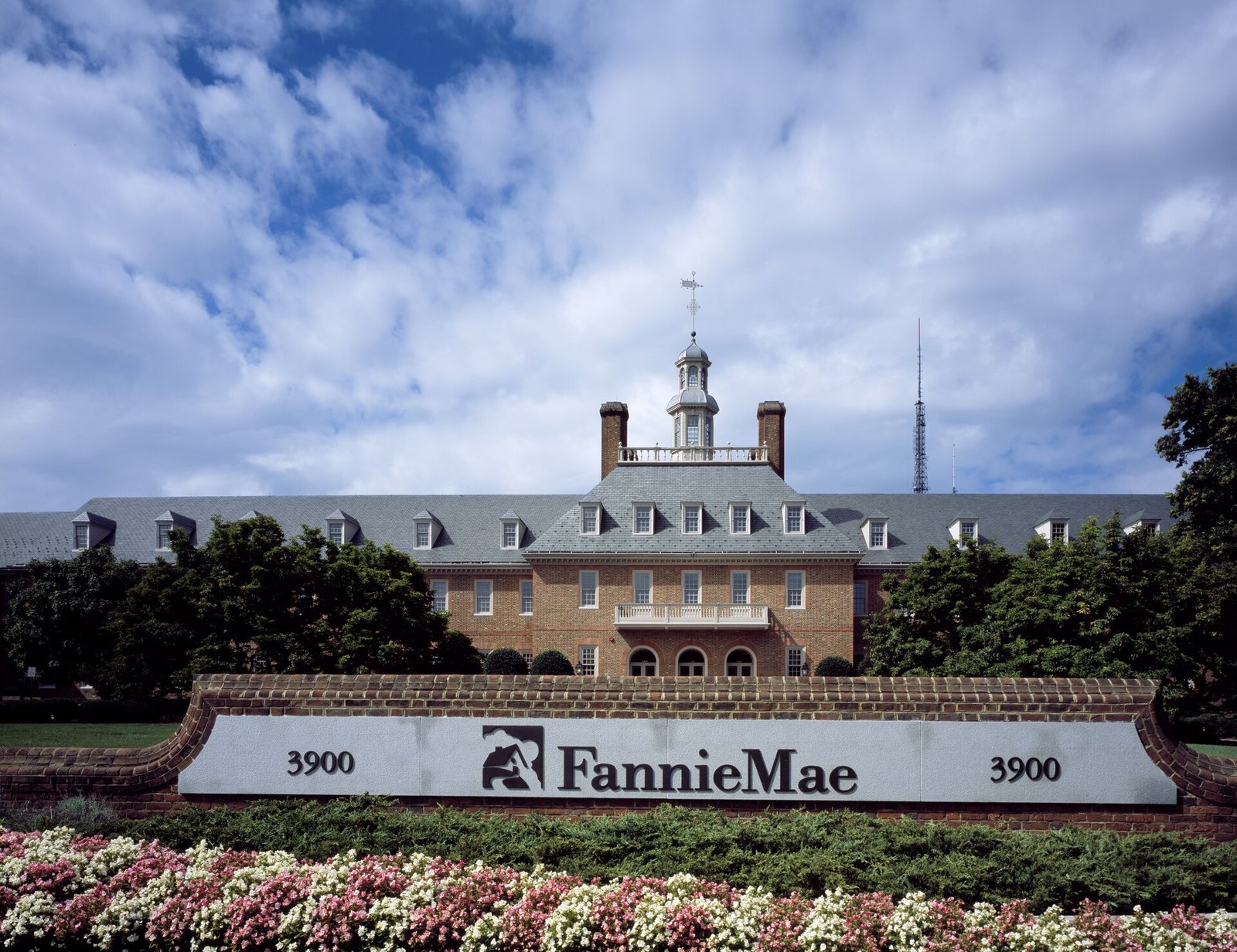
The move came in the last hours of the session on November 4, when the two mortgage giants that underpin the American housing market began to fall and kept falling. Freddie Mac traded down about 24% at one point to roughly $3.80 a share. Fannie Mae fell about 22% to around $4.30. Both swung more than 23% inside the day, and volume picked up sharply as they did.
There was no disclosure behind it. Neither company filed anything on November 4 that would explain a fifth of its market value disappearing in an afternoon, and neither reported a change in the business of guaranteeing mortgage-backed securities, which is what both have done for decades. What moved was the part of the share price that has nothing to do with that business.
Both companies have been under government conservatorship since 2008, when the housing crash left them unable to fund themselves and the Treasury took them over. Common shareholders have spent the years since owning a claim on a decision rather than a claim on earnings. Every dollar of the $3.80 or the $4.30 is a wager on what Washington will eventually do with two institutions that guarantee roughly half of the country’s residential mortgages, and on the terms it will attach when it does.
That structure explains the violence of the move. A stock priced on policy has no cash flow to anchor it and no valuation floor to catch it. When the expectation of a favorable decision weakens, the buyers who were positioned for that decision sell at the same time, and there is no fundamental buyer on the other side to absorb them, because the fundamental buyer would need to underwrite an outcome that has not been announced.
The reading among market participants was that expectations around policy had run ahead of what is likely to be delivered, and that speculative positions built on those expectations were being cleared out. That is an explanation offered after the fact, and it is worth treating as one. No official statement accompanied the drop, no timetable was published, and the companies themselves said nothing about the trading.
What the episode does show is how thin the float of conviction is in these two names. The shares are held by a mix of retail accounts, event-driven funds and specialized investors who own the story rather than the business. Those holders do not need much to change their minds. A headline that reads as a delay, an official who declines to repeat a commitment, a procedural step that pushes a decision past a fiscal deadline, any of these can reprice the whole equity in an hour, because the value of the asset is the present value of an event.
The underlying business, meanwhile, does not move at that speed. Fannie and Freddie buy mortgages from lenders, package them into securities, and charge a fee for guaranteeing that investors will be paid even if borrowers default. The fee is set administratively. The credit risk is real but has been profitable for years, and the two companies have paid the Treasury substantial dividends on the senior preferred stake it took in 2008. Those dividends are the reason the equity is a policy question: the terms of the government’s claim determine what is left for everyone else.
For years, the argument over the two companies has run along a familiar line. Supporters of releasing them from conservatorship say private capital should bear the credit risk and that the government should not be the backstop of last resort for a market this large. Critics say the housing finance system works precisely because the government stands behind it, that mortgage rates would rise if it did not, and that the shareholders who bought in after 2008 are speculators seeking a windfall from a rescue they did not fund.
Neither side was resolved on November 4. What changed was the price of assuming one side had won. A 23% intraday range is not a repricing of credit losses or of guaranty fees. It is the market marking down the probability it assigns to a policy outcome, and doing so without any new information about the companies’ operations.
The relevant comparison is not to other financial stocks but to other event-driven situations, where the same pattern recurs. The equity trades at a level that reflects a probability, and the probability moves on process rather than on performance. In those situations, the volatility is concentrated around dates on which something was supposed to happen, and the quiet periods are quiet because nothing is scheduled. The two mortgage companies have no scheduled date. That is what makes an afternoon like November 4 possible at all.
For the mortgage market, the practical consequences of the drop are close to nil. Guaranty fees are set by the companies under the oversight of their regulator, the securities they issue continue to trade, and lenders continue to sell loans to them. A shareholder who lost a quarter of a position in an afternoon has lost a bet on a decision, not a claim on the plumbing of American housing finance.
The question that remains is the one the trading did not answer. If the value of these shares depends on an administrative choice rather than on earnings, then what would have to be published for the price to be set by something other than rumor, and who has an interest in publishing it?



