
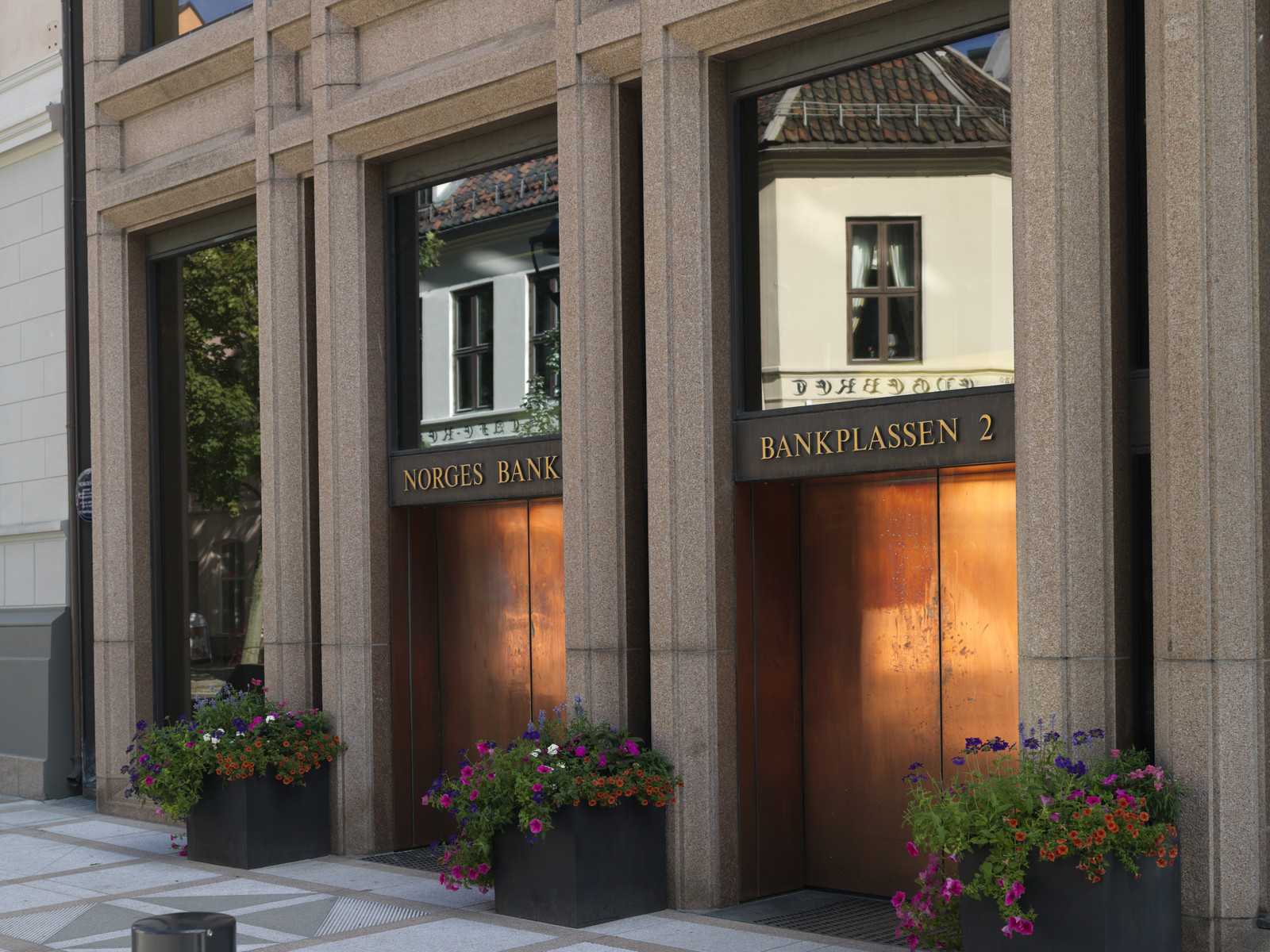
The audit opinion KPMG signed for Silicon Valley Bank carried no warning about the risk that destroyed the institution weeks later. Interest rates had risen, the bank’s securities portfolio was worth far less than its books said, and its deposits belonged largely to companies that could move them in an afternoon. None of that appeared as a qualification. On Nov. 7, a group of investors led by Norges Bank Investment Management, which runs Norway’s sovereign wealth fund, agreed to settle its claims against KPMG for $224.5 million. Sweden’s AP7 and other institutional holders joined the action. KPMG admitted no wrongdoing, and the settlement lets the firm exit litigation that had run for more than three years without a trial that would have put its audit work under oath.
SVB failed in March 2023 after depositors pulled about $42 billion in 48 hours, the fastest run on a large American bank on record. The mechanism was not a slow erosion of confidence. A capital raise was announced, the announcement confirmed what depositors already suspected, and the transfer instructions went out by mobile phone. Regulators closed the bank within two days.
The case against the auditor was never that KPMG caused the failure. It was that a competent audit should have forced disclosure of the interest-rate exposure in the held-to-maturity book and of the concentration of uninsured deposits, and that investors who bought or held the stock in the months before the collapse would have acted differently with that information. Proving that in court requires a plaintiff to establish what a reasonable auditor would have done and then to establish that the market would have reacted to a different opinion. Both steps are expensive to litigate and uncertain to win, which is why cases of this shape usually end in a payment. The discovery process explains the timing. An audit file is a record of conversations: what the engagement partner was told, what the bank’s risk committee said in February, which issues were raised and how they were closed. A trial would have put those documents in front of a jury alongside KPMG’s internal debate about whether to keep the client. For a firm whose product is the credibility of its signature, the arithmetic of settling at a number well below the cost of a bad verdict is simple.
The profession has been here before, and the pattern is consistent. Auditors are sued after collapses rather than before them, the claims take years, and the settlements are paid by insurers and absorbed into the cost of doing business. What has changed since 2023 is the size of the losses flowing through the system and the willingness of large public pension funds to sue in their own name rather than join a class action. A sovereign fund with a long horizon and a legal budget is a more persistent plaintiff than a retail investor with a small holding and no appetite for five years of depositions.
NBIM did not disclose its loss on SVB as part of the settlement. Relative to the deposits that left the bank, $224.5 million is a modest number, and relative to the wider banking losses of 2023 it is small. Its significance is procedural. The payment establishes a price for audit failure at a systemically important bank, and it gives the next group of plaintiffs a benchmark to negotiate against.
The regulatory side of the same question remains open. Auditors are overseen in the United States by the Public Company Accounting Oversight Board, which inspects engagement files and can sanction firms, and the standards for evaluating going-concern risk have been tightened since 2023. Neither process produces compensation for investors, and neither moves at the speed of a lawsuit. Supervision examines whether the work was performed to standard. Litigation asks whether it was performed well enough to protect the people who relied on it, and those are different questions with different answers. A structural tension runs underneath and no settlement resolves it. An auditor is paid by the company it audits, retained year after year, and expected to challenge management on the subjects management least wants raised. The arrangement has survived a century of failures because the alternative, a regulator appointed as auditor, carries its own problems of capacity and capture. The 2023 failures put the arrangement under stress without breaking it, and the payments that followed are how the system prices the gap without closing it.
For KPMG the practical effect is closure. The firm can point to a resolved matter rather than an open claim, and its insurer absorbs most of the cost. For the investors who signed, the settlement ends a process that would otherwise have consumed another two years of legal fees and management attention. For everyone else the lesson is about timing: the audit opinion is the last document produced before a failure and the first one examined afterward, and the distance between those two readings is where the liability lives.
There is a version of this case that would have been more useful and much more expensive. A trial would have produced a public record of how a Big Four firm assessed a bank whose balance sheet was one interest-rate shock away from insolvency, and that record would have changed how the next audit is staffed and reviewed. The settlement buys quiet instead. Quiet is cheaper for everyone involved and slightly worse for the system, which will have to learn the same lesson from the next failure.



