
Shortly before Anthropic filed its amended registration statement, its law firm sent a draft to the underwriting banks. The document described 867 million shares at $70 to $80 apiece, a raise of $69.3 billion. An email that followed said the pricing information was in error.
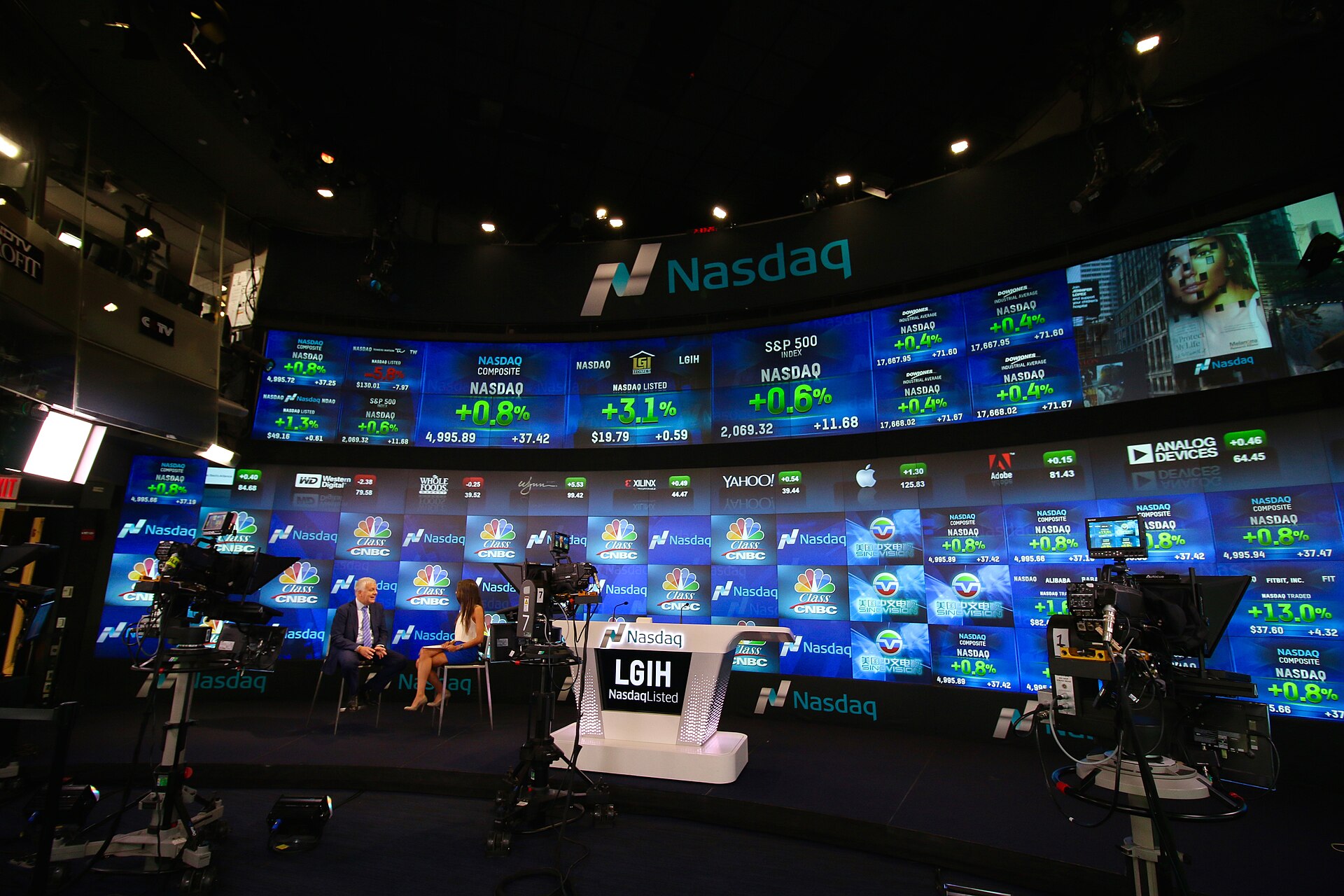
The corrected filing, submitted on Nov. 10, sells 825 million Class A shares at $70 to $78. The company is offering about 801 million of them. Existing holders are selling 23.65 million, under 3% of the total, and at the top of the range the deal raises $64.4 billion. The shares will list on the Nasdaq Global Select Market under the symbol ANT, and people familiar with the matter said trading is scheduled to start on Nov. 19.
Twenty-two banks sit on the cover. That is a wide syndicate for any offering and a normal one for a transaction this size, and it says something about where the risk lives. A book this large has to be filled by a small group of institutions that can write checks big enough to move it.
What the correction did not settle is the figure the company will be judged on. Four estimates of Anthropic’s value are now circulating. Reuters puts it near $1 trillion. The Wall Street Journal has $1.3 trillion. The New York Times and Bloomberg, working from the revised share count, reach $1.4 trillion. Some prospective investors have told bankers they would pay for $1.2 trillion to $1.3 trillion, as much as 40% below the $2 trillion number under discussion earlier.
The gap is a disagreement about arithmetic rather than about the business. Different outlets apply different share counts, and the count moves depending on whether unvested grants, options and convertible instruments are included. Some of the published figures use the top of the range, others a midpoint. Two bankers working from the same filing can land half a trillion dollars apart without either of them being wrong.
That ambiguity helps the issuer and frustrates the buyer. A company that lists with one widely accepted number has a benchmark on its first day. A company that lists with four has to spend the first month explaining which one is correct.
Nine days separate the filing from the first trade, a short window in which to build a book for a deal this size. The roadshow will run compressed. The meetings that matter will be with the funds whose orders are large enough to be counted twice.
The structure of the offering carries one signal worth reading. Existing holders are selling less than 3% of the shares on offer. Founders and early employees in a listing of this size usually take more off the table. A small secondary tells buyers that the people who know the company best are not treating this price as a peak.
The company’s own selling is the bulk of the deal, so most of the proceeds go to Anthropic rather than to its investors. Compute contracts, data center leases and research headcount are the uses management has described. Each is a multi-year commitment taken on before the revenue that justifies it has been booked.
A second document will matter to a different set of buyers. The American Federation of Teachers and a New York teachers union said Anthropic has signed a legally binding agreement covering AI safety and privacy standards in schools. Microsoft signed a similar agreement in September.
School districts buy software under procurement rules written by state legislatures, and those rules carry terms on student data that vendors have to accept. An agreement signed ahead of the contracts is worth more to a sales team than a benchmark score. It also creates an obligation a plaintiff’s lawyer can enforce, which is a cost the marketing department leaves out of the deck.
Public ownership brings its own arithmetic. A listed company reports every quarter, discloses customer concentration and defends its accounting in public. For a business whose largest costs are commitments to buy compute years ahead, and whose revenue arrives on contracts customers can cancel, that disclosure is not neutral. It changes what a salesperson can promise and what a finance team can recognize.
Employees feel it first. Restricted stock becomes tradeable stock, which is easier to value and easier to leave. A fixed listing date helps hold senior researchers who have offers from competitors with liquid shares, and it starts a lockup clock that will be watched for signs of insider selling.
Analysts said the first test is whether the book is covered at the low end or at the top. A deal covered several times over at $70 usually prices near $78. A deal covered once, by accounts planning to sell into the first rally, does not, and the difference shows up in the weeks after listing rather than on the cover of a prospectus.
The question left open is not what Anthropic is worth. It is whether a range of $1.2 trillion to $1.4 trillion is a valuation of the company or a valuation of the category it sells into. The answer will not be visible until the first quarterly report.



