
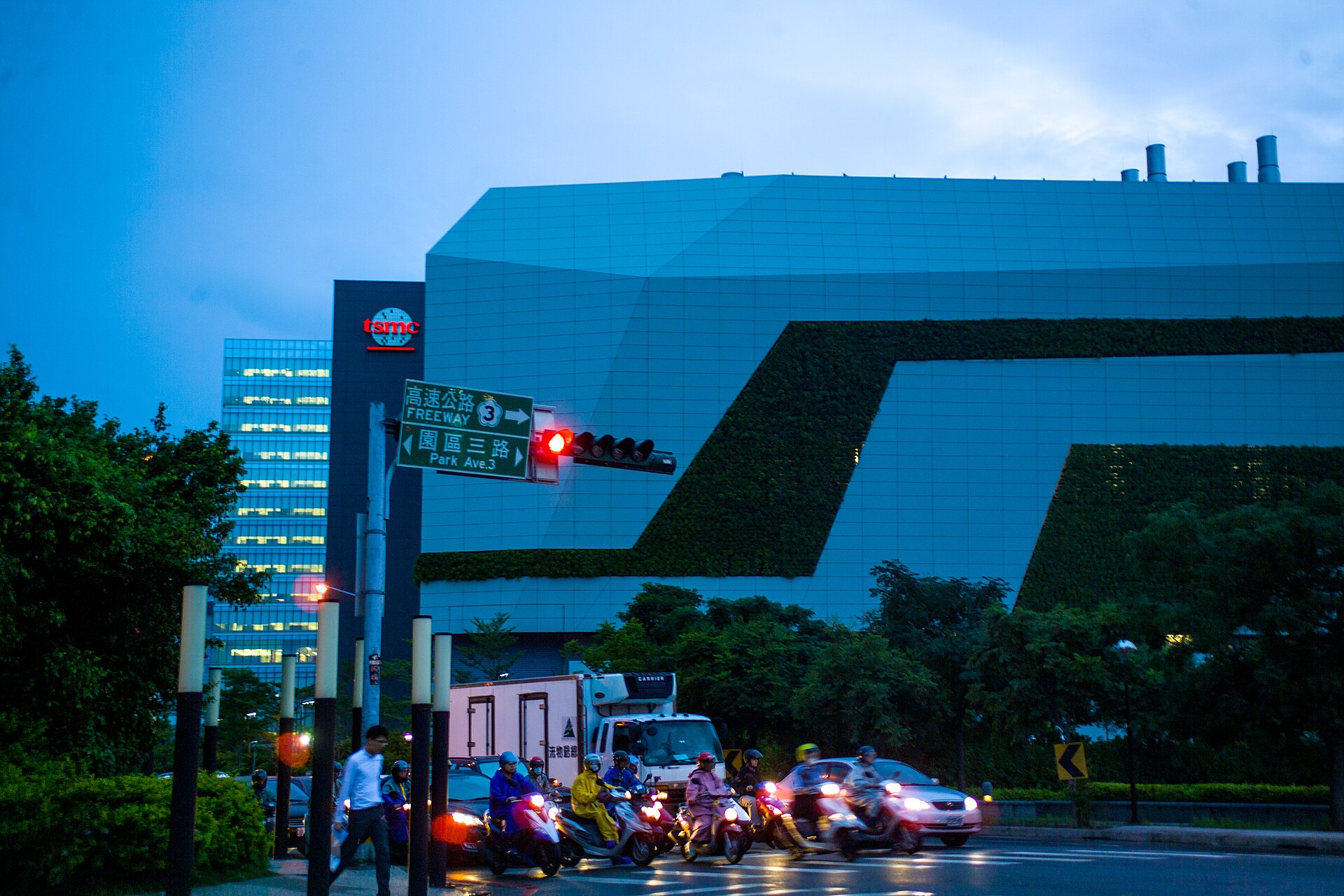
TAIPEI — The monthly revenue release is the least glamorous document Taiwan Semiconductor Manufacturing Co. produces, a single table filed after the close of trading, and on Tuesday it carried the clearest reading yet of how much computing the artificial intelligence boom is consuming.
October consolidated revenue came in at NT$586.89 billion, about $17.88 billion, up 59.7% from a year earlier and 14.7% from September. That topped August’s NT$514.81 billion and set a record for any single month in the company’s history. For the first ten months of the year, revenue reached roughly NT$4.49 trillion, a rise of 43.3%.
The company had already told investors what to expect for the fourth quarter: revenue of $52.3 billion to $54.3 billion and a gross margin between 65% and 67%. It has also said capital spending across 2026, 2027 and 2028 will run significantly above the level of the previous three years, which is the sentence analysts focus on because it sets the shape of the supply curve two years out.
The October number matters less for what it says about the last month than for what it confirms about the structure of demand. TSMC is the only company that manufactures leading-edge logic at volume for everyone who matters: Nvidia’s accelerators, AMD’s processors, Apple’s phone chips and the custom silicon that Amazon, Google and Microsoft design in-house. When its monthly revenue jumps by nearly 60%, the cause is rarely consumer electronics.
Data-centre buildouts are the obvious driver. Training and inference for large models require packages of logic and high-bandwidth memory assembled through advanced packaging, and that packaging capacity has been the tightest link in the chain for two years. TSMC has been adding it as fast as it can install equipment, and each new line shows up in revenue before it shows up in the earnings that analysts model.
There is corroboration outside the company. Taiwan’s exports rose 58.9% in October to $96.76 billion, with electronic components up 61.4%, according to the trade ministry’s figures. An island of 23 million people does not ship $96.76 billion of goods in a month because of laptops. It does so because the components inside every AI server in the world mostly leave through its ports.
The concentration has a cost, and the company knows it. Almost all of the most advanced output sits within a few hours’ drive of the same fault line, and a typhoon, an earthquake or a drought that interrupts water supply can move global prices for memory and logic within days. The fabs in Arizona, Japan and Germany amount to an insurance policy as much as an expansion, and they will produce wafers at a higher cost per unit than the Taiwanese campuses for years.
The read carries across to the equipment side as well. Suppliers of lithography, deposition and inspection tools take orders nine to eighteen months before a tool produces a sellable wafer, so the spending the company has flagged for 2026 and beyond is already visible in their backlogs, in hiring plans in Hsinchu and in the land it has acquired for new campuses.
That is why the margin guidance warrants as much attention as the revenue. A 65% to 67% gross margin is extraordinary for a manufacturer, and it reflects pricing power at the leading edge that no competitor can contest at scale. Samsung has struggled with yields on its most advanced node, and Intel is still building a foundry business it hopes will compete for the same customers.
Overseas capacity cuts against that margin. A fab in Arizona runs at higher cost, and customers who want a second source will pay only so much of a premium for it. The company has said it intends to charge more for wafers made outside Taiwan, which suggests the burden will be shared rather than absorbed.
For the supply chain, the message from Tuesday’s filing is that the shortage is not easing. Memory makers have sold out capacity, equipment vendors report backlogs that stretch past next year, and the server assemblers that sit between TSMC and the hyperscalers are quoting lead times in quarters rather than weeks. Every one of those constraints eventually lands on the price of a model query.
Wall Street has already priced much of this in. TSMC’s shares have re-rated over the past two years as investors concluded that the AI build-out needs a monopoly supplier and that the monopoly supplier is Taiwanese. What the October figure does is remove one of the arguments against the trade, which is that the demand was a burst of orders pulled forward and would fade.
The question left open is the one the company cannot answer from a revenue table. Capital spending plans through 2028 assume customers keep committing to capacity two years before they need it. If the model builders decide that inference can be run more cheaply on older nodes, or that their own chips are better designed for the workload than anything a general-purpose foundry can offer, the second half of that plan becomes an expensive bet.
For now the order book says otherwise. A record month in October, eight weeks before the year ends, with guidance already pointing at another record quarter, is not what a cyclical peak looks like from the inside. It is what the top of a cycle looks like only in hindsight.



