
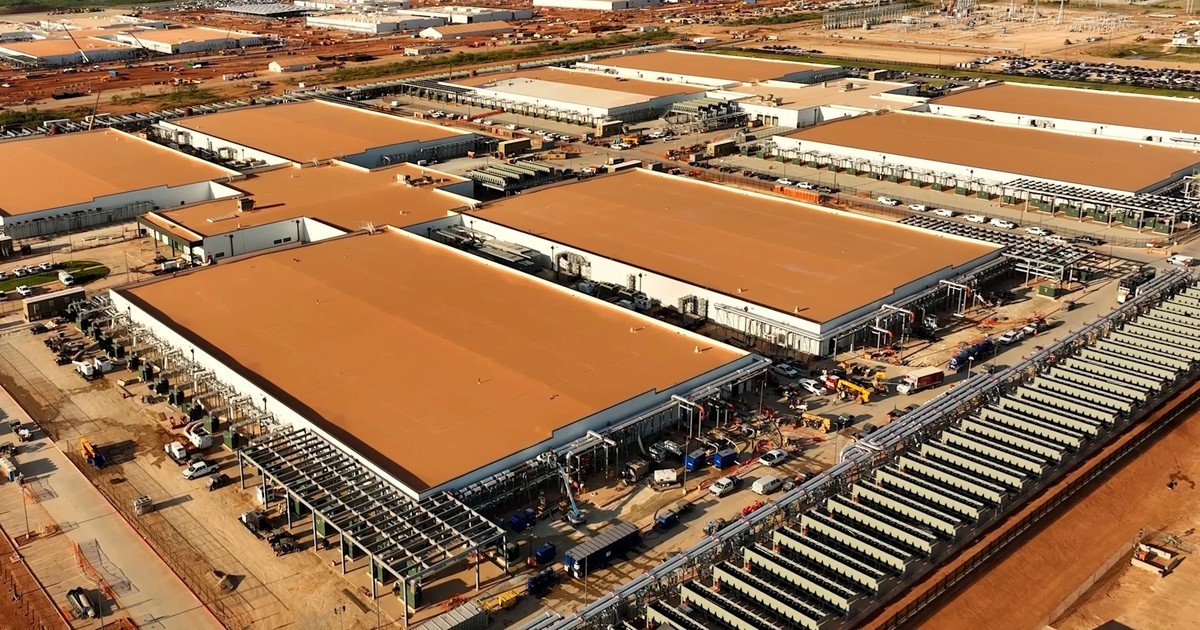
Oracle has the money it needs for a $30 billion contract with OpenAI, the company said on Nov. 20, closing out a year in which investors kept asking whether a backlog that large could be paid for at all. It was the plainest answer the company has given to that question.
The final round of financing was $20 billion, roughly $10 billion of equity and $10 billion of debt. Oracle announced the structure in early November and finished raising this month. Management said the completion makes it the first hyperscale cloud provider in this investment cycle to be fully funded against its contracted work, a distinction that only means anything if rivals are not.
That claim is doing more work than it first appears. Across the industry, capacity is being built against commitments that stretch years into the future, and the gap between signed contracts and delivered revenue sits on the balance sheet as construction in progress. Oracle is arguing that its gap is now closed.
Analysts said the disclosure was less about liquidity than about credibility. A cloud provider that cannot show how a multi-year contract is funded gets valued on the promise of the contract, and the promise of a contract is worth less than the cash it eventually produces.
The schedule came with the money. A campus in Abilene, Texas, where the companies are training a model called GPT-6 Astra, is close to completion. A second site, gigawatt-class and named Shackelford, has received all of its permits. Nvidia Vera Rubin racks are due to arrive within weeks.
Deliveries are the part that can slip. Rack-scale systems depend on power, cooling and networking arriving in sequence, and any one of those running late turns a construction schedule slip into a revenue delay. Oracle did not give a date for the first production training run.
Beyond those two sites, the companies plan 4.5 gigawatts of additional data-center capacity in the United States. For scale, a single gigawatt of AI capacity costs billions of dollars to build and needs firm power contracts signed before ground is broken.
Funding a contract is not the same as earning on it. Oracle said it expects free cash flow to turn positive in the second half of fiscal 2028, and to exceed $30 billion in fiscal 2029. Those targets now sit in public view, and the company will be measured against them every quarter.
The cash-flow ramp implies a specific sequence of events. Capital spending has to peak, depreciation has to run through the income statement, and lease payments from customers have to begin before the crossover. If any of the three moves later than planned, the fiscal 2029 figure moves with it.
Debt is the constraint most analysts watch. Raising equity alongside bonds keeps the debt load from climbing as fast, but it also dilutes holders who bought the growth story. The 50-50 split suggests management wanted both a lower debt load and a credible signal that outside investors would take the equity risk.
Oracle is not alone in this. The largest cloud providers have all raised capital spending guidance repeatedly, and the market has so far rewarded them for it. The distinction Oracle is drawing is narrower: not the size of the build, but how much of it is already paid for.
Demand is the assumption underneath the whole structure. A contract with OpenAI is only as good as OpenAI’s ability to keep paying, and the model maker’s own revenue depends on subscriptions and enterprise deals that are still scaling. Oracle is effectively lending its balance sheet to that growth, which is a different business from selling software licenses. Payments arrive over the life of the agreement rather than up front, so revenue booked early in the contract is matched against depreciation on equipment bought years before any cash returns.
Power may bind before capital does. Grid interconnection queues in the United States run for years in some regions, and a gigawatt-class campus needs firm capacity rather than intermittent supply. Permits are a necessary condition, not a sufficient one, and a transformer shortage has delayed projects that had both.
Shares rose as much as 3.3% in after-hours trading. The move is small relative to the size of the disclosure, which tells you the market had already assumed the funding would be found somewhere. What it had not assumed was a public timetable against which the company can now be judged.
Two numbers now define the story. The first is capital spending per gigawatt delivered, which determines whether the 2029 cash-flow target is reachable. The second is the pace at which contracted capacity converts into billed revenue, which determines how long the market tolerates the wait. If delivery slips past the first half of fiscal 2028, the funding announcement will read as a promise rather than a result.



