
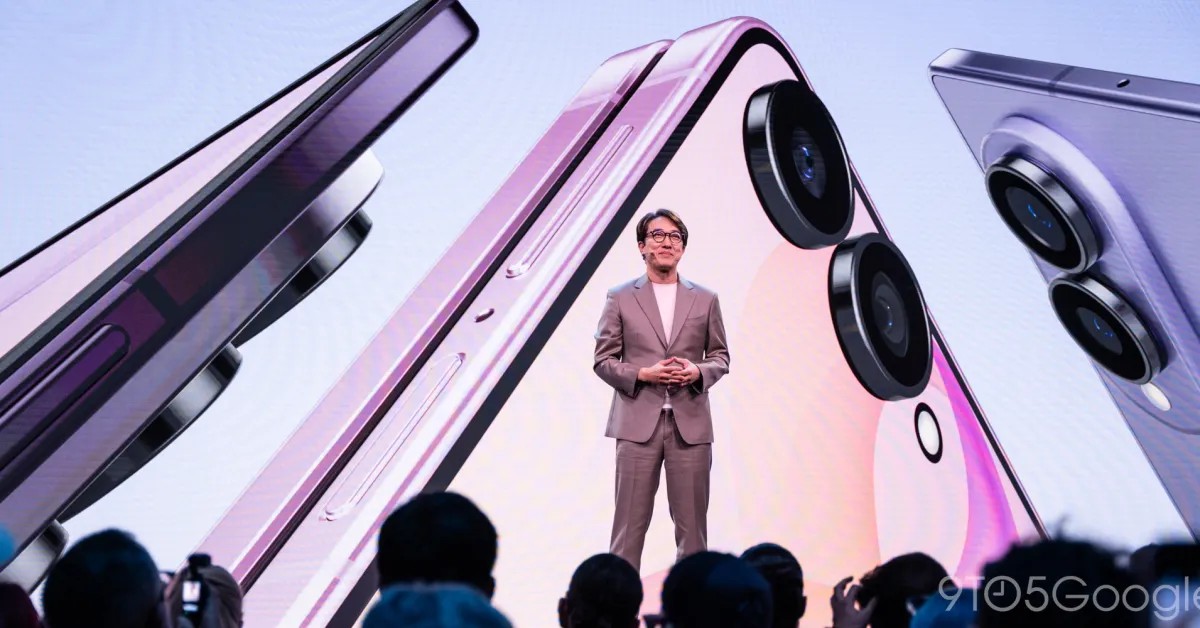
Samsung Electronics Co. named Won-Joon Choi to run its mobile division on Nov. 22, handing him a business that ships more than 200 million phones a year and carries the company’s name into more countries than any other product it makes. It is also the unit most exposed to the price of parts it does not make alone.
The appointment came with Samsung’s annual executive slate for 2027, published on a Sunday. The company has run its reshuffle on that calendar for years, after the memory business sets annual supply negotiations and before the Galaxy S launch cycle opens in the first quarter.
Choi is an engineer who spent most of his career inside the mobile division’s research arm, running teams on camera, display and on-device AI work. He has presented Galaxy AI at company events since 2024, making him the public face of the software push without giving him the profit line. Now he answers for it.
Two pressures define the job. The first is the premium end of the market, where Apple takes most of the industry’s handset profit and Chinese vendors keep closing with better cameras and faster charging at lower prices. Samsung sells more handsets than any other company and earns less on each than Apple does on a single flagship. The second pressure is memory.
Samsung is the largest maker of memory chips in the world, and its handset unit buys DRAM and NAND from the same company that reports the group’s results. That arrangement carries a standing tension: what lifts the chip division’s pricing is a cost increase for the phone division, and both answer to one board.
Memory prices rose through 2026 as data center demand absorbed supply. A premium phone carries several gigabytes of DRAM and hundreds of gigabytes of storage, so a shift in contract prices moves the bill for a product line that sells on thin hardware margins.
TM Roh ran the division from January 2020. His tenure covered the expansion of foldables from one model to a family, the pandemic surge in device demand and the launch of Galaxy AI. It also covered a stretch in which Samsung lost ground at the high end in the United States while its volume position in India and Southeast Asia came under pressure from cheaper Chinese models. Through much of that period the division’s margin leaned on mid-range A-series volume and on carrier promotions rather than on flagship pricing.
Analysts said the choice of a research executive over a sales executive points to product differentiation as the bet for the next cycle, rather than channel expansion. That argument is harder to sell to investors when component costs are moving the wrong way.
Shipment discipline is the first test. Samsung builds more phones than it sells at full price, and the excess leaves through channel promotions that thin margins. A new head can cut planned volume, protecting profit and ceding share, or hold volume, protecting share and inviting discounting. Handset profitability turns on mix, and mix is fixed months before a phone reaches a shelf.
Supplier terms are the second. The mobile unit negotiates every year with display, camera module and memory suppliers, and some of them are Samsung affiliates. The bargaining is internal as much as external, and the result lands in gross margin rather than in headlines.
The 2027 slate went wider than the phone business. Samsung rotates executives across chips, displays and consumer electronics at the same time each year, and it does not publish the reasoning behind individual moves. The notice named incoming heads and left the rest to a regulatory filing. A spokesman declined to comment beyond the announcement.
There is a version of this in which little changes. Choi inherits scale, a global retail footprint and a foldable franchise no rival has matched on volume, plus engineers who have reported to him.
There is another in which the job is a cost exercise. If memory stays expensive, operating margin depends on how much of the phone’s bill of materials can be locked in on long contracts and how much of the increase can go into a retail price that buyers replace every three to four years.
Roh remains at Samsung. The company did not say in what role, which is standard for personnel notices that disclose appointments first and placements later.
The first hard data arrives in January, with preliminary fourth-quarter results and the usual preview of the next flagship. By then Choi will have set production plans, signed or reopened supply agreements and decided whether the S series launches above the price of the model it replaces.
If it does, the memory bill will be the reason given. If it does not, the margin line will show where the cost went. Either way, the division’s next twelve months will be judged on price and volume, not on the software he spent a career building.



