
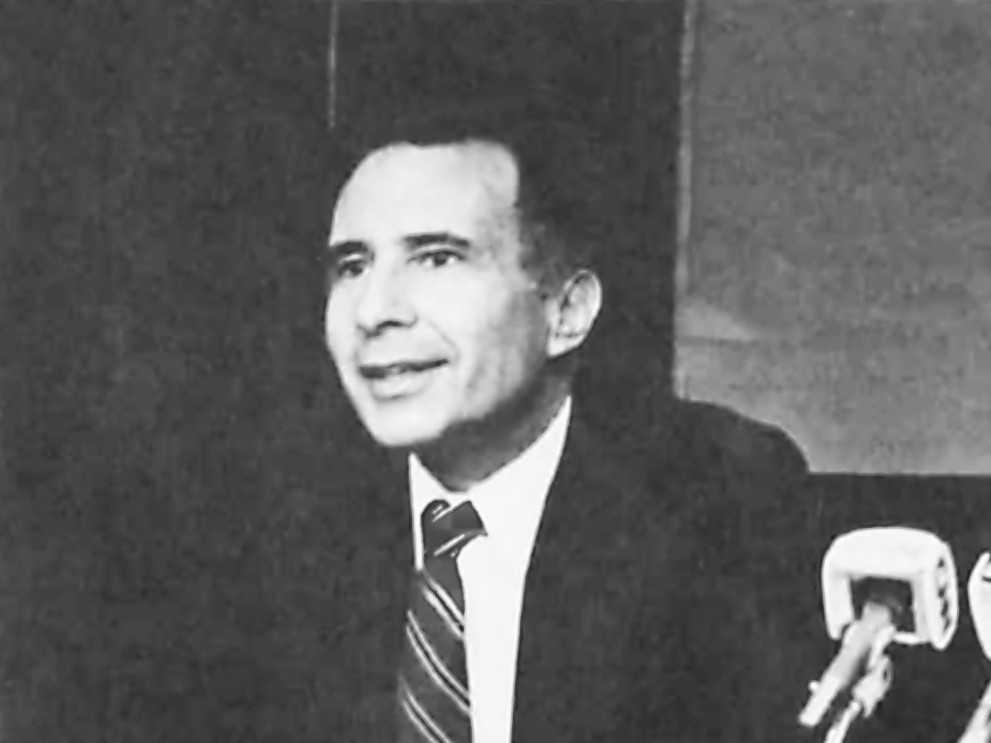
Carl Icahn’s personal net worth slid to about $1.3 billion on Monday, after touching $1.2 billion at the end of last week, the lowest reading since Bloomberg’s wealth index began tracking him in 2012 and down from roughly $26.1 billion five years ago.
The collapse is not a story about a bad year in the market. It is about the structure of Icahn Enterprises LP, the listed holding company that holds most of his money and nearly all of his debt.
IEP units closed at $2.73 on Nov. 24, down 8.4% on the day, 41% since the end of October and 64% this year. Icahn and his affiliates own about 87% of the units, so his fortune moves almost one-for-one with a security that has lost two-thirds of its value in eleven months.
The expectation gap is the distribution. IEP still pays $0.50 per unit a quarter, which at Tuesday’s price implies a yield near 73%. Investors who bought the partnership as an income vehicle a few years ago were underwriting a $2.00 quarterly payout and a portfolio of industrial assets trading near or above net asset value. They now own a security whose payout is mostly made in new units, not cash: IEP distributed $56 million in the third quarter, only $25 million of it in cash to Icahn himself.
The debt is the second gap. IEP has $1.4 billion of 5.25% notes maturing May 15, 2027. In its third-quarter report the company said there “can be no assurance” it will refinance them “on acceptable terms or at all,” a phrase that turns a liquidity question into a solvency question for anyone holding the equity.
The bonds already answer it. The May 2027 notes yield more than 14%, a level that prices in real doubt rather than inconvenience. IEP ended September with $921 million of cash and $1.4 billion in its investment funds, which management says covers obligations for at least twelve months.
The bull case rests on assets and optionality. IEP owns 71% of CVR Energy, the refining business that is its largest operating unit, alongside auto parts, packaging, real estate and food businesses. On Nov. 2, CVR agreed to buy two refineries from Marathon Petroleum for about $4.2 billion, funded partly with $2.5 billion of new secured debt and a $500 million equity commitment from IEP. If refining margins cooperate, the deal adds EBITDA at a moment when IEP needs it, and asset sales or a fund recovery could let the company pay the May notes from cash rather than the market.
The bear case rests on arithmetic and incentives. CVR shares have fallen 46% since the end of October, which is the opposite of the reaction a transformative acquisition usually gets; investors read the deal as more debt stacked on an already debt-heavy balance sheet, during a soft margin environment. IEP’s investment funds lost 31% in the third quarter, mainly on refining hedges meant to offset the CVR stake, so the internal hedge is amplifying losses instead of damping them. The $500 million commitment to CVR is cash the parent may need in May.
Then there is the pledge. Icahn had 658.9 million units pledged at the end of September, nearly his entire stake, against about $1.3 billion of personal loans. He restructured those loans in August 2025, extending them to July 2028 and paying down roughly $300 million. Falling unit prices do not automatically trigger a sale, but they shrink the collateral behind the loans and limit his ability to support the company with new money.
The history matters for how investors should weigh management’s assurances. Hindenburg Research published a report in May 2023 calling IEP’s distribution “ponzi-like” because it was funded partly from new investors’ capital. Icahn and the company settled SEC charges in August 2024 for $2 million over undisclosed pledges of units, without admitting or denying the findings. IEP has cut the quarterly distribution twice since, from $2.00 to $1.00 in August 2023 and from $1.00 to $0.50 in November 2024.
That sequence is the single most useful guide to what happens next. Each time the unit price fell far enough, the payout came down within quarters, and each cut was presented as prudence rather than distress.
The next decision point is close. The distribution payable Dec. 23 requires holders to elect cash or units by Dec. 11, and the cash-versus-units split in that election will show how much liquidity the company is willing to part with. A payout that is again mostly units would tell you management is conserving cash for the refinancing.
A verifiable hypothesis: if IEP has not refinanced or extended the May 2027 notes by the time it reports fourth-quarter results, and if the units are still trading below $3, expect another distribution cut and a further draw on the investment funds. Conversely, a refinancing at a yield inside 10% before year-end would mark the floor, because it would mean lenders have priced the CVR acquisition as an asset rather than a liability.
For anyone tempted by a 73% yield, the relevant comparison is not IEP’s payout history but its maturity wall. A security yielding 73% on a price that has fallen 64% is not offering income. It is offering the market’s estimate of the probability that the distribution survives the spring.



