
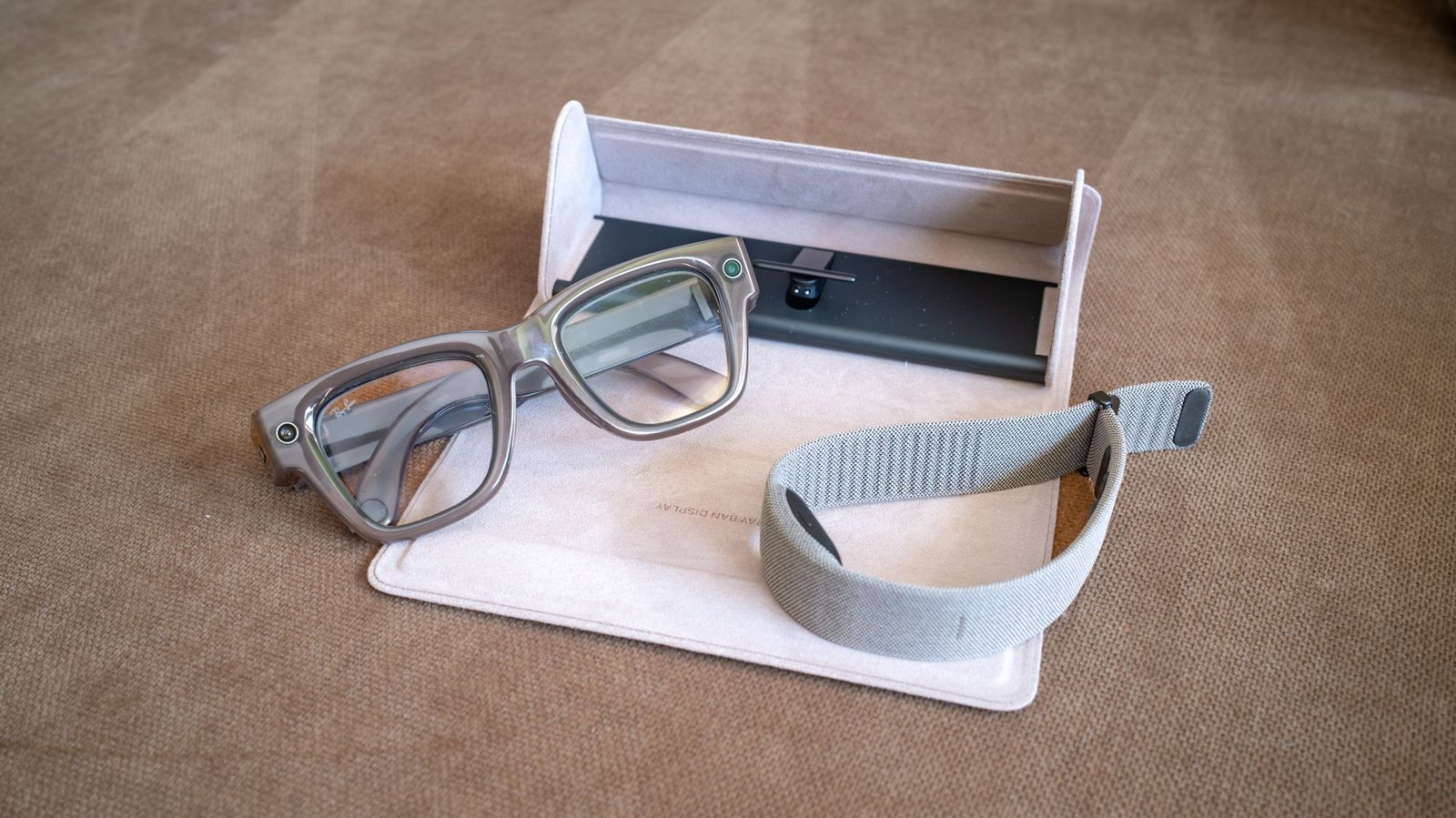
The hearing at the Amsterdam district court on Nov. 26 was a summary proceeding, the fast lane of Dutch civil litigation, and the two organizations that brought it want a ban rather than damages. The Consumentenbond, the Dutch consumers’ association, filed alongside Offlimits. Their target is the AI glasses Meta built with the company that owns Ray-Ban, and their request is that sales stop until the default settings change.
What they mean by change is narrow and testable. The glasses should not be able to record without the person in front of the lens knowing. Footage captured by the device should not be used to train models. Until both conditions hold, the organizations want a penalty of EUR 100,000 per day for each company involved, with a ceiling of EUR 100 million.
The organizations said the current settings do not give a bystander a reliable warning, and that a light is not a notice. Meta’s lawyer answered in court that the recording indicator light is sufficient warning and that a manufacturer should not be held responsible for the conduct of the few owners who misuse a product. That is the general-purpose defense for any camera that can be worn. Whether it holds here depends on what the court thinks the light actually communicates to a bystander who has never seen the product before.
The Dutch case is the only one of the three fronts that is a legal proceeding with a date attached. The other two are regulatory, and they arrived on the same day.
In London, an official at the Financial Conduct Authority said Meta had declined an invitation to test Muse, its AI agent, inside a joint sandbox with the regulator. The Competition and Markets Authority and the Information Commissioner’s Office are also examining the product, according to the account given on Nov. 26. A sandbox is not a requirement, and declining one is not an offense. It does mean the company will meet its supervisors in an enforcement posture rather than a collaborative one, and the record of that refusal now exists.
In the United States, the attorney general of Montana is leading a group of states that issued a demand for information this week about how Muse profiles the data it touches. A multistate demand is the opening move in an inquiry that can end in a settlement, a statute, or a lawsuit, and it usually takes longer than any of the parties would like.
Three regulators, three different questions. The Dutch court is being asked whether a default setting can make a product lawful. The British regulators are being asked whether an agent that acts on a user’s behalf needs supervision before it scales. The American states are being asked what an agent may infer about a person and keep. Meta said it has remained in contact with the regulators, which is the standard formulation and does not concede anything.
The per-day penalty is worth a second look, because it is the part of the Dutch claim with commercial force. At EUR 100,000 per day for each company, a ban that lasted three years would reach the ceiling, and the ceiling applies to each company rather than to the group. A defendant facing that structure has an incentive to change a setting quickly and argue about the rest later. It also means the court’s real decision is not whether recording is dangerous, which nobody disputes, but whether a software default can be ordered to carry the warning that a light was supposed to carry.
The technical version of that question is harder than it sounds. An indicator light is a hardware convention, and it assumes an observer who knows the convention. A default that requires an audible signal, a visible confirmation from the person being recorded, or a prohibition on recording in certain places is a different product, and it may be a worse one for the buyer who wants to film a concert or a bike ride.
For Meta the exposure is not the fine. It is the shape of the precedent. A European court that orders default settings to change creates a template that consumer groups in other member states can copy, and each copy is cheaper to file than the last. A sales ban in one market is a supply-chain and marketing problem, and it arrives at whatever point in the calendar the court chooses.
There is also a mismatch in tempo. Courts move in months, regulators in quarters, and product cycles in weeks. Meta can ship a setting change faster than any of the three can issue a finding, and it can do so without admitting that the old setting was wrong. Companies in this position usually wait to see which demand is cheapest to satisfy, then satisfy that one and describe it as good practice.
The Amsterdam court has not ruled. The British examination has no timetable that anyone has published. The state demand is a request for documents, not a finding of anything. What the three have in common is that they treat an AI assistant and a camera on a face as parts of one system, sold by one company, and answerable to the law of the place where the wearer happens to be standing.
That is the argument Meta will have to answer, and it is not about the light.



