
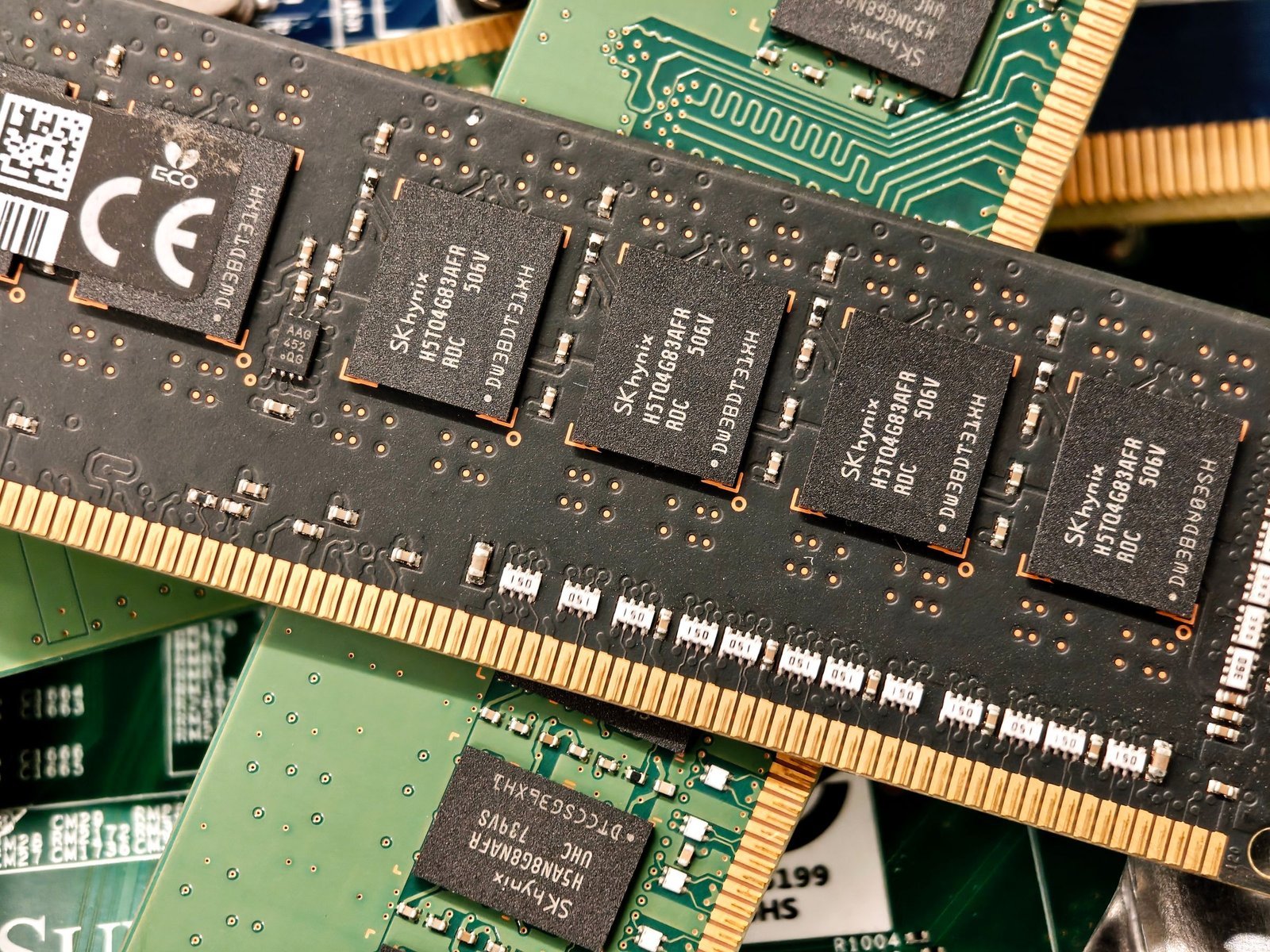
For most of this year, buying memory has been one decision rather than two: pay more now, or wait and pay more later. TrendForce’s latest report says that is about to end. The research firm expects DRAM to stay short of demand through next year, while NAND flash begins to fall in price, possibly as early as the first quarter. Two products that have moved together for four quarters are being given separate forecasts, and the split runs through the revenue line as much as through the spot market.
The figures TrendForce published are large in both directions. It expects the global DRAM market to reach $1.15 trillion in revenue next year, up 69% from this year. NAND revenue is put at $419.3 billion, up 29%, less than half the growth rate of DRAM. Both numbers were cut from earlier estimates, which is the detail worth pausing on. The firm is raising its price assumption for one product while lowering its revenue assumption for both at the same time.
Why that combination can coexist is the substance of the report. A 69% increase in market revenue of that size is a price number as much as a shipment number. When contract prices rise faster than volumes, revenue grows while units stand still, and the suppliers’ income statement improves before any new wafer capacity arrives. The same arithmetic works in reverse. If NAND prices turn down while shipments hold, revenue growth collapses without a single fab closing.
Analysts who follow the memory cycle have learned to read these two lines separately for that reason. DRAM has spent the past year in a seller’s market, with buyers qualifying for allocation rather than negotiating a discount. NAND has been the looser of the two, and its buyers have more room to wait. A storage customer who defers an order loses capacity. A customer for high-bandwidth memory who defers an order loses a product launch.
TrendForce did not stop at the price call. It listed three variables that will decide whether the split holds. The first is how quickly Chinese cloud companies work through the inventory they have built. Inventory clearing is a demand signal in this market, because an operator that stops buying in order to digest stock removes orders from the queue for a quarter or two, and the effect arrives before any price index reflects it.
The second is the direction of overseas rules on GPU procurement. Licensing changes the geography of demand rather than its total, and memory orders follow the accelerators. A cluster that cannot be shipped to one country is a cluster whose memory allocation is reassigned rather than cancelled, which is why the price effect of a rule change usually shows up as a regional shift first.
The third is whether device makers keep cutting the amount of memory they put in each machine. This is the quiet lever. A phone or a notebook with less DRAM per unit reduces the number of bits the market needs at any given price, and manufacturers under cost pressure have pulled that lever before. If they pull it again, the shortage that supports DRAM pricing shrinks without any supplier adding capacity.
What the report describes is a market where the two products are being priced by different clocks. DRAM’s clock is set by how long it takes to build capacity and qualify it at a customer. NAND’s clock is set by how long buyers are willing to hold inventory they do not immediately need. TrendForce’s forecast implies the second clock is running faster.
There is a version of this divergence that memory buyers remember well. Periods when one product tightens while the other loosens tend to end with suppliers shifting wafers between the two, and the shift is slow, expensive, and visible in capital spending before it is visible in price. Nothing in the report says that reallocation has started. It says the incentive for it now exists.
For companies that buy memory at scale, the practical question is contract length. A buyer who signs a twelve-month DRAM agreement at current prices is betting the shortage lasts. A buyer who signs a similar NAND agreement is betting it does not. The two bets are no longer the same bet, and procurement teams that have priced them as one line item for a year will have to separate them.
TrendForce’s own revision is the part that argues for caution. Cutting revenue forecasts while calling for higher DRAM prices means the firm expects the price gains to be narrower than it thought and the volume behind them to be smaller. A market can set records on price alone for a while. It cannot do so indefinitely without units.
The open question is timing rather than direction. If NAND turns in the first quarter, next year’s growth rate for the memory market will be decided by how much DRAM can carry, and the answer depends on three things the report can only name: inventory in China, licensing rules abroad, and the memory content of the next device cycle. None of them is settled, and the first one arrives soonest.



