
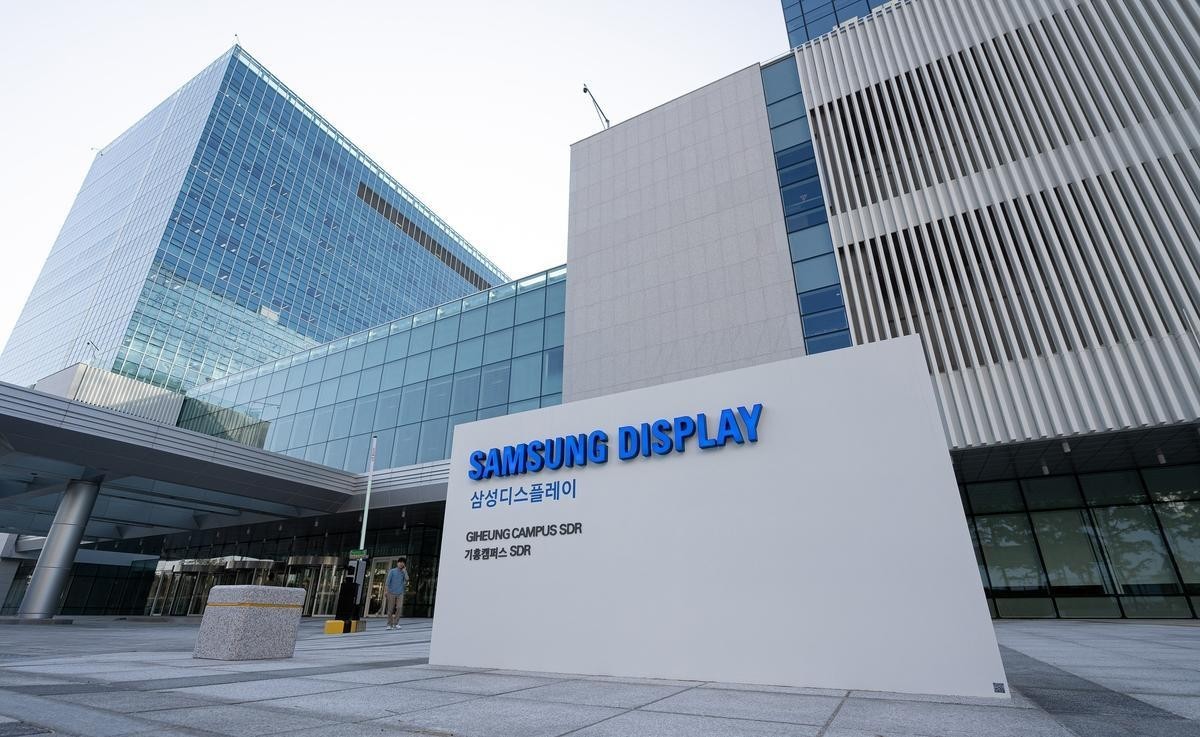
Samsung Display Co. will buy 9.1% of ams OSRAM AG for about EUR 210 million, becoming the Austrian sensor and lighting group’s largest shareholder and funding a joint push into ultra-small microLED displays.
The Seoul company is subscribing to 9,984,439 newly issued shares at EUR 21.00 each, a price that values the stake at roughly $230 million. Closing is expected in early 2027, subject to the usual regulatory approvals.
The investment is the financial leg of a wider agreement announced Nov. 25. Under it, the two companies will jointly develop and commercialize a next-generation microLED technology for screens, with Samsung Display putting up multi-year funding for the development program.
That funding is expected to generate high-double-digit-million-euro annual revenue for ams OSRAM in the coming years, covering program costs and an agreed share of fixed costs at its Kulim 2 fab in Malaysia. In exchange, ams OSRAM reserves a capacity corridor at the site for Samsung Display.
The commercial prize is laid out in stages. ams OSRAM puts the annual revenue opportunity for the new technology in the triple-digit millions of euros over the mid- to long term, contingent on development succeeding and customers adopting it. By the mid-2030s, a fully loaded Kulim 2 could support low-single-digit-billion-euro annual revenue across microLED and other photonics programs.
The division of labor is specific. ams OSRAM brings epitaxy, LED miniaturization and high-volume 8-inch manufacturing. Samsung Display brings its transfer technology, the step that lifts millions of tiny LEDs off a wafer and places them on a panel with enough precision and speed to be affordable.
Samsung Display’s chief executive, Chung Yi, said the technology could beat existing displays on brightness and lifetime, and that its uses stretch “from ultra-small to ultra-large displays.” The company will evaluate ams OSRAM’s LEDs and build the manufacturing processes needed to commercialize them. Aldo Kamper, ams OSRAM’s chief executive, said the partnership “creates a funded pathway” from development toward potential industrialization, with Samsung’s equity check tying the two companies together through the difficult middle years of a technology program.
The equity also repairs a balance sheet. ams OSRAM said the proceeds will improve its pro-forma net-debt-to-earnings ratio by about 0.7 turns, a meaningful amount for a company that has spent years digesting the 2020 merger that created it and the fab build-out that followed. The technology itself has been the industry’s next big thing for a decade. It promises the contrast of OLED without organic materials that degrade, plus far higher brightness, which matters for augmented reality, automotive displays and anything that has to be read in daylight.
The catch has always been manufacturing. A microLED panel needs millions of discrete LED chips placed with micron-level accuracy, and yields have kept costs far above anything a consumer product can absorb. ams OSRAM says the new LEDs will have a footprint two orders of magnitude smaller than current parts, which is the kind of shrink that changes the economics if it can be produced reliably.
The site itself carries scars. Kulim 2 was built around a large microLED program for an anchor customer that walked away in 2024, a cancellation that hammered ams OSRAM’s shares and forced the group to rethink how much capacity it needed. Much of that capacity now sits idle, which is why a funded corridor from a strategic buyer is worth more than the headline price suggests.
For Samsung Display, the stake is a hedge against its own concentration. The company dominates OLED for phones and is extending into larger panels, but OLED’s limits in brightness and longevity leave room for an inorganic challenger. Buying into the supply chain is cheaper than building the LED capability from scratch.
There are competitive and geopolitical dimensions. Samsung Display’s parent has been pushing to localize parts of its supply chain outside China, and Malaysia is a neutral manufacturing base for exactly that reason. ams OSRAM, for its part, gets a customer with the balance sheet to co-fund a program that European capital markets would not finance alone.
The risks are stacked and obvious. The technology may not reach the yields and costs that mass production requires, and both companies attach conditions to the arrangement. Demand for premium displays could stay soft if consumer electronics spending remains subdued. The stake also gives Samsung Display a board-level view of ams OSRAM’s cost structure and customer list, which other customers may not love.
Then there is the strategic question investors will ask first: why 9.1% and not control? The answer is in the structure. This is a development agreement with equity attached, not a takeover. ams OSRAM keeps its independence, its other photonics programs and its automotive business, and Samsung Display keeps the option to deepen the relationship if the technology works.
For ams OSRAM shareholders, the trade is near-term dilution for a funded program and a stronger capital structure: 9.98 million new shares against roughly 250 million outstanding, with the balance-sheet gain arriving before any revenue does.
The test comes in stages. Watch whether the joint development program hits its technical gates on schedule, whether Samsung Display converts the reserved corridor into volume commitments, and whether Kulim 2’s utilization starts rising in the company’s quarterly disclosures. The revenue is years out. The depreciation is not.



