
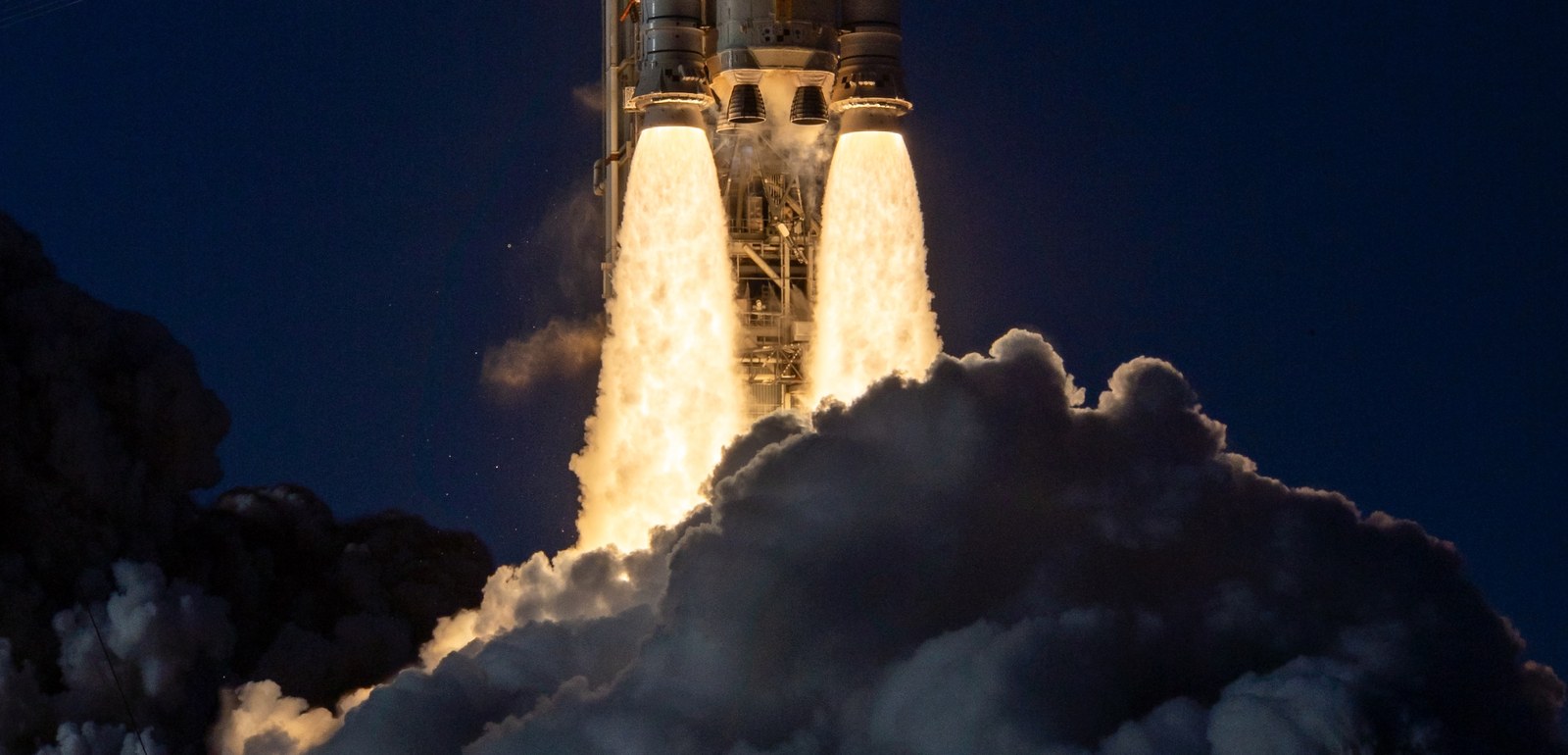
The number that surfaced on Nov. 25 is about $2 billion, an addition the White House wants for NASA and its effort to put people on the moon. Set against what the program has already spent, it is not a large sum. Set against the calendar, it is the only sum that matters.
Word of the request moved through the appropriations committees and the contractor base on the same day, and the reaction in both places was the same shape: the money is welcome, the schedule is the problem. A rocket, a spacecraft and the ground systems that support them are built by supply chains with fixed capacity, and capacity that is already committed does not expand because a budget line grows. What a larger budget buys, at this stage, is queue position.
The program’s own timeline has been rewritten repeatedly. The first flight, an uncrewed capsule sent around the moon and back in 2022, came off close enough to plan to be counted a success, then spent much of the following year being explained. Its heat shield lost more char than models predicted, a finding that pulled engineers into months of testing before the next crew could be cleared to fly. Subsequent flights, including the one meant to carry astronauts around the moon and the one meant to land them, have each moved to the right at least once.
Landing is the harder half, and it is not built by NASA. The human landing system contract went to a lunar variant of SpaceX’s Starship, a vehicle that must be refueled in orbit before it can go anywhere near the moon, and orbital refueling at that scale has not been demonstrated. Every delay in that demonstration is a delay in the landing, whatever the agency’s own hardware is doing.
Other pieces carry their own queues: the next-generation spacesuits, contracted out after the agency’s own suit program ran long; the lunar gateway modules, built by international partners on their own budget cycles; the ground systems and the software that ties them together. Money arriving late in a fiscal year tends to land on the piece with the most flexible schedule, which is rarely the piece that is behind.
The politics of the request are layered. A supplemental of this size comes with a story about competition, and the story writes itself: China has its own lunar program with a published date, and a Congress that has spent a decade funding a rocket with a per-launch cost that audits keep describing in unflattering terms is not inclined to be the body that let the program slip further. The rocket’s cost has been the subject of inspector general reports for years, and those reports are quoted by members of both parties for opposite purposes.
There is a structural reason the program is expensive, and it is worth stating plainly. The rocket and the capsule were designed under cost-plus contracts, in which the government carries overruns, and they were designed to preserve a workforce spread across states and districts that have defended the arrangement through several attempts at reform. Commercial fixed-price contracting, which the agency uses for cargo, crew and the lander, has proved cheaper per unit and more brittle per schedule, because a fixed-price contractor absorbs overruns until it decides not to.
The sum is roughly what the agency’s inspector general has estimated a single flight of its own rocket costs, an estimate that has been repeated in hearing after hearing and never quite absorbed. That a schedule rescue costs about as much as one launch is the clearest available statement of how the program’s cost structure works: the fixed plant is enormous, the marginal flight is a rounding error, and the marginal year is not.
A $2 billion addition, if it is appropriated as requested, would go mostly to the contractors building the rocket, the spacecraft and the ground systems, and it would let them hold schedules that current funding forces them to stretch. Vendors with a shrinking line item tend to slow work and keep the team intact; vendors with a growing one can buy long-lead material, add a second shift, and pay for the testing that gets skipped when money is short.
The agency’s international partners are watching the same calendar. The European Space Agency builds the service module that powers the capsule, and its contributions are budgeted on multiyear cycles that do not bend when Washington adds a line item. Japan and Canada have supplied hardware and a robotic arm on similar terms. A unilateral accelerant bought in dollars does not accelerate a partner’s appropriations cycle, and partners who are asked to move faster without new money tend to move at the speed they already planned.
The disclosure of Nov. 25 carried no legislative text, no spending offsets and no date for a formal submission. Whether the request becomes an appropriation, whether it survives a continuing resolution, and whether the landing date it is meant to protect is achievable are three separate questions, and only the first is in the White House’s hands.
NASA has not announced a revised date. The contractors have not revised their schedules. The $2 billion, for now, is a number in a report, attached to a program that has learned to treat numbers in reports as provisional.



