
Michael Dell spent the 1990s convincing corporate buyers that cheap, standardized servers could replace mainframes. The sequel to that story played out after the closing bell Thursday, when Dell Technologies reported a quarter in which sales of AI servers grew 757%.
Dell shares jumped as much as 40% in after-hours trading, adding roughly $80 billion to the company’s market value, before settling near $440. The stock had already returned about 260% over the trailing twelve months as investors bet that Dell would be a primary beneficiary of the corporate AI buildout.
The numbers were striking even for a company at the center of that buildout. Dell reported revenue of $43.84 billion for its fiscal first quarter ended May 1, up 88% from a year earlier. Net income attributable to shareholders rose 256% to $3.44 billion, and non-GAAP diluted earnings per share came in at $4.86, up 214%.
AI servers were the engine. Revenue from AI-optimized servers reached $16.1 billion in the quarter, up 757% from a year earlier, and Dell booked $24.4 billion in AI orders during the period. The company exited the quarter with a record $51.3 billion in AI backlog, meaning customers have ordered more than the company can currently build.
The Infrastructure Solutions Group, which houses servers and storage, generated $29 billion in revenue, up 181%, with operating income up 206% to $3.1 billion. Its operating margin widened 80 basis points to 10.5%, despite AI server volume expanding nearly eightfold.
“Historical norms do not apply to the current AI demand environment,” Dell Vice Chairman and Chief Operating Officer Jeff Clarke said on a call with analysts, citing supply constraints, customers upgrading aging infrastructure and new demand from agentic AI workloads. The company’s forward-looking pipeline has “never been healthier,” he said.
Dell raised its full-year revenue guidance to between $165 billion and $169 billion, up from a prior range of $138 billion to $142 billion, a $27 billion increase at the midpoint. It lifted its fiscal 2027 AI server revenue expectation to about $60 billion, from roughly $50 billion previously.
Wall Street had expected far less. The Zacks consensus called for adjusted earnings of $3.04 a share on revenue of $35.46 billion; Dell beat both by wide margins. “The magnitude of the beat and the size of the guidance raise were beyond what even the most bullish models assumed,” one analyst said.
The demand is broad. Dell said its AI customer base surpassed 5,000 companies, up more than 50% over six months, spanning neocloud providers, sovereign customers and traditional enterprises. Traditional server sales also grew 92% as agentic AI workloads pulled demand for central processors alongside graphics chips.
Supply is the constraint. Dell cited shortages of DRAM, NAND flash and CPUs, echoing warnings across the industry that the memory market cannot keep up with AI demand. The backlog, management said, reflects not weak demand but the company’s inability to build fast enough.
The shortage explains why Dell is comfortable publishing a backlog figure most hardware companies would rather hide. In a normal market, a giant order book signals a company cannot sell its products; in this one, it signals the opposite. Customers are placing orders 12 to 18 months out, management said, and several large deals in the quarter were limited not by customer appetite but by how much memory Dell could secure.
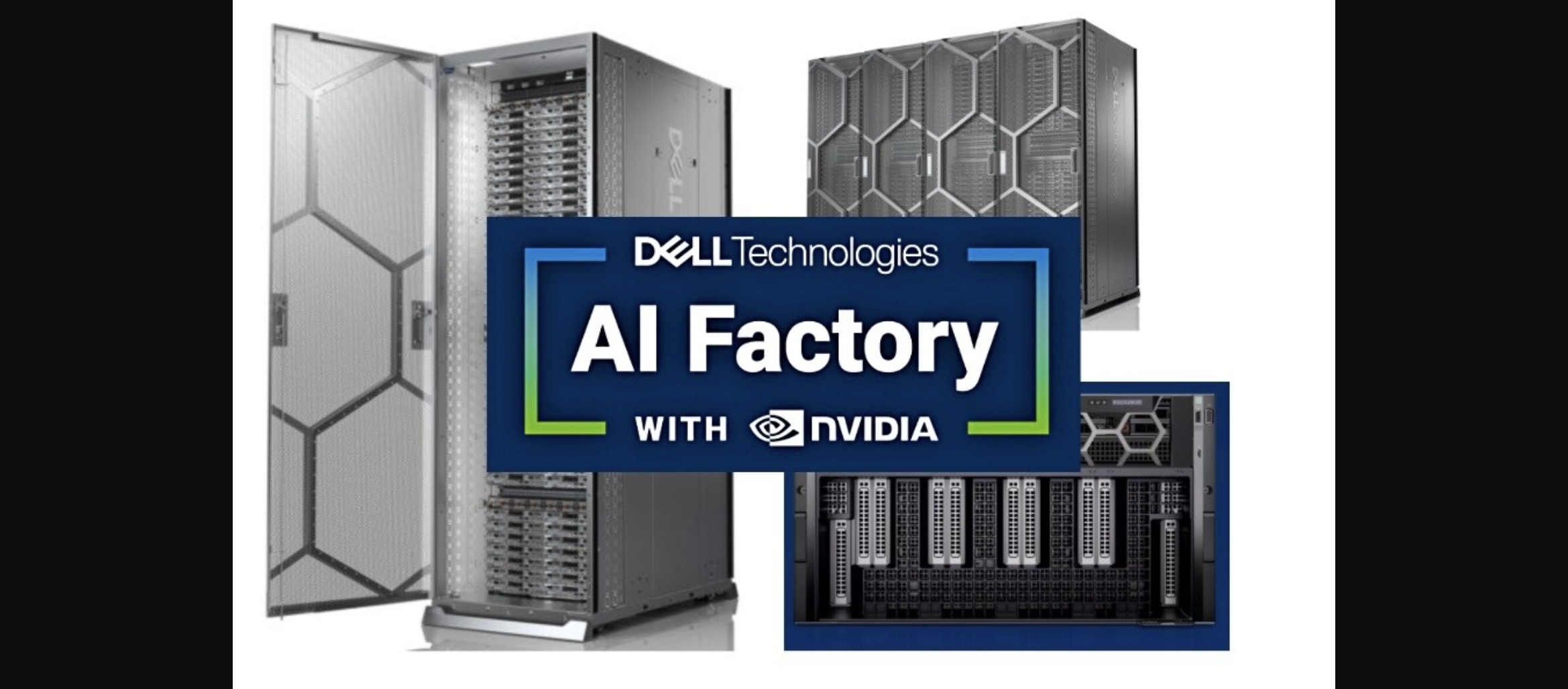
Dell’s partner in the boom is Nvidia, whose chips power most of the AI servers Dell ships. The two companies have appeared on stage together at industry events this year, unveiling liquid-cooled servers and rack-scale systems designed around Nvidia’s newest accelerators. Dell has said it works with all major chip vendors, but Nvidia hardware dominates its AI backlog.
The question investors are asking is whether the growth is durable. Dell’s traditional PC business, once the company’s anchor, is now a supporting act: client solutions revenue grew at a single-digit pace, and the AI server line now contributes more revenue in a quarter than the PC division does. That shift has transformed Dell’s identity from a broad enterprise hardware vendor into an AI infrastructure play.
Analysts cautioned that the boom carries familiar risks. AI servers carry lower margins than traditional enterprise hardware, and Dell’s target of mid-single-digit operating margins for the category leaves little room if pricing pressure returns. The stock’s valuation, trading above 20 times forward earnings, now assumes the growth continues.
Competitors are chasing the same opportunity. Super Micro Computer and Hewlett Packard Enterprise have both reported surging AI server orders, and the memory shortage that constrains Dell also constrains rivals, leaving the market’s spoils to whoever secures supply.
The earnings report also renewed the debate about valuation. Dell shares traded at about 21 times forward earnings after the jump, roughly in line with the broader market’s multiple and far above the low-teens multiple the stock carried a year ago. Bulls argue the growth justifies the premium; bears note that AI server margins are thin and that the memory shortage that is fueling orders could turn into an oversupply if capacity catches up.
For now, the bulls are winning. Dell’s guidance implies the AI backlog will keep converting into revenue through the year, and management said the $60 billion AI server target for fiscal 2027 could prove conservative if supply improves. The company has also signaled it will return more cash to shareholders as the buildout matures.
For Dell, the quarter closes a chapter that began two years ago, when skeptics wondered whether the company had missed the AI wave. The answer, on Thursday’s numbers, was emphatic. The question now is how long the wave lasts, and whether Dell’s partners at Nvidia can keep feeding it chips.



