RICHMOND, Va. — The plaintiffs are neighbors who never agreed to be in the system. Virginia residents filed a class action against Amazon this week over Ring’s Familiar Faces feature, alleging that the company’s doorbell cameras captured and stored facial data of people passing by, without their knowledge or consent, and used that data to power a recognition service that Amazon marketed to homeowners as a security upgrade.
The lawsuit alleges that the feature, which identifies people who appear repeatedly at a home, did more than match known visitors. It built a database of faces belonging to people who had never signed up for anything, never installed a camera, and never consented to having their biometric information collected and retained. For those people, the complaint argues, the camera on the neighbor’s porch was a surveillance system they could not opt out of.
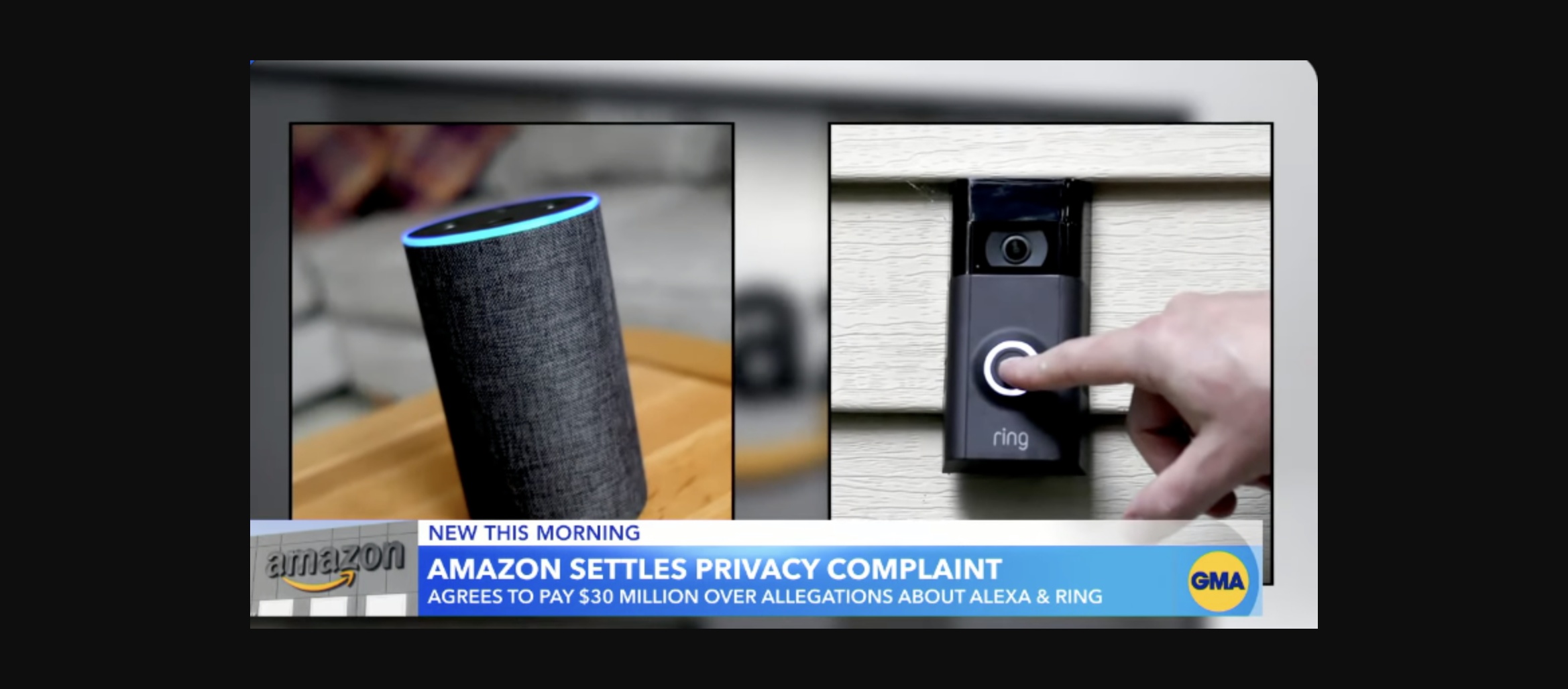
Amazon has faced this territory before. The company settled with the Federal Trade Commission in 2023 over privacy violations involving Ring, including allegations that employees and contractors had accessed customers’ video without authorization. That settlement imposed fines and ordered changes to Ring’s practices. The new lawsuit is a private action seeking damages on behalf of a class of people affected by the recognition feature, a different legal track that can produce penalties the FTC settlement did not.
The case turns on a question the smart home industry has been avoiding: what happens to the data of people who are captured but never consent? Doorbell cameras, smart displays, and security systems record the public space around homes continuously, and the people in that space are not customers. They are data. Facial recognition turns that data into something with lasting value, and the Virginia lawsuit argues that value was created with stolen consent.
The state’s legal climate gives the case weight. Virginia has a biometric privacy law that allows individuals to sue for violations, and unlike some states, it does not require plaintiffs to show actual financial harm to recover damages. The structure of the law, which provides for damages per violation, is what makes class actions viable, and it is the same structure that has produced large settlements against companies in other states with similar statutes.
The precedent question extends beyond Ring. If the case succeeds, every company selling cameras, smart speakers, or doorbells with recognition features faces the same exposure, and the smart home industry will have to reconsider whether facial recognition is worth the legal risk. The industry has been moving away from the feature quietly for years, with some manufacturers dropping facial recognition from new products after privacy complaints, but the installed base of devices with the capability is enormous.
Amazon’s defense will likely center on how the feature works. The company has said Familiar Faces matches captured images against a homeowner’s own library of known people, and that the feature does not identify strangers by name. The plaintiffs’ argument is that the collection and retention of strangers’ face data is itself the violation, regardless of whether the system knows who they are. That distinction, between matching and identifying, is likely to be the technical question at the center of the case.
The damages math is where the lawsuit could become very expensive. Under Virginia’s biometric law, damages are assessed per violation, and a class action covering years of recordings across a large population of passersby could produce a number that dwarfs Ring’s revenue from the feature. Defense lawyers will argue the class definition is too broad and that most captured faces should not count as violations. The court’s answer to that question will determine whether the case is a nuisance or a threat.
Ring’s scale makes the case hard to dismiss as a nuisance suit. The company sold millions of cameras during the smart home boom, and its devices sit on front doors in neighborhoods across the country, recording public sidewalks and driveways around the clock. Each of those cameras is a potential data collector, and the class of people whose faces appear in the footage is far larger than the class of customers who bought the devices. That asymmetry, a small number of buyers generating data about a much larger number of non-buyers, is what gives the case its reach.
For Amazon, the timing compounds the problem. The company has spent years rebuilding trust around Ring, adding privacy controls, end-to-end encryption, and clearer disclosure after the FTC settlement. A class action over facial recognition threatens to reopen the exact conversation Amazon has been trying to close, and it arrives as regulators worldwide are writing new rules for biometric data. The case is one company’s lawsuit, but it is also a test of whether the smart home’s data practices can survive legal scrutiny, one front door at a time.