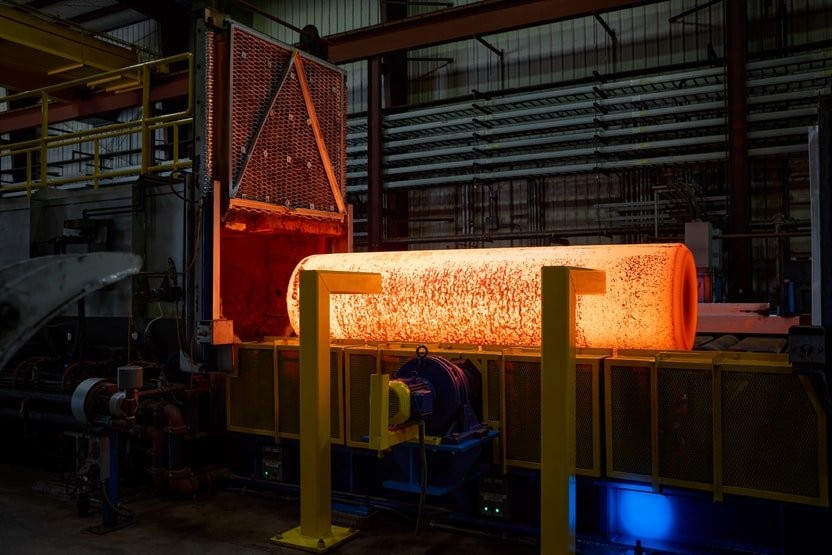
The disclosure landed in a regulatory filing on a Friday afternoon, one week before the largest initial public offering in history. Google will pay SpaceX $920 million a month from October 2026 through June 2029 for access to roughly 110,000 Nvidia graphics processing units, along with central processors, memory and related components housed in SpaceX data centers, according to the filing, first reported by TechCrunch.
The contract is worth about $30 billion if it runs the full 33 months. Google described the arrangement in a statement as “a short-term, timely agreement to ensure we have bridge capacity to meet surging customer demand for our agent platform, Gemini Enterprise, which has been even higher than we expected.” A Google representative declined to say which data center the company would use. SpaceX said access would ramp up through September at a reduced fee, and the filing gives Google the right to walk away if the committed hardware is not delivered by September 30.
The agreement is the second of its kind in a month. In late May, Anthropic agreed to pay $1.25 billion a month through 2029 for the entire output of Colossus 1, the Memphis, Tennessee, facility that xAI built to train its Grok chatbot before Elon Musk folded the startup into SpaceX in February in a transaction that valued the combined company at $1.25 trillion. Anthropic was severely constrained on compute before that deal, and it raised usage limits for customers on the same day the agreement was announced. Taken together, the two contracts bring SpaceX about $2.17 billion a month in compute revenue, roughly $26 billion on an annualized basis, a figure that will feature prominently in the IPO prospectus.
Both deals carry escape hatches. Either party can terminate with 90 days’ notice after December 31, 2026. If SpaceX fails to deliver the committed number of GPUs by September 30, Google may end the agreement after a one-month grace period, or accept fewer chips at a reduced price. Analysts said the clauses mean the headline totals represent contracted demand rather than locked-in backlog, and that the filing leaves open the questions investors would need to value the contracts precisely, including power costs, depreciation and the gross margin on rented hardware.
The unusual part of the arrangement is that Google is not short of chips. Some estimates name the search company the world’s largest single owner of AI compute, a position built on its custom tensor processing units. The company in April raised its 2026 capital spending forecast to between $180 billion and $190 billion, and Alphabet said this week it plans to sell $85 billion in stock, including a $10 billion investment from Berkshire Hathaway, citing “unprecedented customer demand.”
The SpaceX deal shows how quickly demand has outrun even that budget. Building a data center takes years; renting someone else’s chips takes a signature. Across the industry, the AI arms race is shifting from capital expenditure to operating expenditure, as hyperscalers sign monthly fees for capacity they cannot build fast enough themselves. Google’s own filing frames the deal as a bridge, an explicit acknowledgment that its infrastructure buildout has a gap in time. The rental market for GPUs has grown into a business of its own, with cloud providers and specialist firms selling access by the month, and SpaceX is now the newest and largest entrant.
For SpaceX, the compute contracts are turning a cost center into a revenue engine. xAI built Colossus at record speed to train Grok, and usage of the chatbot has reportedly declined since the merger. Instead of letting the GPUs sit idle, the company is renting them to the two organizations most desperate for capacity: Anthropic, which was severely constrained, and Google, which is scaling its own buildout but cannot move fast enough. Musk has previously suggested the Colossus 2 facility would be reserved for xAI, leaving the rest of the fleet available for customers.
Google has a longer history with SpaceX. Alphabet invested in the company in 2015, when it was valued at $12 billion, and the stake is expected to be worth more than $100 billion after the listing, a windfall that has drawn fresh attention to the relationship. The two companies are also reported to be in talks about orbital data centers, a component of SpaceX’s post-IPO plans that would put computing infrastructure in space, powered by Starship’s launch capacity.
The arrangement arrives as SpaceX prepares to begin trading on the Nasdaq on June 12 at a valuation of roughly $1.75 trillion, seeking to raise about $75 billion, according to securities filings. Musk will retain more than 82 percent of voting control after the offering. The compute deals were disclosed deliberately ahead of the listing, giving prospective investors a revenue story that does not depend on launch schedules or satellite demand, and the timing has not been lost on analysts. For Google, the deal is a hedge against its own supply constraints; for SpaceX, it is a demonstration, in the week before the biggest debut in market history, that its hardware can be monetized at scale.