
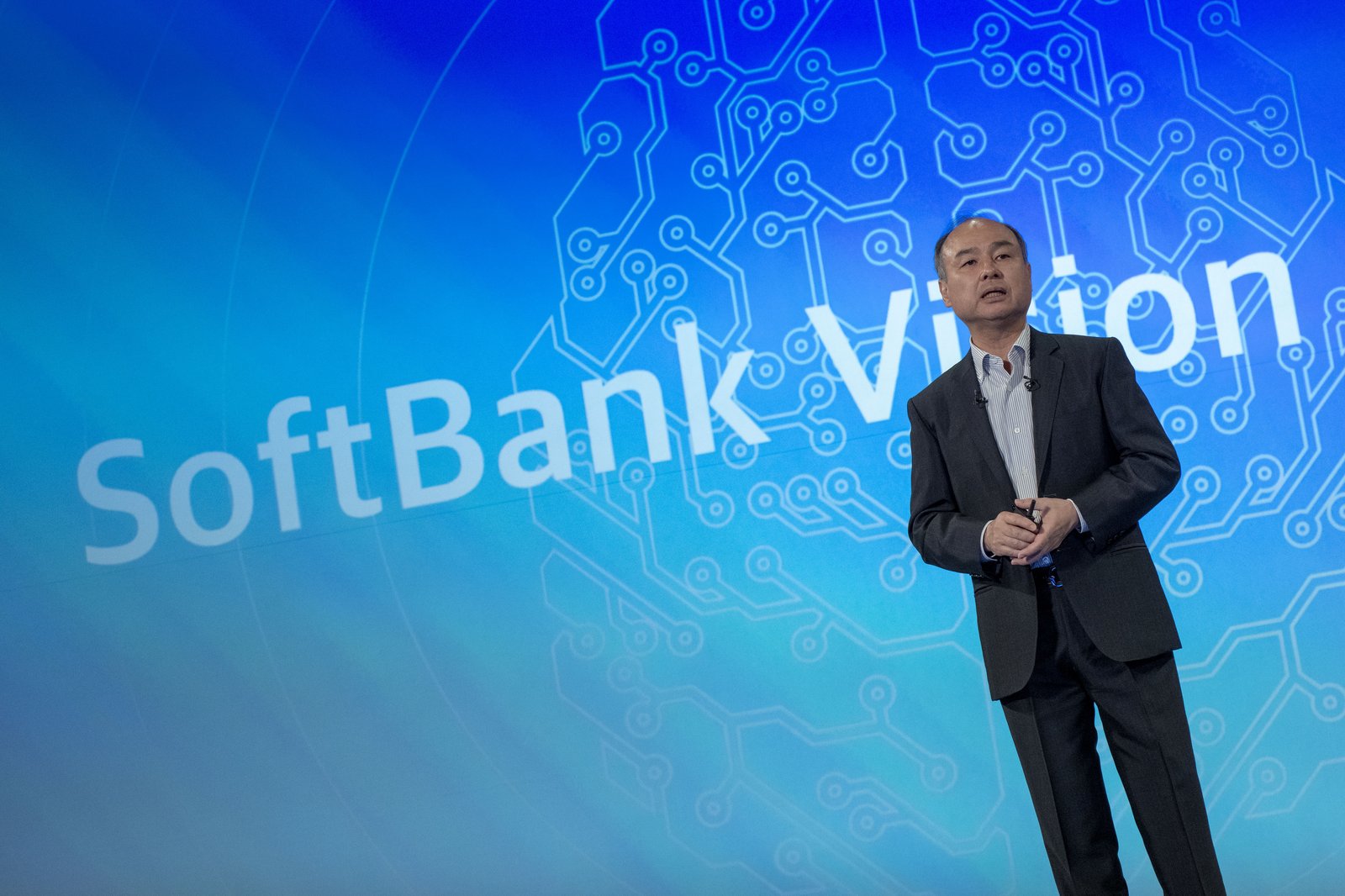
SoftBank Group fell more than 6 percent in Tokyo trading on Monday, one of the biggest declines among Asia’s technology stocks as a global selloff in AI names rolled through the region. The drop put the Japanese conglomerate at the center of a question investors have been asking all year: what happens to the AI trade when the money that financed it starts to leave?
The selling was not confined to Tokyo. Foreign investors dumped billions of dollars of Korean stocks on Monday, according to CNBC, and the scale of the outflow was visible in the KOSPI’s open, which fell more than 8 percent before triggering a circuit breaker. The Korean market is the supply chain of the AI boom, home to the memory-chip makers whose products go into every training cluster, and its collapse was the day’s loudest signal.
SoftBank’s slide has a logic of its own. The company is the largest external investor in OpenAI, the parent of the Vision Fund that bankrolled much of the startup side of the AI cycle, and its share price has traded as a proxy for the whole complex: when the market believes in AI, SoftBank rises with the names it backs, and when the market doubts, SoftBank falls first. Monday was a doubt day.
The doubt has a name: capital expenditure. The AI buildout rests on an assumption that the hyperscalers and their financiers will keep spending hundreds of billions of dollars a year on data centers and chips, and Friday’s selloff began when Broadcom declined to raise its long-term guidance, a small crack in that assumption. If capital spending peaks, the entire stack of companies built on it reprices, and SoftBank’s portfolio is the most exposed collection of AI assets in the world.
The company’s own finances amplify the risk. The Vision Fund invested at valuations that assumed years of growth, and a correction in the private market would force markdowns that flow straight through to SoftBank’s results. The company has spent years selling assets and restructuring to reassure investors about its balance sheet, and Monday’s drop showed how quickly that reassurance can be tested when the underlying trade turns.
The Korean selling tells a similar story from the other direction. Foreign investors had piled into Samsung Electronics, SK Hynix and the rest of the Korean supply chain as the AI trade broadened, and the Monday outflow showed how fast that money can leave. The stocks fell despite the strength of their order books, a sign that the selling was about positioning rather than fundamentals.
Analysts who cover the region said the episode looks like a re-rating rather than a change in the business. The memory-chip makers are still selling every wafer they can produce, and the order books for AI accelerators stretch into next year; what changed is the multiple the market is willing to pay for that certainty. A correction in valuations was overdue, they said, and Monday was the market catching up.
SoftBank’s role in the drama is the uncomfortable part for its shareholders. The company’s value has always been a function of its portfolio’s paper value, and paper values move faster than businesses. When the market repriced AI stocks on Friday and Monday, SoftBank was repriced twice: once for its own holdings and once as the symbol of the whole complex, which is why the stock fell further than the assets it owns.
The question investors now face is whether Monday was the bottom of the correction or the beginning. The Iran headline that helped stabilize U.S. futures eased the geopolitical premium, but the valuation question that started the selloff remains open, and the data that would settle it, from the next round of chip earnings to the Fed’s rate path, has not arrived.
The episode has a precedent that investors are citing. The last time SoftBank fell this hard on AI positioning concerns, in 2022, the Vision Fund took losses that forced the company into a two-year restructuring, and the memory of that period is why Monday’s drop carried extra weight. The difference this time is that the underlying businesses, from OpenAI’s revenue to the memory makers’ order books, are further along than they were four years ago.
For SoftBank, the path forward runs through its own portfolio. The company has said it will keep its position in OpenAI and keep funding the startups it believes in, and a softer valuation environment actually lowers the cost of new investments. Whether shareholders accept that trade depends on the same variable as everyone else’s: whether the AI buildout keeps spending at the pace the market has priced. Monday said it might not, and SoftBank’s 6 percent drop was the market’s way of saying it the loudest.



