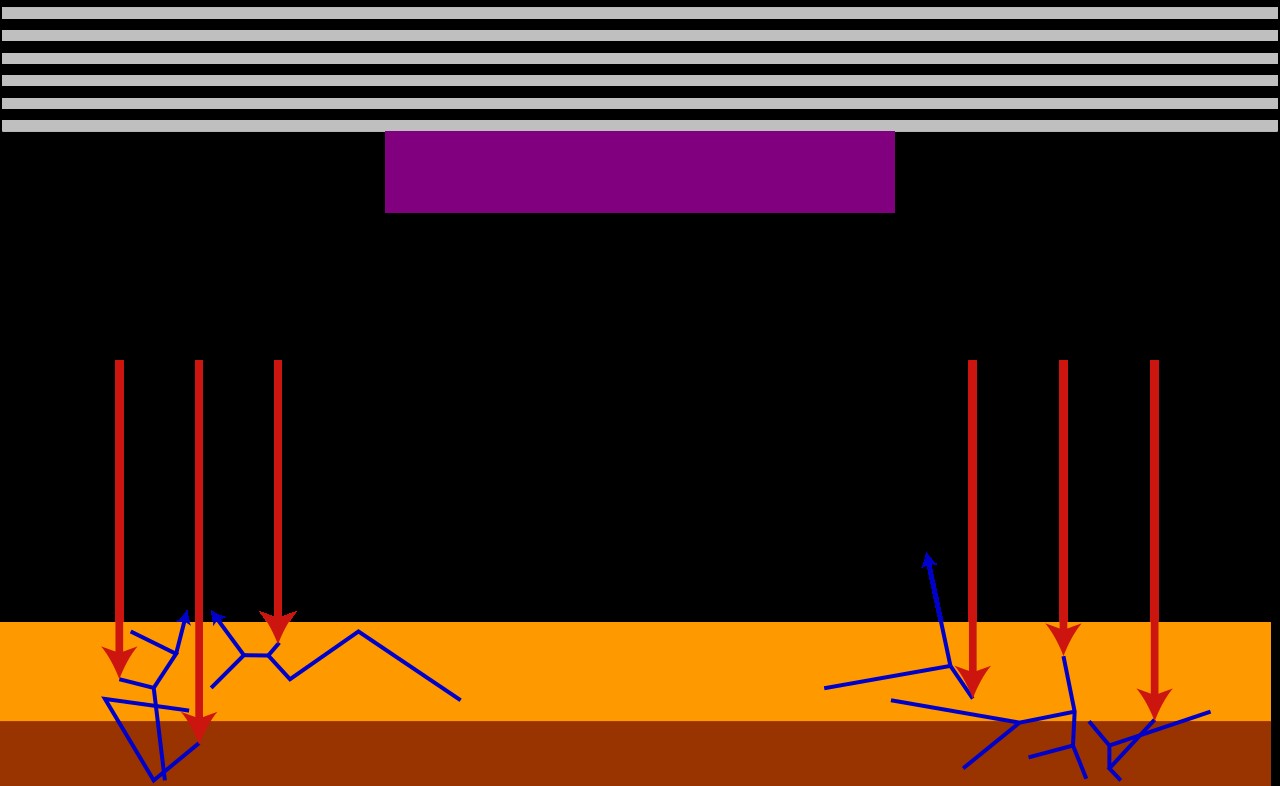
Commerce Secretary Howard Lutnick has told senior ASML executives in a series of recent meetings that he is concerned one of the Dutch company’s most advanced chipmaking machines may have ended up in China, according to Bloomberg, citing people familiar with the discussions. The machine in question is an extreme-ultraviolet lithography system — the only equipment on Earth capable of printing the most advanced semiconductor patterns — and its presence in China would breach an export-control regime that has barred ASML from selling EUV tools there since 2019.
ASML’s denial has been categorical. The company said it has never shipped an EUV machine to China, and that no such system has ever existed there, a position it has repeated to the Commerce Department, to the Dutch government and in public statements. A spokesperson called the suggestions “inaccurate and damaging to our reputation,” language the company has used before when confronting rumors about its export compliance.
The stakes give the dispute its intensity. ASML is the only manufacturer of EUV lithography tools in the world, and the 314 systems it has in operation produce virtually all of the most advanced logic and memory chips on the planet. Each machine weighs roughly 180 metric tons, contains more than 100,000 components and costs hundreds of millions of dollars, with the newest high-NA generation priced around $380 million. A single machine in the wrong hands would represent one of the most consequential breaches of the technology controls the United States has assembled to slow China’s AI ambitions.
The technical argument cuts in ASML’s favor. EUV systems cannot simply be packed and moved: they operate in a vacuum, rely on mirrors manufactured by Carl Zeiss to tolerances measured in fractions of a nanometer, and require continuous servicing by ASML engineers. The company says it monitors all its machines remotely and can detect any interruption, abnormal behavior or loss of connectivity across the fleet. Customers cannot dismantle or relocate the systems without ASML’s direct involvement, the company has said.
Commerce officials told Bloomberg they have evidence that ASML shipped EUV-related components and transport equipment to China, though they have declined to show it — to reporters or, according to the report, to ASML itself. The Commerce Department did not respond to questions about whether it holds evidence of a complete EUV system on Chinese soil. ASML, for its part, says it tracks every machine it has ever shipped: each is either in service with a monitored customer or has been dismantled and returned.
The episode reflects a broader anxiety in Washington about the effectiveness of the export-control system. The CHIPS Act, the trilateral agreements with Japan and the Netherlands, and successive rounds of restrictions were all designed to keep advanced chipmaking out of China’s reach, yet the same period has produced a steady stream of reports about loopholes, stockpiling and diversion. Chinese fabs have built credible advanced chips using older deep-ultraviolet tools and multi-patterning, raising questions about whether the controls are holding.
The commercial dimension complicates the politics. ASML expects about 20% of its 2026 revenue to come from already-permitted sales to China — older DUV systems that are legal to export — and a dispute over EUV could put that business, and the company’s standing as the most valuable industrial company in Europe, at risk. Analysts at Quilter Cheviot have estimated that a broader ban on DUV shipments, proposed in a bipartisan bill in Congress known as the MATCH Act, could reduce ASML’s revenue by roughly 5%.
The enforcement precedent is fresh. In February, the Commerce Department’s Bureau of Industry and Security settled with Applied Materials for $252.5 million, the second-largest penalty in the agency’s history, over allegations that the company routed ion-implant equipment to China’s SMIC through a South Korean subsidiary. The case showed that Washington can act on component shipments without proving that a complete restricted system crossed a border, and it has focused attention on exactly the kind of evidence Commerce now says it holds against ASML.
The Dutch government is caught in the middle. The Netherlands has enforced the EUV restrictions strictly, officials said, and it takes seriously the responsibility that comes with hosting the world’s only EUV maker. But The Hague has resisted Washington’s push for broader controls, and a Dutch think tank recently urged the government to push back against American pressure on ASML’s exports. The dispute threatens to turn a compliance question into a transatlantic diplomatic one.
Neither the Commerce Department nor ASML has made the underlying evidence public, and officials in both Washington and Veldhoven said discussions are ongoing. The company has circulated a document in Washington titled “No indication of any ASML EUV System in China,” an unusually public posture for a firm that normally avoids conflict with the governments that oversee it. For the industry, the question is not just whether a machine crossed a border, but whether the controls themselves can be trusted — and what the answer will cost the companies that enforce them.