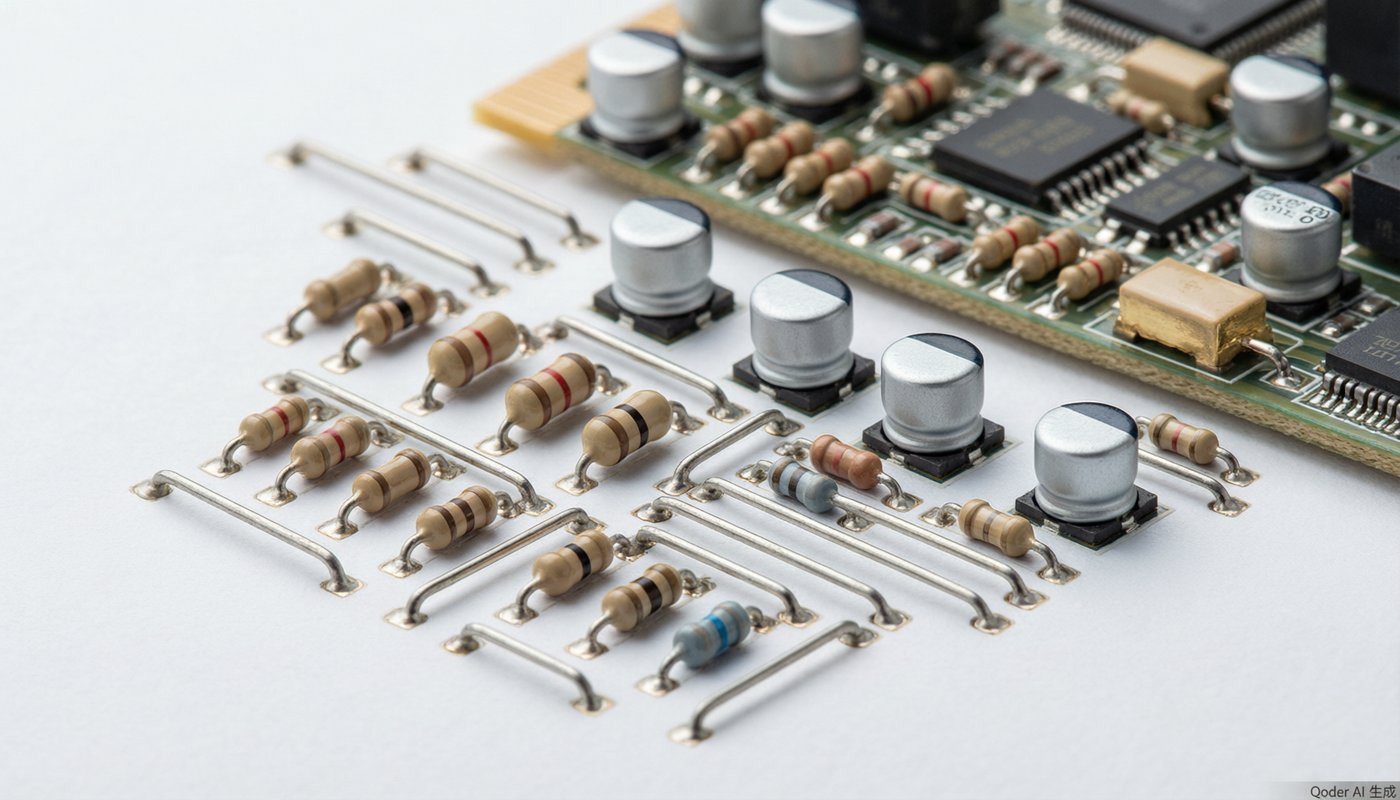
The unglamorous parts inside every electronic device are having a moment. Japanese manufacturers of capacitors, resistors and other passive components shipped 231.4 billion yen worth of goods in April, up 18 percent from a year earlier, according to data released June 30 by the Japan Electronics and Information Technology Industries Association, and capacitor shipments set a single-month record.
The figures cap a run of consecutive monthly increases for Japanese passive component makers, a stretch of growth that industry executives attribute to a surge in demand from artificial-intelligence data centers. AI servers use capacitors and other small parts in quantities that dwarf conventional computers, and the build-out of computing capacity has become the strongest driver of demand for components that rarely feature in product announcements.
The surge is a counterpoint to the gloom that surrounded the industry a few years ago. Japanese component makers, led by Murata Manufacturing, TDK and Taiyo Yuden, once dominated the global market for multilayer ceramic capacitors, the tiny devices that regulate power in everything from smartphones to electric vehicles. Competition from Chinese and South Korean producers eroded that dominance, and analysts questioned whether Japan could hold its share.
The AI boom has changed the calculation. High-end capacitors used in servers and networking gear carry higher margins than commodity parts, and Japanese makers have concentrated on exactly those products. The result is that the industry is growing even as overall electronics production, particularly smartphones and PCs, has been flat. Component shipments are increasingly decoupled from consumer device sales.
Automotive electronics remain a second engine. Electric vehicles use far more passive components than combustion cars, and Japanese makers have built close relationships with the country’s auto suppliers. The shift to electrified drivetrains and driver-assistance systems has extended the component cycle even as vehicle sales growth has slowed.
The yen has helped too. Component makers report revenue in yen, and the currency’s weakness against the dollar has inflated reported shipment values, adding a few percentage points to growth that is otherwise real but smaller than the headline number. Analysts said the underlying demand is genuine, driven by capacity additions at data center operators that show no sign of slowing.
Supply constraints are starting to appear. Lead times for high-capacity multilayer ceramic capacitors have lengthened, and some server builders report difficulty sourcing enough of the largest sizes. Japanese makers have responded by shifting production toward high-end parts and expanding capacity, but they have been cautious about adding volume in a market where a single quarter of AI capital spending can swing demand sharply.
The industry’s geography is another factor in the numbers. Japan’s component makers concentrate production of premium parts at home, while commodity lines move to plants in Southeast Asia and China. The April surge in yen-denominated shipments therefore reflects a mix of genuine volume growth and a favorable product mix, as server builders order the higher-value parts that Japanese plants actually make.
The current cycle resembles the shortage years of 2021, when pandemic-era demand for electronics stretched component supply chains and sent prices soaring. That episode ended in an inventory correction that punished makers who overbuilt. This time, executives say they are running plants closer to capacity but holding back on major expansions, a discipline that has kept prices firm without repeating the boom-and-bust pattern.
The April record is a useful marker for the industry’s trajectory. Passive components are a leading indicator of electronics production, since they are among the first parts ordered when a new device or facility is designed. The strength of shipments suggests the AI build-out is still in its early phase, with component orders running ahead of the servers that will use them.
Not everyone in the chain is celebrating. Small and midsize Japanese component makers, which lack the scale of Murata and TDK, have struggled to win orders for AI server parts, which tend to be concentrated among the largest suppliers. The industry’s growth is real, but it is uneven, and the gap between the leaders and the rest has widened.
The longer-term question is whether the AI-driven demand can offset the slow decline of consumer electronics, the industry’s traditional base. Smartphone and PC volumes have stagnated, and some analysts project that AI servers will become the largest end market for premium passive components within a few years. Japanese makers are positioning for that shift, investing in the high-capacity products that servers need while letting commodity lines run at reduced rates.
For the industry as a whole, the record month offers evidence that the component business has found a new growth cycle after years of consolidation. Whether the cycle lasts depends on the durability of AI spending, a question that hangs over the entire semiconductor industry. For now, the companies that make the industry’s smallest parts are enjoying its largest tailwinds.