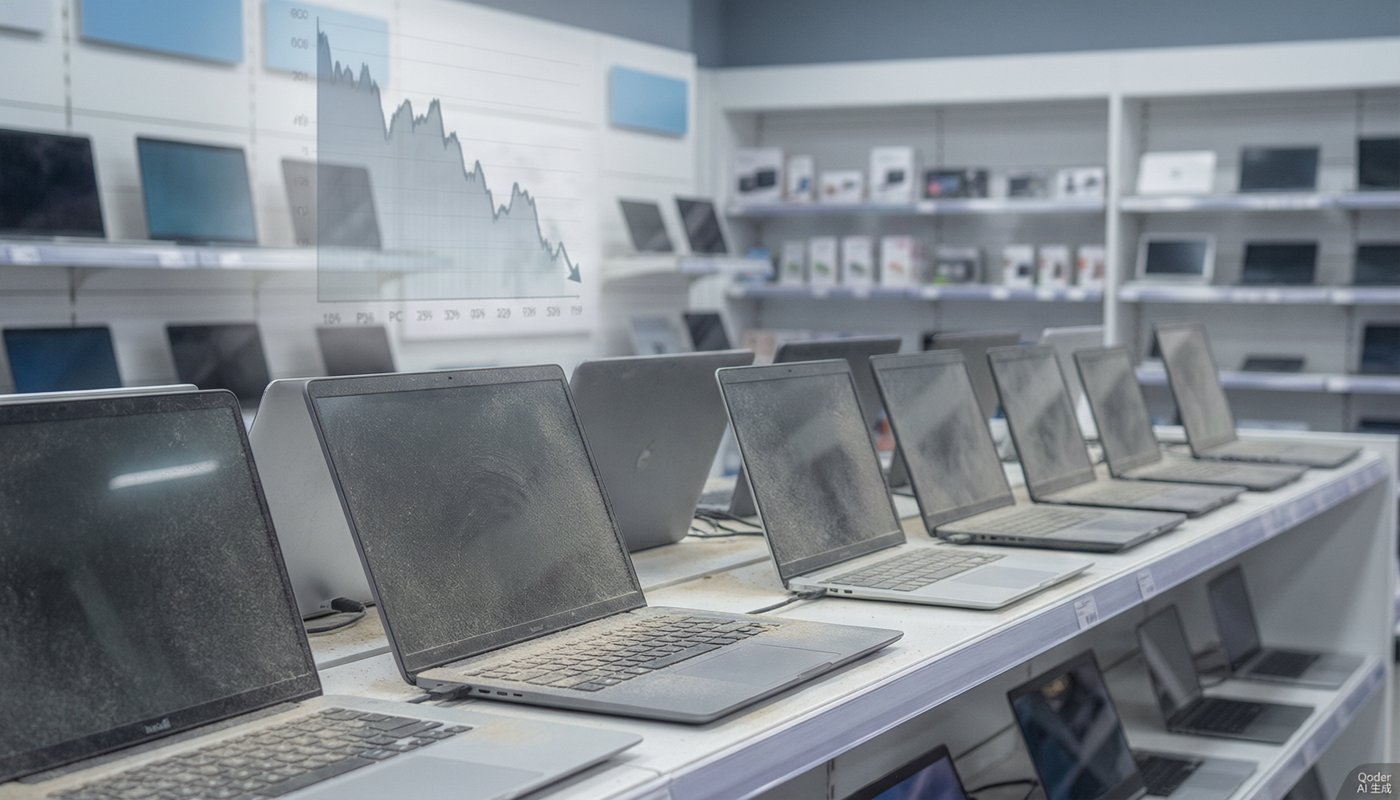
The corporate buyer who refreshed his company’s laptops in 2024, when Windows 11 upgrades were rolling out and prices were reasonable, is not buying again this year. Neither, it seems, are most of his peers. PC shipments in the United States fell 7 percent in the first quarter of 2026 from a year earlier, to 15.8 million units, according to research firm Omdia, the steepest decline since the third quarter of 2023.
The drop is the product of two forces pulling in the same direction. Memory prices, which rose sharply as AI data centers consumed record volumes of DRAM and NAND flash, pushed up the cost of the components inside every computer, and manufacturers passed those costs on. At the same time, the wave of Windows 11 upgrades that drove sales in 2023 and 2024 has run its course, leaving commercial buyers with no reason to replace machines that still work.
The two factors compound each other. Companies that already completed their Windows 11 migrations are now facing higher prices for any further purchases, and the timing could not be worse for PC makers, who had hoped the upgrade cycle would carry them through until a new generation of AI-equipped laptops arrived. Instead, the market is being squeezed from both directions: weaker demand and higher costs.
The memory price shock is the more disruptive of the two. DRAM and NAND prices have climbed for more than a year, driven by the same AI boom that has reshaped the semiconductor industry, and PC makers have absorbed the increases unevenly. Some have passed them to consumers, some have trimmed configurations to hold prices steady, and some have simply shipped fewer machines. Every option cuts into volume.
The Windows effect is the quieter problem. The Windows 11 upgrade cycle, which began in earnest in 2023, pulled demand forward: companies that would have bought over several years compressed their purchases into a shorter window, and the market is now paying that debt back. Omdia said the base effect, comparing this year’s sales against the peak of the upgrade wave, magnified the year-over-year decline.
The consumer market is faring differently. Sales to individuals have held up better than commercial sales, helped by back-to-school promotions and by the slow arrival of laptops with dedicated AI processors, which have given consumers a reason to trade in machines they might otherwise keep. But consumer volume is smaller than commercial volume, and it cannot offset the corporate slowdown.
The weakness is not evenly distributed across vendors. Dell and HP, which depend heavily on corporate sales, have felt the commercial pullback most directly, while Apple, whose premium laptops attract a different buyer, has been less exposed to the memory-driven price pressure at the low end. Analysts said the divergence could show up in the vendors’ quarterly results in the coming weeks.
PC makers are responding the way they always do to a soft market: with promotions, configuration changes and appeals to upgrade to AI features. The pitch this year is that new laptops with faster neural processors can run AI applications locally, a feature that was the industry’s main hope for reviving demand. So far, the evidence suggests buyers are interested but not yet convinced enough to open their wallets.
The memory shortage has also created a secondary problem for PC makers: allocation. Component suppliers that sell to both data centers and PCs naturally favor the customers paying the highest prices, and AI companies pay far more per chip than PC makers do. Some manufacturers reported that they could not source as much memory as they wanted even before the demand decline, a constraint that limited how much they could cushion price increases with larger configurations.
The industry’s long-term question is whether the PC market has permanently shrunk. Smartphones absorbed much of the casual computing that PCs once owned, and tablets took another slice, and the pandemic-era surge in PC sales proved temporary. Even the AI laptop wave, which manufacturers touted as the next big thing, has produced more announcements than replacements.
Omdia’s data covers only the United States, but the pattern appears to be repeating in other mature markets, where the same memory prices and the same completed upgrade cycles apply. The one bright spot is the corporate refresh cycle that is starting to build for 2027, when the first wave of Windows 11 machines will be old enough to replace. There are counterarguments to the gloom. The installed base of PCs is aging, and even without a major upgrade catalyst, replacement demand eventually reasserts itself. Some analysts also point out that AI laptops are still in their first generation, and that the second generation, with faster processors and more memory, could arrive at a moment when the upgrade cycle is ready. The question is whether the industry can hold on until then, and at what margins.
Until then, the PC industry is learning to live with a market that is smaller, more expensive and much harder to predict.