
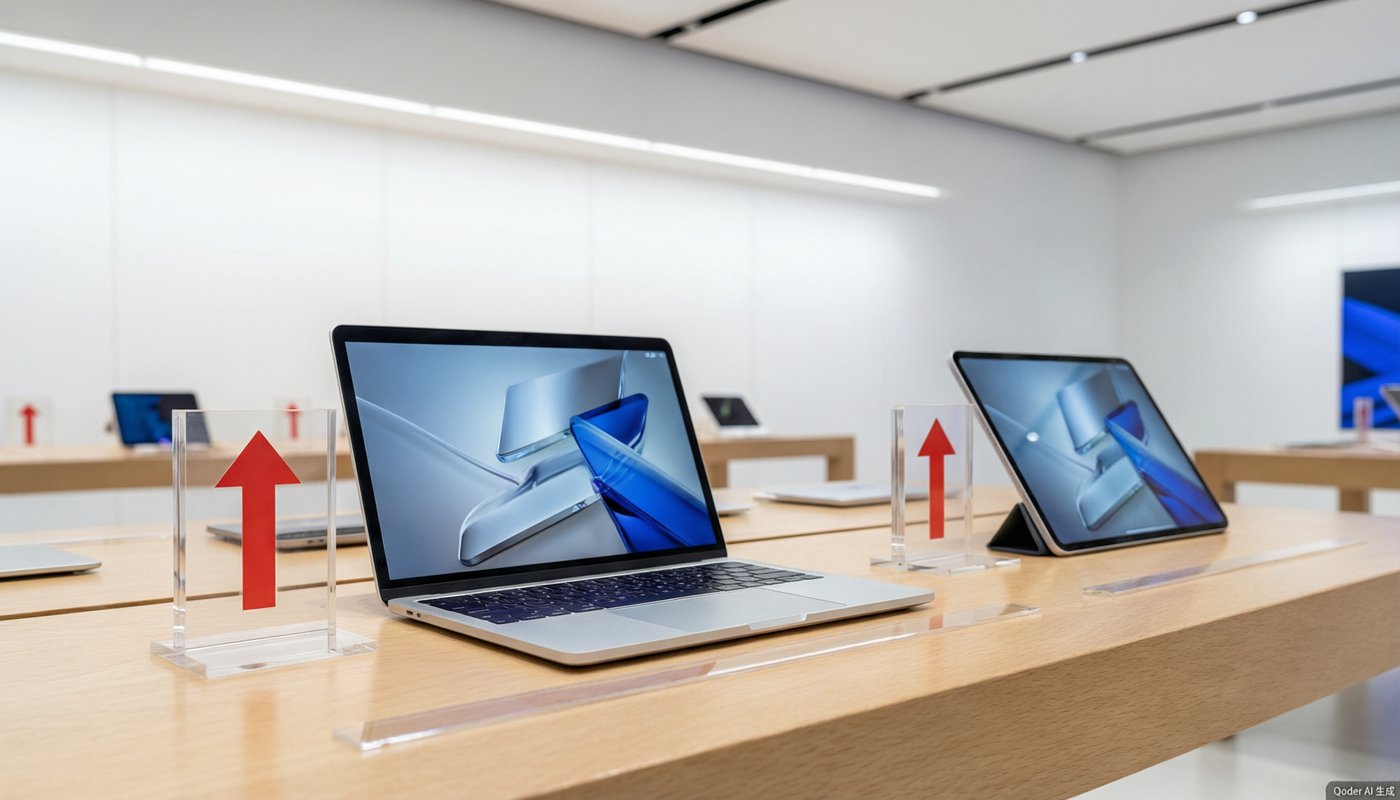
Apple’s Wednesday close was its worst in more than a year, and the reason was on the price tags. The company raised prices on MacBooks and iPads by 200 to 500 dollars, passing on a surge in memory costs that has reshaped the economics of the computer industry, and investors responded by selling the stock down more than 6 percent in a single session.
The drop was the largest single-day decline for Apple this year and the steepest in more than a year, according to data compiled by CNBC, which first reported the details of the price increases. The moves came as the company, which has long resisted raising prices on its core products, conceded that it could no longer absorb the rising cost of the components inside them.
The culprit is memory. DRAM and NAND flash prices have roughly quadrupled since 2024, according to supply-chain sources, driven by the same AI boom that has consumed enormous quantities of memory for data centers. PC and phone makers have been squeezed for months, and Apple, which buys memory in vast volumes, has finally passed the increase to customers.
The decision is a departure for Apple. The company has treated pricing as a competitive weapon, keeping Mac prices stable for years while competitors cut theirs, and its premium positioning has rested on the idea that its products justify their cost. Raising prices by hundreds of dollars tests that idea, particularly at a moment when consumers are watching their spending.
The question analysts are now asking is whether Apple’s pricing power survives contact with the market. TIKR.com, a research firm that covers Apple closely, said the increases could suppress demand for upgrades, as customers delay replacing machines that still work. The memory shock is temporary in principle, but the habits it creates, waiting longer between purchases, may not be.
The company’s margins tell part of the story. Apple has some of the highest gross margins in hardware, and it could have absorbed the memory costs for a quarter or two, as it has done in past component cycles. That it chose to raise prices instead suggests management expects memory costs to stay elevated for a while, or that it wants customers to share the burden of the AI-driven component boom.
The reaction of the stock suggests the market sees the trade-off as unfavorable. A price increase that protects margins but slows unit growth is not obviously a win, and the 6 percent drop shows how much of Apple’s valuation rests on continued growth in its device business. The company’s services revenue, which grows regardless of hardware volumes, offers some cushion, but not enough to offset a weak quarter.
The price increases are not uniform. Apple has kept the entry-level models closer to their old prices, concentrating the increases on configurations with more memory and storage, the ones where the component costs bite hardest. That structure is deliberate: it protects the price points that attract first-time buyers while extracting more from customers who want higher-spec machines, a split that analysts said limits the damage to demand at the bottom of the range.
There is also a competitive angle. Apple’s price increases come as the broader PC market is already shrinking, with shipments down sharply in the first quarter of 2026, and rivals like Dell and HP have been more aggressive in holding prices down. If Apple’s higher prices push buyers toward Windows machines, the company could trade margin for market share, a bargain that rarely works out in the premium segment.
The longer-term question is what the memory cycle means for the industry. AI data centers are consuming so much DRAM and NAND that suppliers have redirected capacity, and consumer electronics makers are competing with hyperscale clouds for the same wafers. Analysts said the shortage could persist through the year, which would keep prices high and force more price increases across the industry.
For Apple, the memory shock arrived at an awkward moment. The company is preparing a new generation of iPhones, and it has been trying to frame AI features as a reason to upgrade. Higher prices for the computers people buy now make that pitch harder. Apple has navigated component shortages before. In 2021 and 2022, during the pandemic-era chip crunch, the company absorbed higher costs and kept prices stable, using its scale and its purchasing power to ride out the cycle. The difference this time is the scale of the increase, memory costs four times higher, and the company’s willingness to break its long-standing pricing discipline, which investors read as a sign that management expects the pain to last.
Apple’s leadership has always insisted the company manages for the long term; the market’s reaction on Wednesday suggests investors are not convinced the memory bill is worth passing on.



