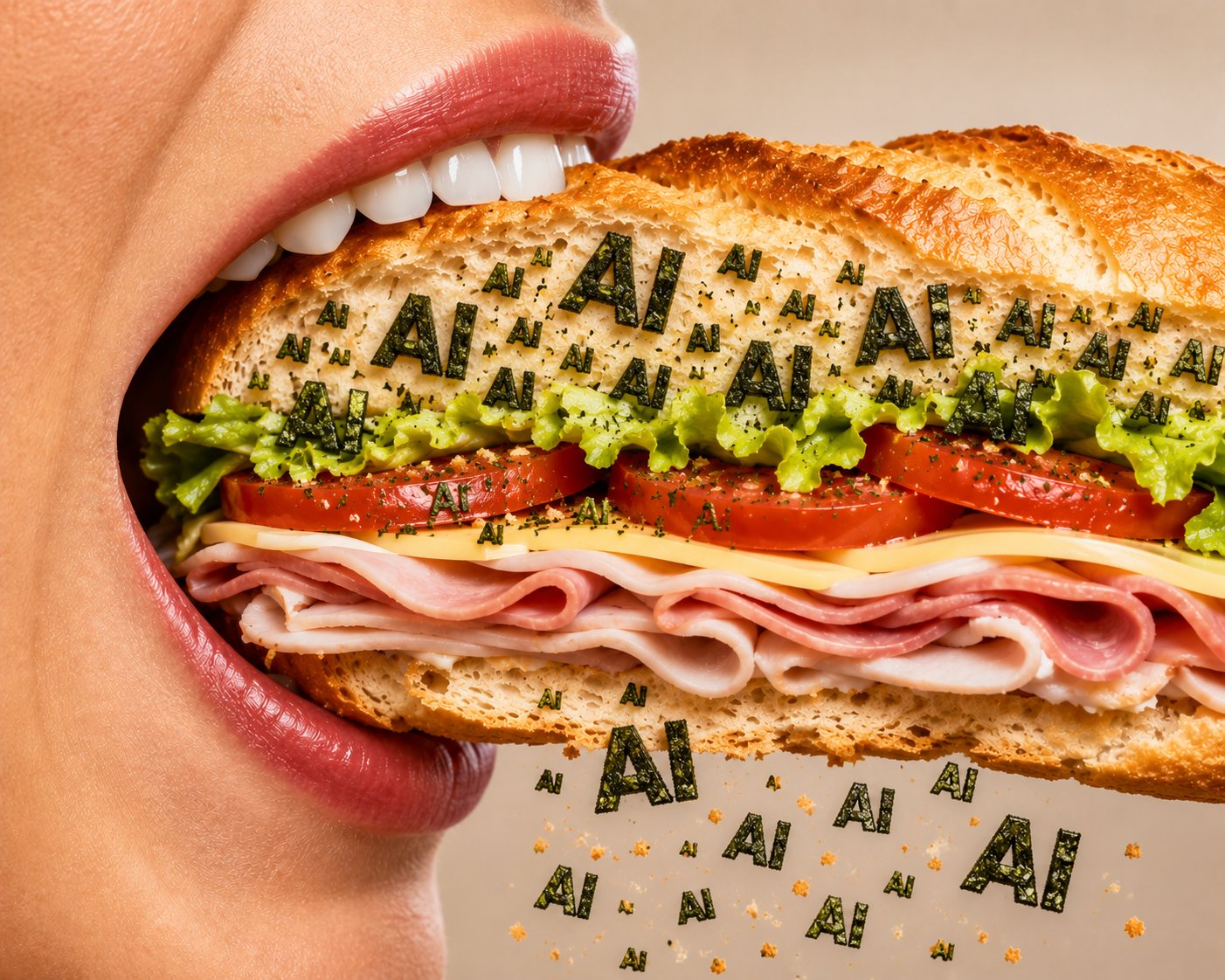
The filing runs to hundreds of pages, and the word appears dozens of times: artificial intelligence, or its ubiquitous abbreviation, AI. The company making the filing sells submarine sandwiches. Jersey Mike’s, the fast-growing chain with thousands of stores across the United States, has packed its initial public offering documents with references to AI, and the juxtaposition has become a case study in how the technology has colonized the language of capital markets.
TechCrunch flagged the phenomenon this week, and the reaction spread quickly across financial media, in part because the example is so clean. Here is a business built on bread, meat and storefront economics, telling investors about its plans for artificial intelligence. The sandwich chain’s own numbers, the filing shows, are strong: years of same-store growth, a national footprint and a brand that has expanded steadily. The AI mentions are not the reason the company can go public. They are the dressing.
The filing reflects a trend that analysts have tracked for two years. Studies of IPO documents show mentions of AI rising sharply since 2024, as companies of every description added the term to their risk factors, business descriptions and growth strategies. Some of the mentions are substantive, tied to real investments in software and automation. Many are aspirational, describing plans that could apply to any company in any industry.
The prospectus does not hide the mundane reality of the business. It describes the costs of bread, labor and rent, the systems for training franchisees and the logistics of getting ingredients to thousands of stores, all of it the standard machinery of a restaurant company. The AI references sit alongside that machinery, describing plans for digital ordering, supply-chain software and customer data, uses that are real but hardly revolutionary.
The sandwich chain is not pretending to be a technology company. Its prospectus describes its core business in traditional terms: restaurants, franchises, supply chains and the economics of selling lunch. The AI language appears in the sections where companies describe how they intend to grow, how they manage their operations and what could go wrong, the same sections where every other recent filer has added the same word.
Why would a sandwich company need AI in its filing at all? The answer says more about the market than about the company. Underwriters and investors have rewarded companies that connect themselves to the AI story, and the language of the prospectus is written with that audience in mind. A filing without the word would not disqualify Jersey Mike’s, but a filing with it costs nothing and may help.
The pattern carries a cost that is harder to measure. When every company claims the technology, the claims stop meaning anything, and investors must spend more time separating real exposure from language. The Jersey Mike’s filing is a useful test case for the gap between what companies do and what they say.
For Jersey Mike’s, the AI discussion is a small part of a filing that stands on its own. The chain’s growth has been driven by the fundamentals of the restaurant business: unit economics, franchisee selection and the consistency of the product. Its path to the public market does not depend on machine learning, and its investors will judge it on store openings and same-store sales, not on the number of times the word appears.
Underwriters are part of the story. The banks that bring companies to market have their own reasons to encourage the language, since AI exposure has helped price deals and attract investors, and the prospectus reflects the market they are selling into. Nobody forces a sandwich chain to mention AI, but the structure of incentives makes the mention nearly automatic.
The broader question is what the trend says about the market’s temperature. Companies add buzzwords to filings when they believe investors want to hear them, and the belief itself is a data point. When a sandwich chain mentions AI in its prospectus, the market is telling the companies something: the word has become part of the language of going public, a vocabulary everyone speaks and nobody fully trusts.
Analysts who study filings say the pattern mirrors earlier cycles. Companies once stuffed prospectuses with references to the internet, then to cloud computing, then to blockchain, and in each cycle the mentions peaked near the top of the market. The AI wave has followed the same shape, and the fact that it has reached the sandwich aisle suggests how broad the adoption has become.
The risk is not that Jersey Mike’s is overstating its AI plans. It is that the market stops being able to tell the difference between the companies that mean it and the companies that say it. The filing’s AI language, taken at face value, is a plan for using software to improve a restaurant business; taken as a signal, it is the industry’s most reliable indicator that the AI narrative has reached full saturation.
Investors reading the prospectus should do what the company’s own numbers suggest: weigh the fundamentals and discount the vocabulary. Jersey Mike’s is a good restaurant company going public with the language of the moment attached to its story. The food is the business, and the AI is the garnish.