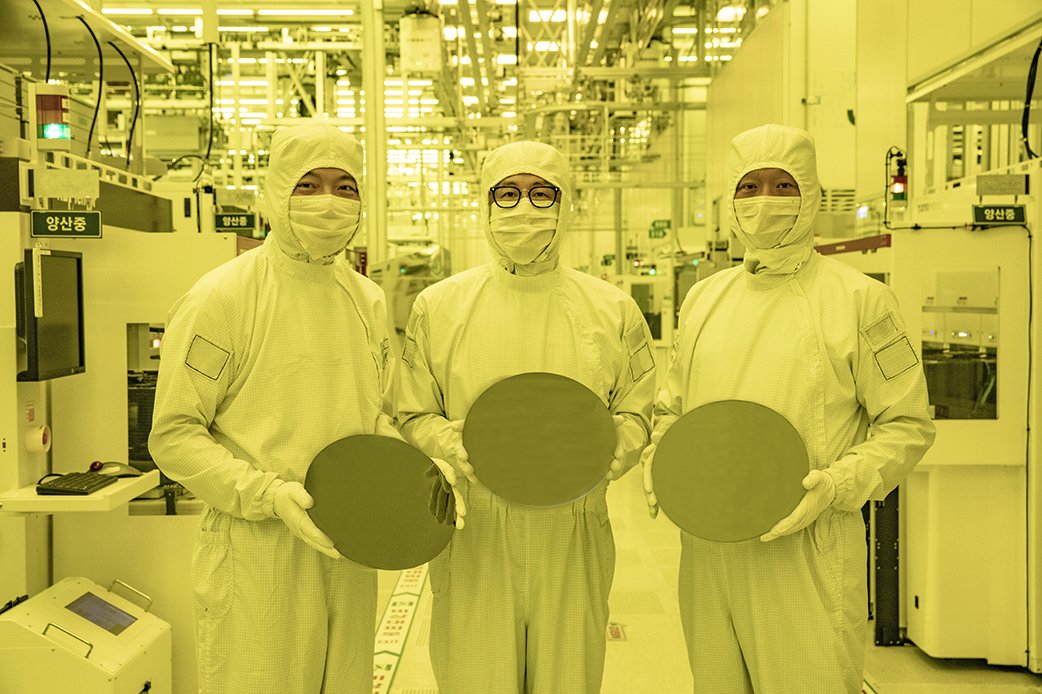
Samsung Electronics Co. has begun producing Tesla Inc.’s AI5 chip at its wafer fab in Taylor, Texas, using its 2-nanometer process, according to Electrek. The move makes Tesla the flagship customer for Samsung’s newest manufacturing technology in the United States and gives the Korean company a beachhead in the advanced-foundry business that has been dominated by TSMC.
Yonhap News Agency confirmed the same day that Samsung has completed the design of the AI5 chip and is preparing for mass production. The timing matters: 2-nanometer is the frontier of chip manufacturing, and every wafer produced at the Taylor fab is a test of Samsung’s ability to compete at the very edge of the technology. The company has staked its foundry ambitions on the process, and Tesla is the first major customer to put it to work.
For Tesla, the AI5 chip is a component of its self-driving push, which depends on increasingly powerful on-board computing. The company has designed its own silicon for years, working with partners to produce it, and the shift to a 2-nanometer part at a Texas fab shortens the supply chain for a product that is central to its strategy. Producing the chip on U.S. soil also insulates Tesla from some of the geopolitical risk that hangs over chip supply from Asia.
The deal is a study in competitive dynamics. TSMC has long held the lead in advanced foundry services, and its customers, including Apple and Nvidia, have been reluctant to move designs to other suppliers. Samsung’s pitch to Tesla ran through cost, capacity and geography: a fab in Texas, close to Tesla’s operations, with a process that Samsung says matches TSMC’s latest nodes on performance. Winning Tesla gives Samsung proof that the pitch works.
The Taylor fab has been a long-running project with a bumpy history. Samsung chose the site for its proximity to customers and its access to power and water, but construction and ramp-up have taken years longer than originally planned. The facility is now producing, and the Tesla order gives it an anchor. Analysts who follow the company said the next test is yield: whether the 2-nanometer process can produce chips in volume at a cost that makes the business profitable.
Samsung’s foundry division has been the laggard inside a company best known for memory chips. It has invested heavily to close the gap with TSMC, but share gains have been slow, and some customers have been cautious about qualifying a second supplier for leading-edge parts. Tesla’s willingness to commit is a signal that the caution is easing, at least among customers that value design flexibility and domestic production over the comfort of an established supplier.
The broader contest is about the geography of advanced chipmaking. The U.S. government has pushed for domestic production through the CHIPS Act, and Samsung has been one of the beneficiaries, with federal support attached to the Taylor project. Producing Tesla’s AI5 chip there gives the program a visible success: an American-designed AI processor made in an American factory by a foreign-owned company that chose the U.S. for its next-generation output.
The foundry push is expensive, and Samsung’s shareholders have felt it. The company has spent billions on new fabs and process development while its memory business, long the profit engine, has cycled through a downturn. The Taylor ramp has absorbed capital and attention, and the division’s losses have weighed on the parent’s results. A successful 2-nanometer program with a marquee customer is the argument that the spending is beginning to pay for itself.
The AI5 chip itself is part of a broader trend in the auto industry. Carmakers that once bought standard processors are now designing custom silicon for their own software, and the move from design to production has become the competitive edge. Tesla’s decision to put its newest chip at Samsung rather than TSMC was closely watched by other carmakers, which are evaluating their own foundry choices. A smooth ramp in Texas could open the door to more automotive and industrial customers for Samsung, which has pitched its U.S. footprint as an advantage for clients that want domestic production.
There are limits to what one order proves. Tesla is not the largest buyer of advanced chips, and its volumes are small compared with the hyperscalers that dominate TSMC’s order book. The AI5 program is a validation of the process, not a challenge to the market leader’s share. Samsung will need more customers, more volume and better yields before the foundry business stops being a drag on the company’s results.
For now, the Taylor fab gives Samsung something it has lacked: a headline customer for its newest technology and a production site in the U.S. that can be shown to other potential clients. The company’s road map calls for successive generations of advanced nodes, and each one needs a flagship order to prove itself. Tesla played that role in Texas. The next question is who follows.