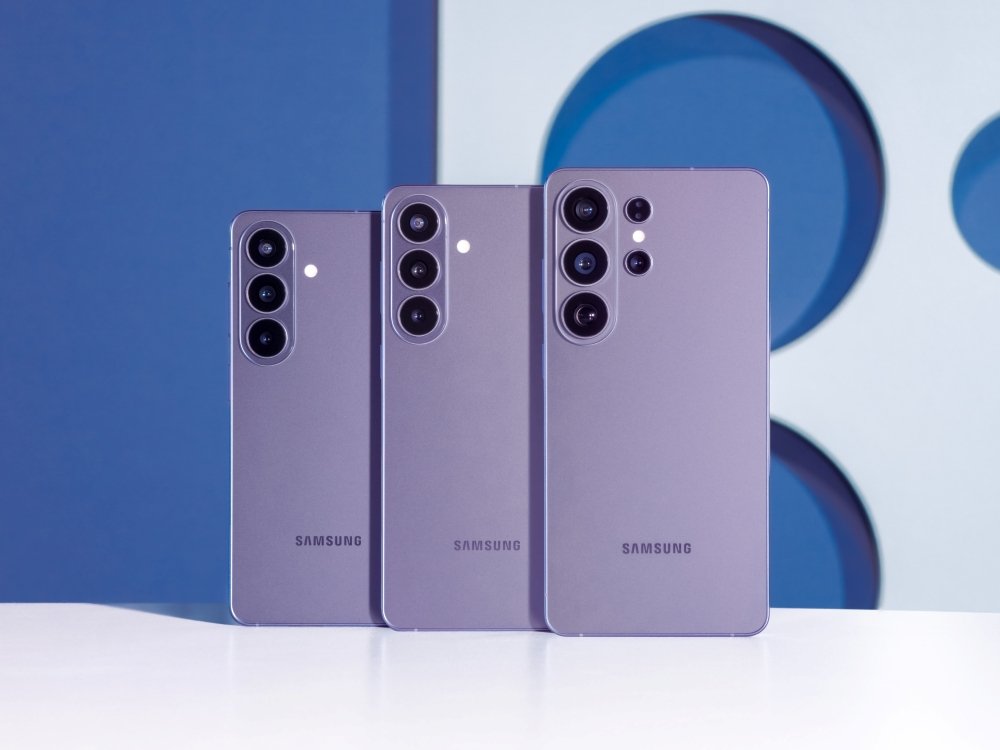
Samsung Electronics opened its Galaxy Unpacked event on Wednesday with a foldable phone, a pair of smart glasses and two new watches, a product spread designed to defend its lead in hardware at a moment when rivals are pressing on every front. The centerpiece was the Z Fold8, a foldable the company said is now roughly the size of a passport when closed, priced $100 higher than its predecessor.
The price increase was the detail that drew the most attention. Foldables remain the most expensive mainstream phones, and Samsung has been trying to move them from novelty to necessity for years. The company argues the larger price tag buys a thinner device, a sturdier hinge and a display that folds flat — the incremental improvements that have defined the category’s evolution. Analysts said the increase reflects rising component costs and Samsung’s confidence that foldable buyers are less price-sensitive than the mass market.
The Galaxy Glasses, announced at the same event, are Samsung’s answer to the Ray-Ban smart glasses that Meta has sold in partnership with EssilorLuxottica. The glasses run Google’s Gemini AI, carry a 12-megapixel camera and are built around a Qualcomm Snapdragon AR1 chip, with battery life rated at nine hours. Samsung positioned them as a daily accessory rather than a niche gadget: a camera, an assistant and a notification screen worn on the face, priced and styled to be worn in public.
The watch line got the health-and-longevity treatment. The Galaxy Watch9 and the Watch Ultra2 both emphasize health tracking, and Samsung committed to five years of Wear OS updates for the lineup — a pledge aimed at a market where buyers increasingly treat a watch as a long-term device rather than an annual upgrade. Samsung also said it is expanding its partnerships with health-care providers to turn watch data into something doctors can act on.
The event closed with a number: 800 million Galaxy AI devices by the end of 2026. That is the scale Samsung says it needs to compete in AI, where the value of a device increasingly depends on the intelligence running behind it. The company’s bet is that its global hardware reach — phones, tablets, watches, glasses, appliances — gives it an advantage in AI distribution that rivals with narrower product lines cannot match.
The competitive backdrop sharpened the stakes. Apple continues to push its own AI features across its device lineup, and the smart-glasses category, once Meta’s alone, is suddenly contested. Google, whose Gemini AI powers the Galaxy Glasses, is both partner and rival: Samsung relies on Google’s models while competing with Google’s own Pixel hardware. Managing that relationship will be as important as any single product decision.
Samsung’s immediate challenge is execution. The Z Fold8 must justify its higher price in a phone market that grows slowly; the Glasses must avoid the awkwardness that has plagued earlier smart eyewear; the watches must prove the health claims are more than marketing. Unpacked gave Samsung a stage. The next quarter will show whether the products hold it.
The foldable category has reached a pivotal moment. Samsung has dominated it since introducing the first mass-market foldables, but rivals have closed the gap: Chinese manufacturers sell foldables with aggressive pricing in their home market, and Google has entered the space with its own devices. The Z Fold8’s design — thinner, lighter, folding nearly flat — is Samsung’s answer to the argument that foldables remain compromises. The $100 price increase is the riskiest part of that answer, testing whether the category’s buyers will pay more for the refinements.
Smart glasses carry a different set of stakes. Meta has demonstrated that the category can sell in meaningful volumes, but it has also shown how hard the category is to get right: battery life, camera privacy and the social awkwardness of wearing a computer on your face have all been obstacles. Samsung’s entry, built with Google’s AI and Qualcomm’s chips, is the most credible challenge Meta has faced. The nine-hour battery and the everyday styling are direct responses to the criticisms that have followed earlier glasses.
The watch announcements, quieter by comparison, may matter most to Samsung’s finances. Watches are the wearable category with proven scale, and Samsung has been locked in a close contest with Apple for the upper end of the market. The five-year software update commitment is aimed at a buyer concern that has lingered since the category’s start: devices that become obsolete when the software support ends. Health tracking, meanwhile, is the feature buyers cite most often, and Samsung’s push into clinical partnerships is an attempt to make the watch useful to doctors, not just to runners.
The 800 million device target is the connective tissue of the event. Samsung sells more devices in more categories than any of its rivals, and its argument is that this reach becomes an AI advantage: every Galaxy phone, watch and pair of glasses becomes a surface for AI services, generating data and usage that competitors cannot match. Whether consumers see it that way depends on the AI features being genuinely useful. Unpacked showed the hardware. The software will have to follow.