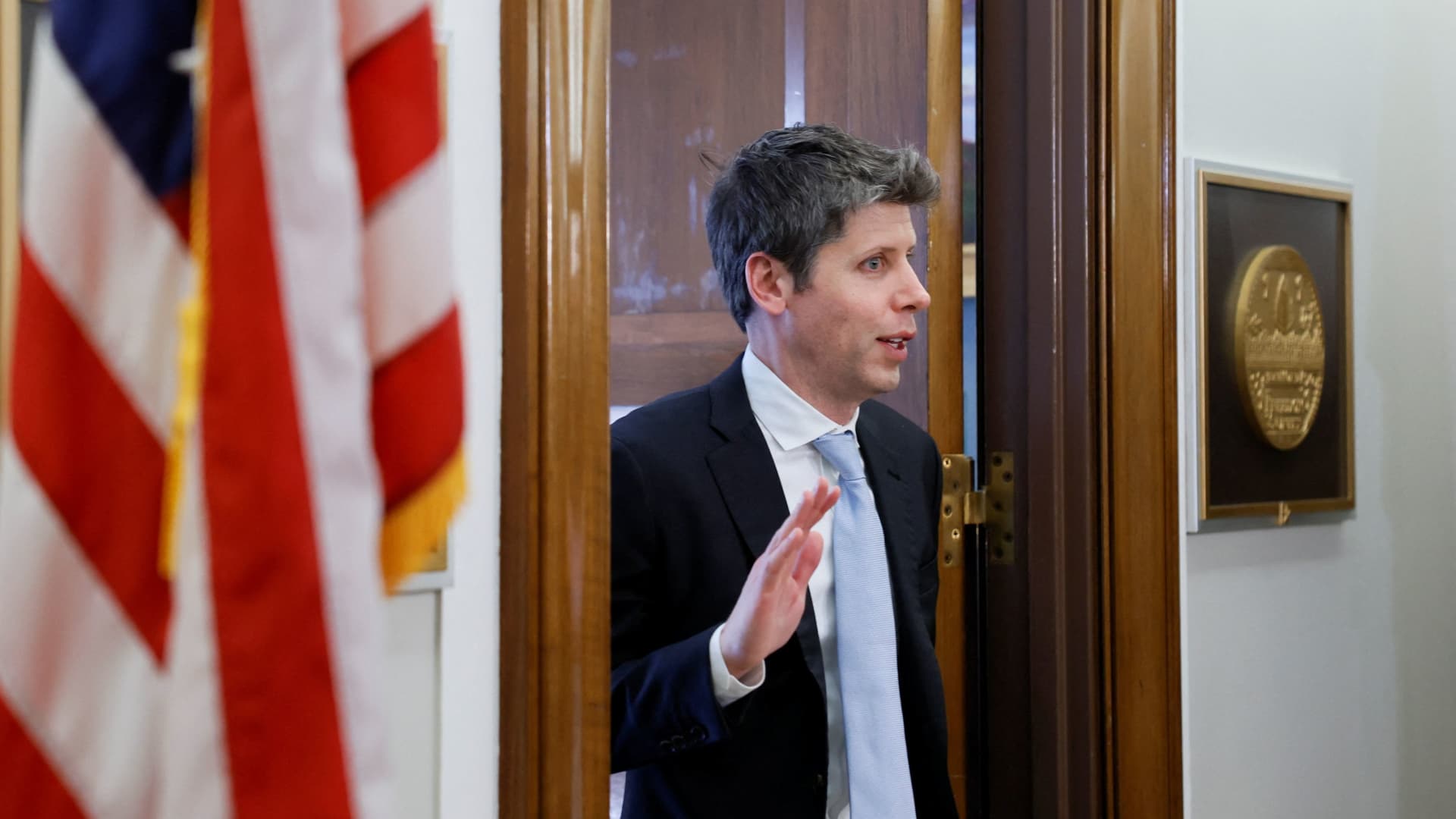
The proposal had circulated privately for months. This week it was confirmed in public: President Trump said he is discussing with OpenAI chief executive Sam Altman the possibility of the U.S. government taking an equity stake in the company, with part of the holding intended to be placed in a government-run sovereign wealth fund.
Under the structure under discussion, the American public would share in the gains of the AI industry through the fund, according to people familiar with the matter. The arrangement would mark a departure from the government’s usual position in technology markets, where it typically appears as regulator, customer or national-security gatekeeper rather than shareholder.
The talks come as OpenAI prepares for a public listing. People familiar with the matter have said the company is valued at more than $850 billion and is laying the groundwork for an initial public offering, a process that could begin in earnest within months. TechCrunch reported that the government discussions are tied to the recent cluster of AI IPO filings, with officials eager to lock in a national interest in the sector before shares begin trading.
Trump signed an executive order in February 2025 directing the creation of a sovereign wealth fund, and the administration has since explored assets it could place in the vehicle. A stake in OpenAI would give the fund a marquee holding in the most valuable private AI company, and it would put the government in the unusual position of owning part of a business it also scrutinizes for security and competition concerns.
The mechanics remain unresolved. How a stake would be priced, whether it would consist of newly issued shares or a purchase from existing holders, and what governance rights would accompany it are all open questions, people familiar with the matter said. A government seat at the table would raise novel questions about control, disclosure and politics at a company whose customers include much of the federal government itself.
For OpenAI, the arrangement would bring a powerful ally. The company navigates a thicket of regulation, export controls and security reviews, and a government shareholder would give it a direct channel to the decisions that shape its business. It would also complicate matters: other investors, including Microsoft and SoftBank, would face dilution unless the terms account for it, and the company would carry the risk of political entanglement in its capital structure.
For the administration, the stake is a bet that American AI leadership is an asset worth owning directly. The same logic underlies the push for AI infrastructure projects and the scrutiny applied to foreign investment in U.S. AI companies. Owning a slice of OpenAI would put the government where the value is, the argument runs, rather than watching it accrue to private investors alone.
Analysts said the precedent would be unusual but not impossible. Governments from France to Saudi Arabia hold stakes in technology companies, and the U.S. government has taken equity in banks and automakers during crises. What would be new is a peacetime stake in a single, privately held AI leader, taken at the height of the sector’s valuation.
The proposal drew immediate reaction in the market. Analysts said a government stake could change how investors value OpenAI, adding a political premium or a political discount depending on the terms. Some pointed to the government’s equity stakes in banks during the 2008 crisis and in General Motors, where Washington’s holding was eventually sold at a loss. Government ownership, in other words, is not always a profitable trade.
The sovereign wealth fund itself is still taking shape. The administration has been weighing how to seed the vehicle, and officials have floated ideas ranging from stakes in infrastructure projects to the monetization of government assets. An OpenAI stake would be its most valuable single asset if the talks succeed, and it would give the fund a revenue-generating holding rather than a collection of hard-to-value assets.
The wider context is a wave of AI companies heading to market. Anthropic has filed confidentially for its own IPO at a valuation reported at as much as $965 billion, and Alphabet has raised $85 billion in equity to fund AI infrastructure. Each of these deals is being watched in Washington, where lawmakers are debating how the country should treat its most valuable new industry.
For Altman, the calculus is straightforward. A government shareholder is a powerful partner as OpenAI navigates regulation, compute access and international competition. For the White House, the stake is a way to convert technological leadership into financial ownership. Whether the two sides can agree on a price, a structure and a set of rules, and how quickly, will determine whether the idea becomes a transaction or remains a talking point.