
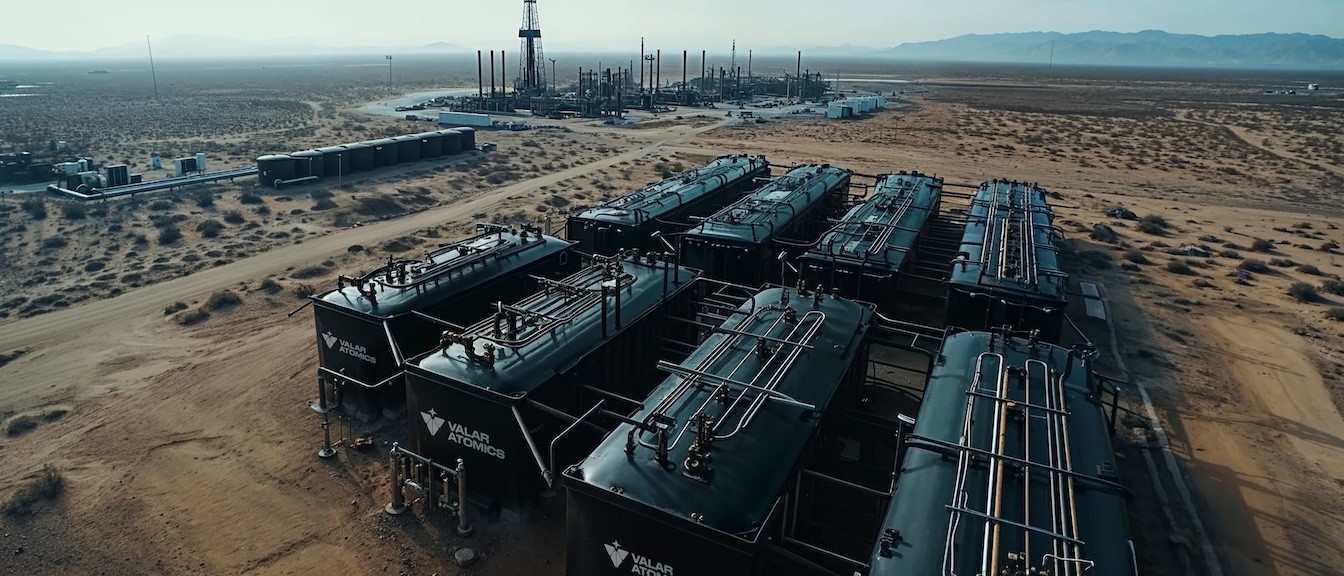
Valar Atomics raised $1 billion in a Series B round led by Sequoia Capital, tripling its valuation to $6 billion from $2 billion, according to Axios. The startup builds modular nuclear reactors, and it has already provided power for Nvidia’s AI chips.
The deal is the latest sign that the AI boom’s next bottleneck is electricity. Data centers need enormous amounts of power, and the industry’s appetite is colliding with grids that cannot expand fast enough. Nuclear power, which runs around the clock and produces no carbon, has become the answer tech companies are betting on.
The wave has been building for two years. Microsoft agreed to restart a shuttered reactor at Three Mile Island to power its data centers. Google signed agreements to buy power from small modular reactors built by Kairos Power. Amazon invested in X-energy. And now venture investors are piling into the startups building the reactors themselves. Valar Atomics is one of the most richly valued of that group.
Valar’s pitch is modularity. Instead of multibillion-dollar plants that take a decade to build, the company aims to deploy smaller reactors that can be manufactured, shipped and installed closer to the customers that need them. Its work with Nvidia — powering AI chips — gives it something most nuclear startups lack: a direct link to the industry’s biggest buyer of power.
The valuation curve is steep. Valar was worth $2 billion in its last round; $6 billion now. A tripling in one round reflects how fast the market has moved, and how few credible nuclear startups exist to absorb the money. Sequoia, the venture firm behind Apple, Google and Nvidia, has been increasing its bets on energy and industrial companies, and its backing lends Valar credibility and access.
The logic behind the bet is simple. AI models consume electricity at every step. Training runs use thousands of chips at full power for weeks, and serving the models afterward uses more. Utilities have told data center developers they will wait years for grid connections, and in some regions new data centers cannot get power at any price. Nuclear offers a way around the queue — if it can be built in time.
That if is the industry’s central question. No reactor of the kind Valar and its peers are selling has completed a commercial deployment in the United States, and licensing, construction and fuel supply all take years. Startups in this field have a history of overpromising, and the timeline from design to electrons has humbled far more experienced companies than any founded in the AI era.
The economics are changing in the industry’s favor. Data center operators are signing power purchase agreements that lock in supply for decades, and nuclear plants, with their long lives, fit those contracts naturally. The federal government has also moved: the ADVANCE Act streamlined licensing for advanced reactors, and the Energy Department has backed fuel supply and demonstration projects. Public opinion has shifted too, with polls showing rising support for nuclear as the climate and power debates converge.
Analysts said the valuations look frothy by the standards of the power industry, but the sector is being priced on scarcity. There are few teams with nuclear experience, and the buyers — hyperscalers with hundreds of billions in capital budgets — are real. When demand is that concentrated, prices rise.
The power market is becoming the AI industry’s ground floor. Every data center, every chip and every model depends on electricity, and the companies that control power supply will capture a share of the AI boom’s returns. The hyperscalers have concluded it is cheaper to invest in nuclear than to bet their entire expansion on grid upgrades.
The risks remain large. Construction costs have a way of exceeding estimates, fuel supply for advanced reactors is still being built out, and a single licensing delay can push a project back years. For Valar, the $1 billion round is a vote of confidence in a very long project, and the market’s patience will be tested well before the first reactor delivers power at scale.
The deal is the latest sign that the AI buildout has changed how investors think about electricity. Microsoft’s agreement to restart a unit at Three Mile Island, Google’s power purchase deal with Kairos Power and Amazon’s stakes in small modular reactor developers have all put nuclear at the center of the data center expansion story. Wall Street has followed: shares of Oklo, a SMR developer that went public in 2024, have swung wildly on the prospect of deals with hyperscalers, and venture funds have poured money into fission startups at valuations that would have seemed fanciful a decade ago.
The pitch is simple on paper. Data centers need round-the-clock power that solar and wind cannot guarantee without massive storage, and nuclear offers a dense, carbon-free source that can be sited near load. The execution is the hard part. No advanced reactor design has reached commercial scale in the United States, the supply chain for fuel and components is thin, and the Nuclear Regulatory Commission’s review process, while streamlined in recent years, still runs on a timeline measured in years. Valar’s backers are betting that the combination of AI’s appetite for power and a new generation of reactor designs can overcome those barriers, and that the first mover will capture the data center contracts that are already being negotiated.
For the AI industry, the deal is a hedge: the models may improve, but the electrons that run them still have to come from somewhere. Investors are betting that somewhere is nuclear — and that the startups building it can learn to build fast.



