
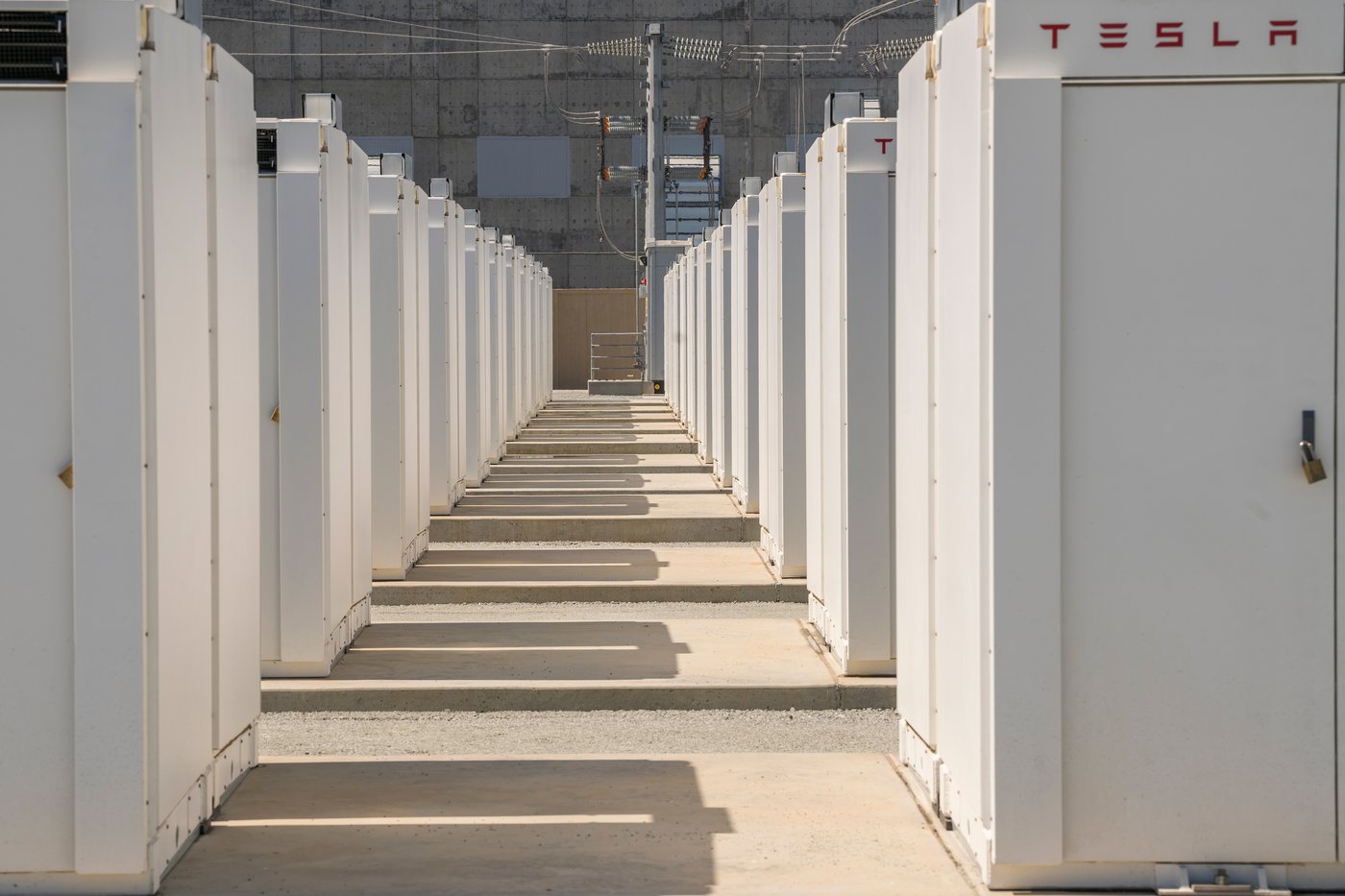
The first units were rolling off the line this week, and for Tesla’s energy division the moment was a long time coming. Megapack 3, the company’s next-generation grid-scale storage product, has entered mass production, with each unit’s energy density up 28% from the previous generation. The improvement matters in a business where land, permitting and grid connections are the scarce resources: denser units mean more capacity in the same footprint, and more revenue per installation.
Tesla’s energy business has become the company’s most consistent growth story. The automotive side of the house has spent years fighting price wars, production hiccups and shifting demand, while the storage division has quietly compounded: Megapack installations at utilities and grid operators have grown quarter after quarter, and the product line now represents the second curve Tesla’s investors have been promised since the beginning. The Megapack 3 ramp, by most accounts, is running more smoothly than any recent vehicle launch, a detail that has not escaped analysts who compare the two divisions’ execution.
The storage market is being built by the same forces that drive the AI boom. Data centers need power around the clock, and grid operators need buffers to smooth the flow of intermittent renewables; both needs translate into demand for large batteries. Utilities that once viewed storage as experimental now treat it as the fastest way to add capacity without building new power plants, and the order books of battery makers reflect that shift. Tesla’s bet, made years ago when storage was a side project, is that scale in manufacturing would let it win the volume race as the market matured.
The 28% density gain is the product of both chemistry and packaging. Tesla has spent years refining the cells and the enclosure design, and the new generation squeezes more capacity into the standardized container that utilities have come to expect. For buyers, the density improvement is a direct cost reduction: fewer units, fewer foundations, fewer interconnections for the same megawatt-hours. In a market where project economics decide which proposals get built, that arithmetic wins contracts.
The same week brought a separate development on the regulatory front. European regulators, under pressure from Tesla, have decided to keep the company’s full self-driving safety data confidential, declining to publish detailed figures that the company argued would mislead the public and handicap its development work. The decision is a win for Tesla’s position that its safety record should be judged by the standards it sets, and a loss for critics who want independent scrutiny of the system’s performance on European roads.
The two stories, production and regulation, fit together in a single picture. Tesla is scaling its most profitable non-automotive business at a steady clip while managing the political and regulatory relationships that determine where its products can sell. The energy division has largely avoided the controversy that surrounds the company’s driving software, and the regulatory accommodation on self-driving data suggests the company’s willingness to fight over the one issue that generates headlines has not diminished.
Analysts who track the storage market say the competitive field is filling up. Chinese battery makers have brought enormous scale to the grid-storage segment, and utilities have more suppliers to choose from than they did when Tesla dominated the early market. Tesla’s answer has been technology and brand: density leadership, software for managing the systems, and a track record of installations that competitors are still building. Whether that is enough to hold share as the market triples is the question the next few years will answer.
The storage market’s trajectory is hard to overstate. Utilities and grid operators have moved from pilot projects to bulk orders in the space of a few years, and the queue for grid connections has become the industry’s real constraint. Tesla’s position in that queue is a function of both product and history: its installations are running at hundreds of sites, its software manages systems from multiple manufacturers, and its brand carries weight with the developers who decide which bids to accept. Rivals have matched some of the technology, but matching a decade of operating data is a slower process.
The economics of the business reward exactly what Tesla has built. Storage contracts are signed years in advance, margins are disclosed with the candor of a maturing product line, and the revenue base compounds as installed capacity grows. The energy division’s growth has become a reliable counterweight to the automotive business, where quarterly results swing with delivery numbers and price cuts. For investors who have grown tired of the car story, the batteries have become the argument: a product with rising demand, improving margins and a production line that hits its targets.
For Tesla’s broader story, the Megapack 3 ramp is the counterweight to the auto division’s turbulence. Investors have watched vehicle margins compress and delivery forecasts wobble; the energy business offers the opposite picture, growing revenue, improving product, steady execution. The company has said storage is a priority, and the production line this week is evidence that the priority is real. In a year of questions about Tesla’s core business, the batteries rolling off the line are the most reassuring answer the company has produced.



