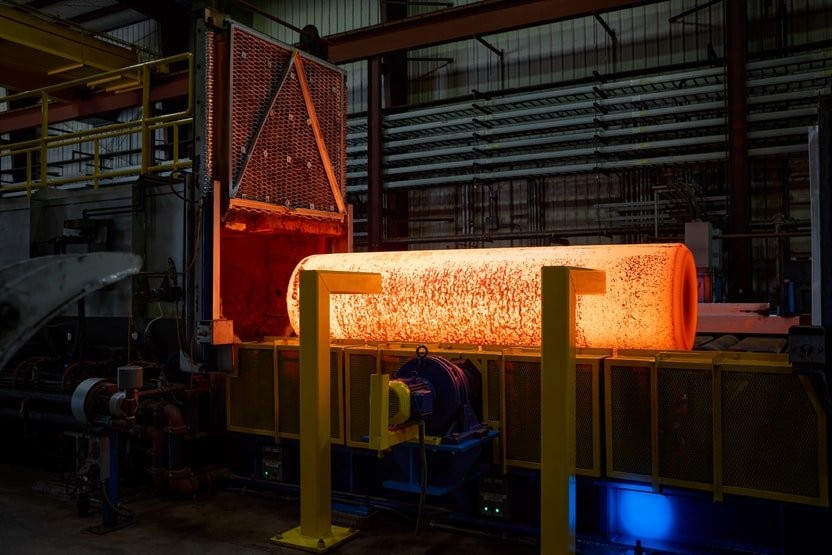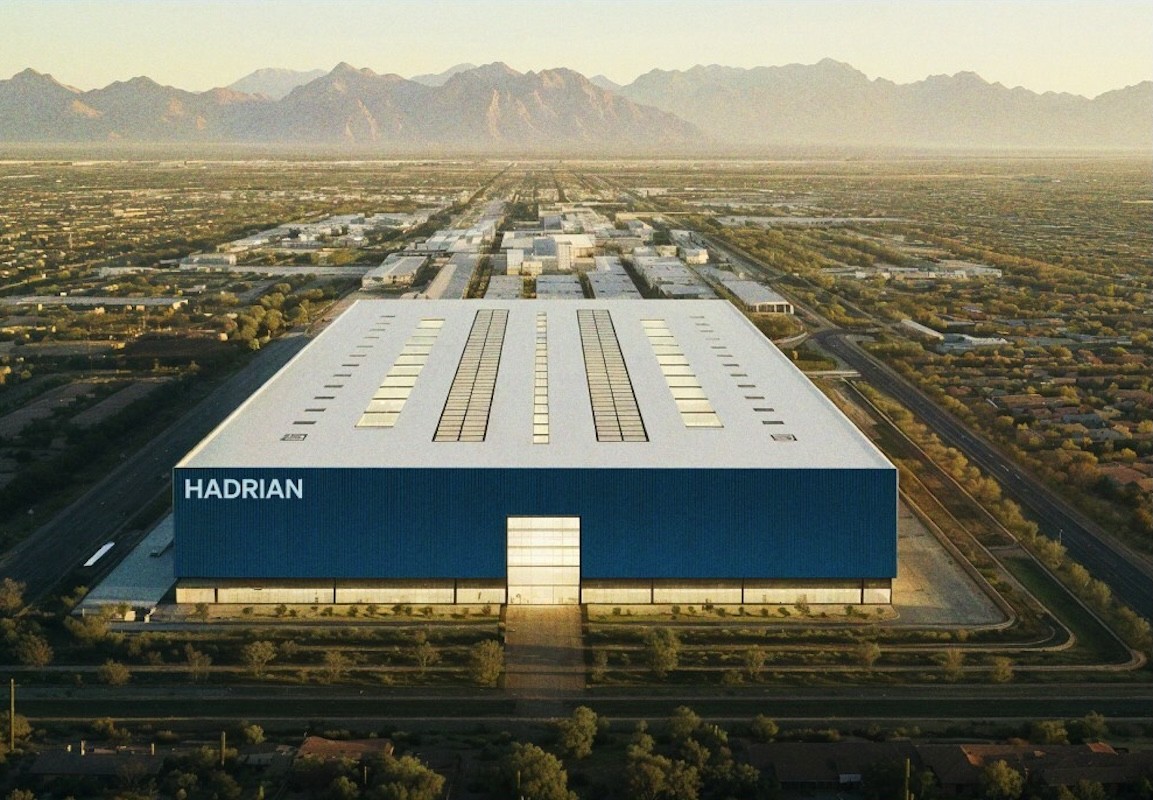
HAWTHORNE, Calif.—The machines in the factory do not look like weapons, and the company that runs them insists they are not in the business of making any. Hadrian builds precision parts—the brackets, housings and components that go into military aircraft, missiles and satellites—using software-driven factories where robots do the machining and algorithms decide the sequence. On Aug. 7, the company said it has raised $1.37 billion in new funding at a valuation of $7.87 billion, with a roster of investors that spans the technology and financial worlds: Andreessen Horowitz, Founders Fund, Lux Capital, Apollo and Baillie Gifford.
The company’s pitch is that the U.S. defense industrial base is broken, and that software can fix it. American weapons programs have long been plagued by long lead times and small supplier bases, with many critical components made by a handful of specialized shops. Hadrian’s answer is to build automated factories that can produce parts faster and cheaper than the traditional supply chain, using AI to optimize machining, quality control and scheduling. The company calls its approach software-defined manufacturing, and its customers are the prime contractors who build the country’s most important weapons systems.
The timing is favorable. Russia’s invasion of Ukraine and the broader deterioration of the global security environment have exposed the limits of U.S. defense production, and Washington has begun a campaign to rebuild the industrial base. The Pentagon has pushed for faster procurement and has embraced startups that can deliver, and the defense technology sector has become one of the few corners of the economy where venture capital is pouring in despite the broader downturn in startup funding. Hadrian has been one of the largest beneficiaries of that shift.
The new round values the company at $7.87 billion, a striking number for a business that was founded only a few years ago. The valuation reflects both the scale of the opportunity and the scarcity of companies with Hadrian’s profile: a defense supplier that behaves like a software company, with factories that can scale by adding machines rather than craftsmen. The investor list is a who’s who of the technology establishment, with Founders Fund and Andreessen Horowitz representing the Silicon Valley wing and Apollo and Baillie Gifford representing the institutional money that has begun to take defense tech seriously.
The business model is straightforward. Hadrian’s factories take in raw metal and produce finished components, using machines that are largely autonomous and software that learns from every part it makes. The company says its approach cuts weeks off traditional lead times and produces parts at costs that undercut the existing supply chain. For the primes—Lockheed Martin, Raytheon, General Dynamics and their peers—that speed and cost matter, because the bottleneck in American defense production is often not design but manufacturing capacity.
The company has said its factories are operating at scale for multiple defense programs, and that its order book has grown faster than it can build capacity. The new funding will go toward new facilities, more machines and the software team that runs them. Hadrian’s founder has described the company’s mission in blunt terms: the defense industrial base needs to be rebuilt, and the only way to rebuild it at the required speed is to automate the work that has been done by hand for decades.
The broader trend is the context for the funding. Defense technology has become one of the hottest sectors in venture capital, as investors have concluded that the security environment is permanently changed and that the companies supplying the military will grow for years. Drones, satellites, cyber tools and now manufacturing have all attracted large rounds, and Hadrian’s $1.37 billion is among the largest ever raised by a defense startup. The money is betting that the U.S. military will keep buying, and that the companies building the modern defense supply chain will capture a growing share of a growing budget.
There are risks. Defense procurement is notoriously slow and cyclical, and a startup’s fortunes can hinge on a single program’s fate. Hadrian’s reliance on the primes as customers means it is one step removed from the Pentagon, and its growth depends on the primes’ willingness to outsource more manufacturing to automated factories. The company has argued that the trend is structural, that the primes themselves are under pressure to reduce costs and lead times and will keep turning to suppliers like Hadrian. So far the argument is working: the order book is full, the factories are running, and the investors are lining up.
The round makes Hadrian one of the most valuable private defense companies in the United States, a position that brings attention and expectations. The company’s answer to both is the same: keep building factories, keep cutting lead times, and keep proving that software can run a machine shop as well as it runs a cloud. The $1.37 billion is a bet on that proposition, and on the belief that the next generation of American defense manufacturing will be built by companies that think like Silicon Valley rather than like the industrial base they are replacing.