
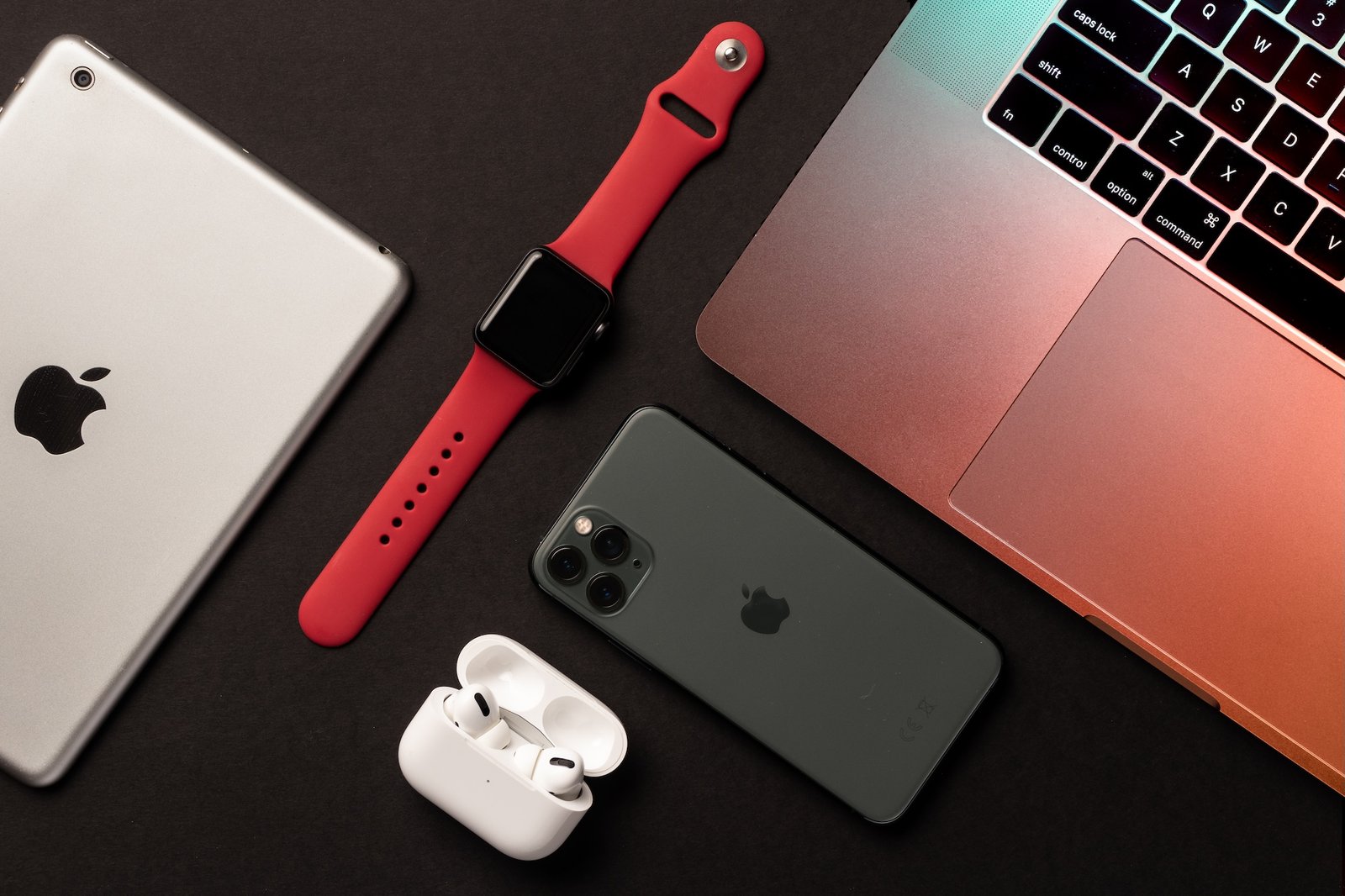
CUPERTINO, Calif. — In one week, Tim Cook will do what no Apple chief executive has done since the company’s founding era: hand the job to a successor while staying on. Cook, who announced in April that he would relinquish the chief executive role on Sept. 1, will become executive chairman, and John Ternus, the company’s hardware chief, will take over as CEO. The transition arrives just as Apple’s retail stores prepare for a fall wave of smart-home products — a new product line, executives have said, that will test the company’s ability to extend its ecosystem beyond the phone.
The handover has been planned for months, but its timing is still striking. Cook’s 15-year tenure saw Apple’s market value rise from roughly $350 billion to about $5 trillion, powered by the iPhone’s expansion into a global platform, the growth of services revenue, and the company’s ability to keep raising prices without losing customers. He steered Apple through the death of Steve Jobs’s product vision and the reinvention of its business around subscriptions and services, and he leaves the company in its most profitable era. His decision to remain as chairman ensures continuity of a kind that is rare in corporate America.
Ternus inherits a company facing its most consequential transition since the iPhone: the shift to artificial intelligence. Apple’s AI strategy has been deliberate and, by the standards of its rivals, slow. The company integrated its own models into its devices, struck a partnership with OpenAI to bring a more capable assistant to the iPhone, and has promised a deeper integration of AI into every product it makes. The bet is that Apple’s advantage — control of the hardware, the operating system and the customer relationship — will let it deliver AI experiences that its competitors cannot match. The smart-home push, which follows years of stalled attempts, is the first major test of that thesis under new leadership.
Cook’s record on AI is mixed by his own admission. He was early to warn about the risks of the technology and late, by some accounts, to commit the company’s resources to it. Apple’s competitors — Microsoft, Google, Amazon — have spent the AI boom building cloud-based models and data centers, while Apple guarded its lead in devices. The result is that Apple enters the AI era with the strongest distribution and the weakest infrastructure, a combination that has forced it into partnerships, including the one with OpenAI, that its executives once ruled out.
The retail organization, one of Cook’s signature creations, is preparing for the transition with characteristic precision. Store teams have been retraining on the smart-home lineup, and the company is expected to make the new products a centerpiece of its fall displays. For Apple, the home has been a difficult market: the company’s attempts to build a hub for the connected household have stalled repeatedly, and its competitors have shipped more aggressively. Ternus, who led the development of the company’s silicon strategy and its recent hardware successes, is expected to apply the same discipline to the home category.
Wall Street has taken the transition in stride. Apple’s shares have traded in a narrow range since the announcement, and analysts note that Cook’s continued presence as chairman and the depth of the executive bench reduce the risk that often accompanies CEO changes. The company’s succession planning has been described as the most rigorous in technology, with Ternus groomed for the role over several years while running the hardware division.
The deeper question is what Ternus changes. Cook’s Apple was defined by operational excellence — supply chains, retail, services, capital returns. Ternus’s Apple will be judged on products, and on whether the company can convert its AI partnerships and its device base into the next era of growth. The smart-home launch will be his first public exam; the years after will decide whether Apple remains the world’s most valuable company or cedes the next decade to the builders of AI.
Cook’s tenure will be studied as a case in how to manage a company through extraordinary growth without losing its identity. He took over at a moment of crisis — the illness and death of Jobs, the skepticism about whether Apple could innovate without its founder — and answered by expanding the iPhone franchise, building the services business into a hundred-billion-dollar engine, and turning Apple’s supply chain into a competitive weapon. The Watch, the AirPods, the transition to Apple silicon and the trillion-dollar services expansion all happened on his watch. The market value that grew to five trillion under his leadership is the simplest measure of his record, and it explains why the board asked him to stay.
The company he hands over is in strong financial shape but facing structural questions. Apple’s core products have matured, and its growth increasingly depends on new categories — the headset business, services, and now the home. Its AI strategy is a partnership model rather than an ownership model, and its dependence on other companies’ models is a departure from the vertical integration that defined its success. Ternus, a career Apple hardware man, will decide how much of that culture survives a software-led shift.
For the employees walking into the company’s headquarters on Sept. 1, the change will be felt in small ways first — new voices in the meetings that matter, new priorities in the product reviews, a new name in the signature on the documents that cross the building. The larger test will come with the products. Apple has promised that its AI future will be personal, private and deeply integrated, and the smart-home lineup is the first delivery of that promise. Ternus’s Apple will be measured against the standard Cook set: not just new products, but products that define how millions of people live.



