
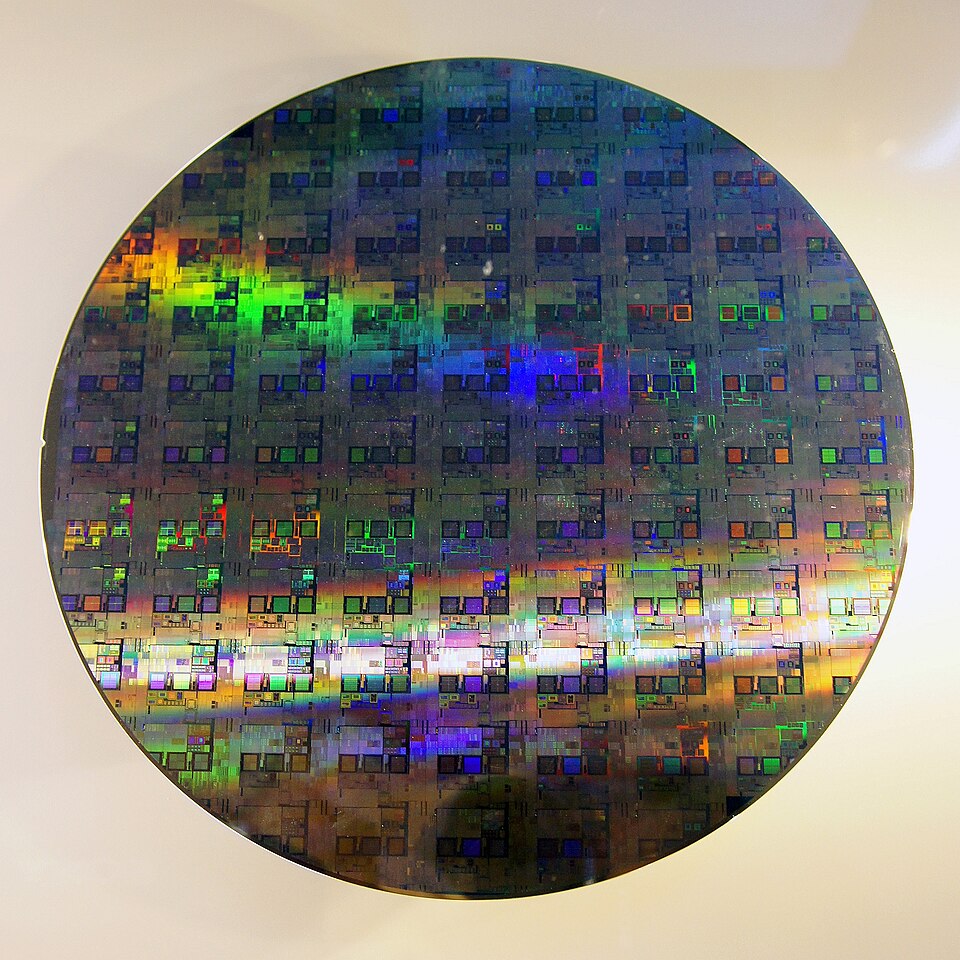
TSMC is reallocating capacity at its CoWoS advanced-packaging lines, giving AMD a larger share of the industry’s most sought-after AI packaging resource while trimming the allotment reserved for Nvidia, according to Digitimes, which reported the shift on Aug. 26. Morgan Stanley analysts said AMD’s ramp of agentic AI CPUs in 2027 will amplify the rebalancing, extending a trend that is quietly redrawing the pecking order of the AI supply chain.
CoWoS, which stands for chip-on-wafer-on-substrate, is the packaging technology that lets AI accelerators combine a processor with stacks of high-bandwidth memory in a single package. Demand for the process has outstripped supply for three consecutive years, and every major AI chip is built on it. Whoever holds CoWoS capacity holds a seat at the AI table, which is why TSMC’s allocation decisions are watched as closely as its earnings.
The rebalancing is not a rejection of Nvidia. TSMC’s relationship with its largest customer remains intact, and Nvidia still commands the biggest share of CoWoS output. But the company has expanded total capacity, and the new increments are going disproportionately to other clients, including AMD, Google, and a growing list of custom-silicon designers. Nvidia’s proportional share is shrinking even as its absolute volume grows, a distinction that matters for how investors read the market.
AMD has been the most aggressive beneficiary. The company has bet its data-center business on the Instinct line of accelerators and on AI-optimized server CPUs that combine x86 cores with integrated accelerators. Those products, particularly the agentic AI CPU line that AMD has positioned for the next generation of autonomous software agents, are designed to consume the same CoWoS packaging that Nvidia’s GPUs use. Morgan Stanley’s analysts said the 2027 ramp of that product line will require packaging capacity that AMD has been securing now.
The shift reflects a maturing market. Early in the AI boom, Nvidia was nearly the only buyer of advanced packaging, and TSMC structured its capacity around a single customer. As competition has grown, TSMC has deliberately diversified, both to reduce its own dependence and to capture business from a wider base. Custom chips designed by cloud companies and startups now account for a meaningful slice of CoWoS demand, and TSMC has told investors it expects that slice to keep growing.
For AMD, the capacity allocation is a competitive lifeline. The company has repeatedly said its ability to ship accelerators has been constrained by packaging supply, not by demand for its products. Additional CoWoS allotment translates directly into more Instinct GPUs in the hands of data-center customers and more server CPUs sold to enterprises building AI infrastructure. The packaging rebalancing, analysts said, is as consequential for AMD as any product launch.
For Nvidia, the adjustment is manageable but notable. The company has long operated with allocation anxiety, and it has responded by pre-buying capacity, designing its own packaging arrangements, and pushing TSMC to build more. Its proportional share of CoWoS will decline, but its absolute supply will continue to rise. The risk is more subtle: if TSMC’s capacity growth trails demand growth across the industry, Nvidia could find itself competing for packaging with a better-armed AMD.
The packaging market is becoming the choke point of the AI supply chain. Wafer fabrication capacity has expanded rapidly, but advanced packaging is harder to scale, requiring precision equipment, clean-room capacity, and skilled engineers that take years to develop. TSMC is building new packaging plants in Taiwan, Japan, and Arizona, and every new line is being claimed before it opens. The allocation decisions made now will shape which chip designers can ship products through 2027 and beyond.
The rebalancing also signals a shift in how TSMC views its customer base. The company’s public messaging has moved from a focus on serving a few dominant customers to a strategy of serving “many customers, many designs,” a phrase executives have used in recent investor calls. That strategy cushions TSMC against the concentration risk of any single customer and positions it to capture the industry’s shift toward custom silicon, where dozens of companies are designing specialized chips for specific workloads.
Analysts said the practical effect of the Digitimes report will be modest in the short term and significant over time. Nvidia’s next-generation products remain fully scheduled for packaging, and AMD’s share gains will show up gradually as new capacity comes online. But the direction of travel is clear: the era in which Nvidia consumed the bulk of advanced packaging is ending, replaced by a more distributed allocation that mirrors the AI market’s own fragmentation.
The rebalancing has a message for investors in both companies. AMD’s packaging wins support the argument that its AI business has room to grow beyond its current share. Nvidia’s shrinking proportion, paired with rising absolute volumes, suggests a company whose dominance is becoming less exclusive even as its business expands. In a supply chain where packaging decides who ships, TSMC’s decisions are the quiet arbiters of the AI race.



