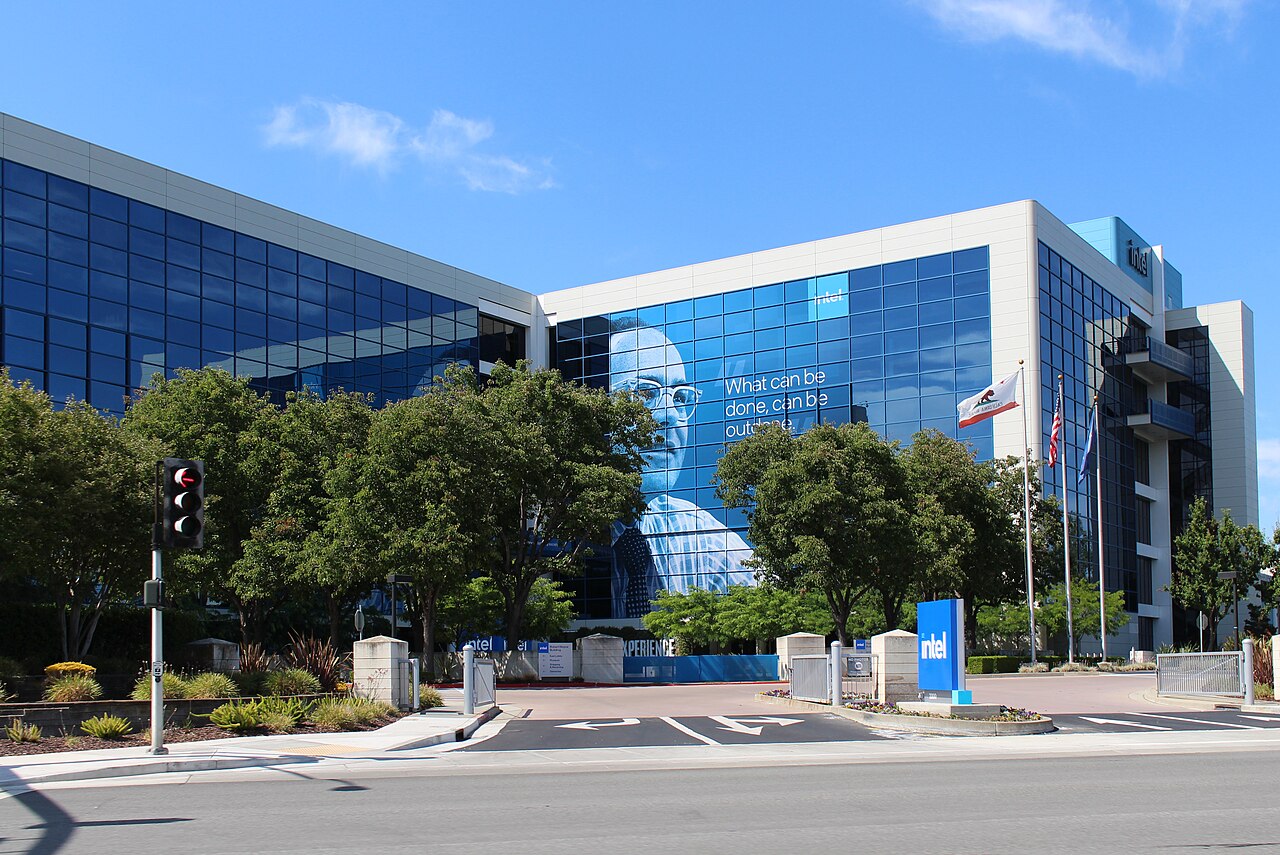
The engineers gathered at the VLSI Symposium in Honolulu on Tuesday to hear Intel make a quiet but consequential announcement: the company’s most advanced chipmaking process, 18A-P, had entered risk production, the early manufacturing stage where full wafers are run to measure defect rates and performance before volume output begins.
For Intel, the announcement was the next step in a strategy years in the making. The node is an enhanced version of the 18A process that Intel has been producing at volume since December, and the company says it delivers roughly 9 percent higher performance at the same power, or about 18 percent lower power at the same performance, along with 50 percent better thermal conductivity and tighter process variation. The improvements come from the company’s PowerVia backside power delivery architecture, a design that moves power lines beneath the silicon and frees space on the surface for logic.
The timing of the announcement mattered as much as the technology. Intel has been negotiating with Apple for more than a year over a deal to manufacture some Apple-designed processors, and the Wall Street Journal and CNBC reported in May that the two companies had reached a preliminary agreement. Apple has not used a contract foundry other than TSMC since it began designing its own chips in 2020, and the reported deal would cover entry-level A-series and M-series silicon, including the M7 chip for MacBook Pro and MacBook Air and the A21 for iPhone, with initial shipments not expected until late 2027.
The market read the news as confirmation that the Apple relationship is moving. ASML, the Dutch maker of the extreme ultraviolet lithography machines that any leading-edge foundry needs, saw its shares hit a 52-week high on Tuesday, closing up 4.24 percent. The stock has gained about 36 percent in three months, a rally that investors attribute partly to expectations that Intel’s foundry push will expand demand for EUV equipment beyond TSMC.
Intel’s own shares have been on a remarkable run. The stock started the year near $37 and now trades around $130, a gain of roughly 250 percent that has made Intel one of the best-performing large semiconductor names of 2026. The rally reflects growing confidence in the company’s data center and AI business as well as its foundry ambitions, but it has also priced in an Apple deal that remains preliminary. President Trump posted on Truth Social in mid-June that Apple had agreed to work with Intel to design and build chips in the United States, a political endorsement that investors treated as further confirmation.
The stakes are high because the foundry business has been a persistent drag. Intel’s foundry segment posted an operating loss of about $5.3 billion in fiscal 2025, and the division has lost money since its launch. Turning that around requires volume from external customers, and few customers carry the credibility of Apple. Analysts say the Apple relationship, if finalized, would validate Intel’s manufacturing technology at the highest quality bar in the industry and could unlock additional orders from other chip designers that have been waiting to see whether Intel can deliver.
The path from risk production to revenue is long. Industry practice typically requires several quarters of risk production before a process is qualified for high-volume manufacturing, and the Apple deal as reported would not produce meaningful revenue until fiscal 2028. Even then, the initial volumes are expected to be modest — test wafers and qualification lots — with the real ramp tied to the next-generation 14A node, which Intel does not expect to reach mass production until around 2029.
The competitive backdrop makes the timing delicate. TSMC still produces more than 90 percent of the world’s most advanced chips, and its capacity is stretched by the AI boom, with Nvidia, AMD, and Google competing for advanced packaging slots. That bottleneck is part of why Apple is exploring a second source at all: diversification gives Apple negotiating power with TSMC and a hedge against a Taiwan contingency. Intel’s Arizona fabs, running 18A, offer a domestic alternative that no other U.S. company can provide.
The real test is yield, the percentage of chips on each wafer that come out working. Intel has struggled with yields on previous nodes, and analysts caution that 18A-P’s performance numbers from the lab do not guarantee profitable production. Apple’s quality requirements are among the strictest in the industry, and its engineers will spend months validating Intel’s wafers before committing to volume orders. The preliminary agreement, several people familiar with the discussions said, is a bet that Intel’s manufacturing is finally closing the gap with TSMC.
For Intel, the announcement in Honolulu was a step, not a finish line. The company has pointed to other wins — a collaboration with Nvidia and a multibillion-dollar deal to make custom AI chips for Amazon — as evidence that its foundry business is gaining traction. But the Apple relationship is the anchor customer that could make the whole venture work. Whether 18A-P can make the leap from risk production to high-volume manufacturing, and do it at yields that make money, will determine whether the stock’s 250 percent rally has a foundation.