Tesla published an update on its Cybercab program on Friday, and investors answered with a sale. By the close, the company’s shares were down about 6 percent, one of the stock’s sharpest moves in recent weeks, as the market weighed an announcement it found underwhelming against a regulatory investigation that is not going away.
Wall Street’s verdict was blunt. Analysts who follow the company described the Cybercab update as falling short of expectations, at a moment when the stock’s valuation already assumed steady progress toward driverless rides. The reaction echoed earlier moments in Tesla’s robotaxi story: every update is measured against the schedule Mr. Musk has drawn, and anything that does not advance that schedule reads as a delay.
The same day brought a second piece of news. The National Highway Traffic Safety Administration said it had opened an investigation into how vehicles without steering wheels or pedals can be certified for sale in the United States. Federal safety standards were written around a human driver with manual controls, and the law gives the agency only narrow room to work around them: a manufacturer may receive exemptions for no more than 2,500 vehicles a year, a fraction of what Tesla would need for a mass-market robotaxi fleet.
The investigation does not accuse Tesla of wrongdoing. It asks whether the rules themselves can accommodate a vehicle built without the equipment every other car on the road is required to carry, and it puts the Cybercab’s central promise in the hands of a federal rule-making process measured in years, not product cycles.
The exemption route has been used before, but never at the scale Tesla is proposing. Nuro, a company building low-speed delivery vehicles, received an early exemption from NHTSA in 2020 to put a small fleet on public roads, and General Motors sought permission for a driverless shuttle without manual controls before shelving the program. Those requests involved specialized vehicles counted in the hundreds or thousands. Tesla’s plan implies a passenger vehicle that would have to be built in large numbers, a scale the current statute was never designed to accommodate.
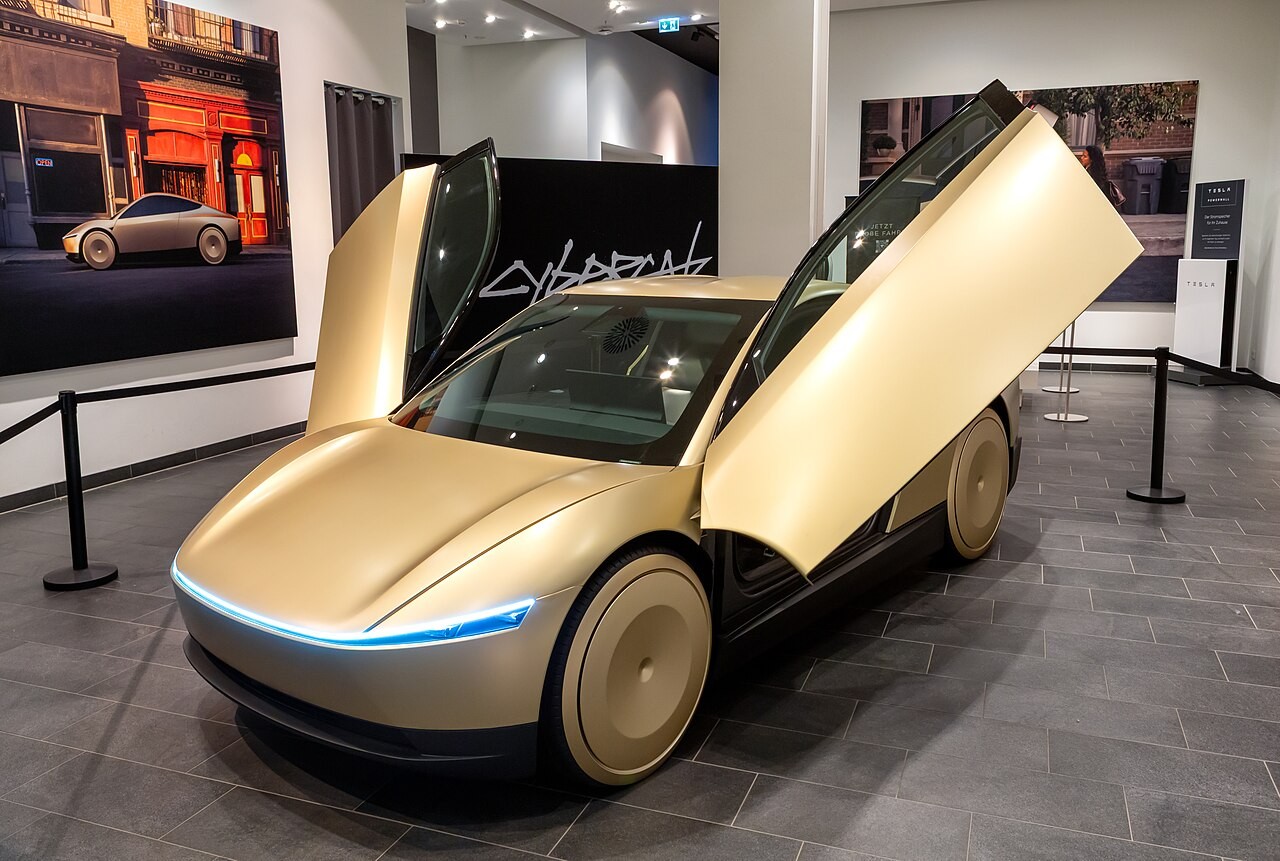
The Cybercab was first shown in October 2024, at an event where the vehicle rolled onto a studio lot in Los Angeles with no steering wheel and no pedals. Mr. Musk said then that it would cost less than $30,000 and that the company aimed to begin volume production in 2026. Nearly two years later, the timetable has not moved materially, and investors have begun treating the dates with visible skepticism.
Tesla has already started to operate paid robotaxi rides, launching a service in Austin last year in which its cars carry passengers under the company’s autonomous software. Those vehicles retain the steering wheels and pedals that federal rules require, which is precisely the equipment the Cybercab is designed to omit. The gap between the two products defines the company’s problem: it can demonstrate autonomous driving today, but it cannot sell the vehicle designed for it until regulators clear a path that does not yet exist.
Mr. Musk’s history with robotaxi timetables reaches back years. In 2019 he said Tesla would have a million robotaxis on the road the following year; the fleet never materialized, and federal investigators have spent much of the intervening time examining the driver-assistance systems that were supposed to make it possible. The pattern has made the market wary of dates attached to autonomy, no matter who is setting them.
The stakes behind Friday’s slide are strategic rather than operational. Tesla’s market value rests less on the cars it sells than on the services it has promised to sell. Mr. Musk has argued that a fleet of autonomous vehicles will transform Tesla from an automaker into a transportation operator with recurring revenue, and the Cybercab is the vehicle designed for that business. Every delay in its arrival is a delay in the story that supports the stock’s valuation.
The delays land on a company that is also defending its core business. Sales growth in electric vehicles has slowed in the United States and Europe, Tesla has cut prices repeatedly to defend its share, and the margins that once made it the industry’s most profitable automaker have thinned. A robotaxi program that moves more slowly than promised removes the offsetting narrative investors have used to justify the premium.
Competitors have not waited. Alphabet’s Waymo already operates paid driverless rides in a handful of American cities, using vehicles that carry no safety driver, and it has been expanding its service area while Tesla works through certification questions. The contrast sharpens the market’s impatience: rival fleets are on the road today, while Tesla’s purpose-built robotaxi remains a vehicle awaiting permission.
For now, the Cybercab’s schedule belongs as much to regulators as to the company building it. The investigation announced Friday will proceed at the pace of federal rule-making, a rhythm with little in common with the one Mr. Musk keeps. Friday’s decline was the market’s way of acknowledging the difference between the two clocks.