
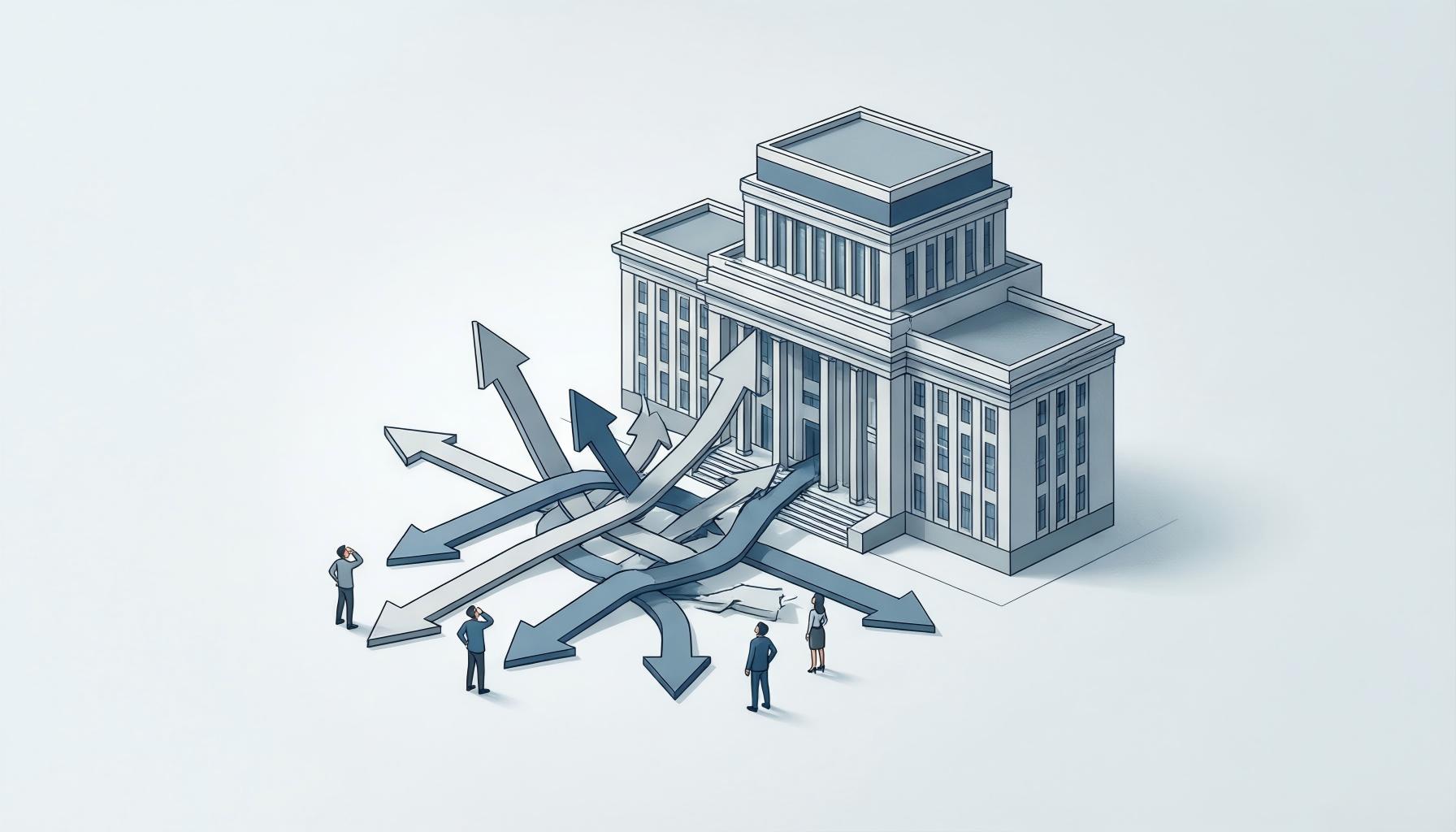
A White House that asks an AI company to delay its product launch one week, threatens access restrictions the next, and then floats the idea of taking equity stakes in AI companies, has left the technology industry struggling to plan around a policy that keeps changing direction. Politico documented the pattern this week, and executives across the sector say the whiplash has become the defining feature of doing business in Washington.
The episodes are individually familiar. OpenAI was asked to delay the release of its latest model while the administration reviewed its safety implications. Anthropic has faced the threat of access restrictions tied to concerns about foreign influence and export controls. And officials have repeatedly floated the idea that the government should take ownership stakes in leading AI companies, a proposal that would remake the relationship between Washington and the industry it is trying to both support and control.
Each of these moves has been presented as a response to a specific concern, and each has been walked back or softened after industry pushback. The cumulative effect, executives say, is a regulatory environment with no reliable center of gravity. Companies building products on multi-year timelines need to know whether the government will support exports, whether it will restrict model access, and whether it will be a partner or an investor in their businesses. At the moment, the answer to all three questions changes monthly.
The stakes are concrete. Export policy determines which markets American AI companies can serve, and the administration has signaled different directions on different days, tightening controls on some technologies while signaling openness in others. Model access policy determines whether foreign customers can use American frontier models at all, a question that affects the revenue plans of every major lab. And the equity-stake idea, however informally it has been floated, has forced companies to consider what they would do if the government demanded a seat at the table.
Industry response has been a mixture of private frustration and public accommodation. Company executives have avoided direct confrontation, praising the administration’s support for AI leadership while quietly lobbying against specific proposals. Washington offices of the major labs have grown, and policy teams have been reorganized to respond faster to signals from the White House. The result is a significant diversion of resources from product work to government relations, according to people who work in the industry.
The inconsistency has a logic, according to officials and people close to the administration: the president wants the U.S. to win the AI race, but also wants to be seen as controlling a technology that many voters find alarming. Those two goals pull in different directions, and the policy reflects whichever pull was strongest in the preceding news cycle. An AI company’s accident, a senator’s hearing, or a high-profile editorial can each shift the direction of policy within days.
Analysts say the uncertainty is itself a cost. Capital spending on AI infrastructure is planned years in advance, and executives making those decisions need clarity on export rules, on access policy and on the government’s role. When that clarity is absent, projects get delayed, contracts get structured with contingencies, and some investment moves offshore. There is a price to unpredictable regulation even when the individual decisions are defensible, and the industry is paying it.
The comparison with other administrations has not helped. The previous White House approach, whatever its merits, was relatively predictable: clear positions on chips, on exports and on the federal role, maintained with reasonable consistency. The current approach has been described by one industry lobbyist as governance by news cycle, with policy set in response to headlines rather than the other way around.
The open question is whether the pattern resolves itself. The administration could settle on a coherent framework, and industry executives say there are signals it wants to: officials have discussed a unified AI policy document and a clearer division of authority among agencies. Until that happens, companies will continue to build hedges, hire lobbyists and treat every administration statement as provisional. The industry has learned to operate in uncertainty before, but it has rarely had to do so with so much money at stake.
Smaller companies feel the whiplash more acutely than the giants. The major labs have the staff and the lawyers to track every administration signal and respond within hours; a startup with a dozen engineers does not. Founders describe planning decisions that depend on questions they cannot get answered: whether their export-dependent business model will survive a policy change, whether the government’s stance on open models will shift, whether a licensing deal with a foreign partner will be allowed to close. The uncertainty is not evenly distributed, and the companies least equipped to absorb it are the ones most exposed to it.



