
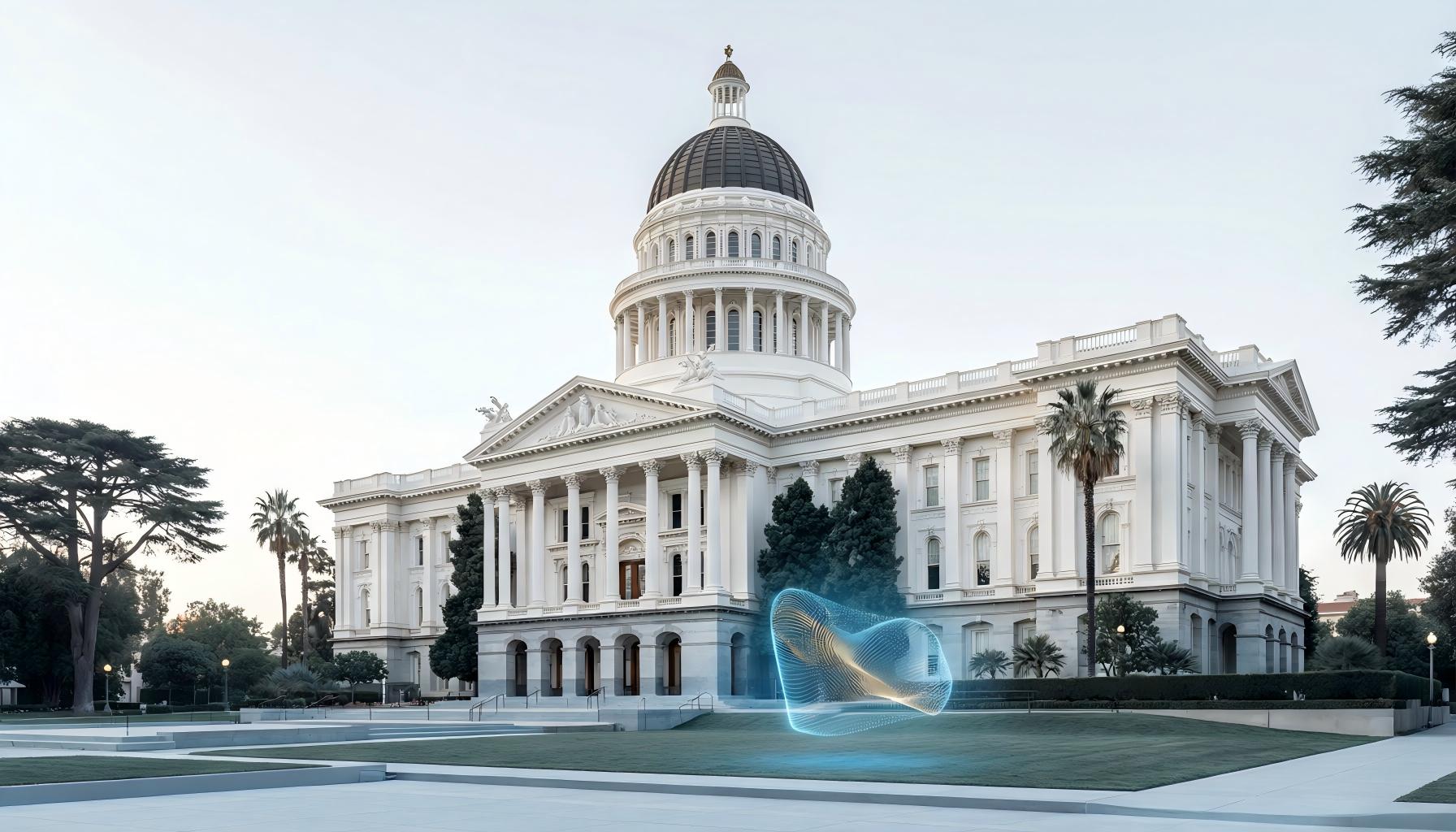
California Governor Gavin Newsom and Anthropic have signed an agreement to expand the use of the company’s Claude AI assistant across state government agencies, according to Politico. The deal is one of the largest public-sector AI arrangements in the United States, and it gives Anthropic a flagship government customer in its home state.
The agreement covers a broad set of use cases: drafting documents, answering constituent questions, processing applications and supporting IT help desks across agencies. The state has been testing AI tools for more than a year, and the new agreement formalizes and widens those efforts, according to people familiar with the matter.
The same day, California launched an AI-powered dashboard for tracking unemployment claims, a tool designed to identify fraud and speed up processing. The dashboard is a concrete example of the kind of application the state wants to build on Claude — and a test of whether AI can deliver in a bureaucracy that touches millions of residents.
For Anthropic, the deal is strategically important. The company is widely expected to pursue a public listing, and its valuation — roughly $965 billion after a $65 billion round in May — rests partly on its ability to win enterprise and public-sector customers beyond its core developer base. Government deals are trust signals as much as revenue.
The politics are delicate. California has been at the center of the national debate over AI regulation, and Newsom has walked a line between encouraging innovation and addressing concerns about safety and job displacement. A deal with Anthropic — the AI company most associated with safety-first positioning — fits that balancing act.
The agreement also gives Anthropic a home-field advantage. The company is headquartered in San Francisco, and a high-profile deployment in its own state serves as a reference case for governments elsewhere. Other states and countries, according to people familiar with the matter, have already asked about California’s experience.
Privacy and procurement questions will shape how far the deal goes. State agencies handle sensitive data — health records, financial information, case files — and the agreement includes restrictions on how data is used and retained. The details of those restrictions will determine whether other agencies can follow the pilot agencies’ lead.
The unemployment dashboard illustrates the stakes. Fraud detection in claims processing has been a persistent problem for California, and the state has been burned before by automation that wrongly flagged legitimate claims. The new system is designed to flag anomalies for human review rather than decide claims automatically — a design choice that reflects those lessons.
For workers, the AI expansion raises familiar questions. Unions representing state employees have asked whether the tools will replace jobs or change working conditions. State officials say the AI is meant to handle routine work so staff can focus on complex cases, and they point to the unemployment system’s processing backlog as evidence of need.
Anthropic’s government business has been growing. The company has pursued federal contracts and partnerships, and it has positioned Claude as the model built with safety and accountability in mind — attributes that matter to public buyers. The California deal is the most visible state-level proof of that pitch.
The timing coincides with Anthropic’s push toward the public markets. Companies preparing to list want to show durable, diversified revenue, and a long-term state contract is exactly the kind of customer relationship investors like to see. People familiar with the company’s planning said government deals are a priority for the pre-listing period.
There are limits to what the deal alone can deliver. Government procurement is slow, agency adoption varies, and the contract’s value depends on how many agencies actually deploy Claude at scale. The agreement is a framework, analysts noted, not a finished deployment — the work of proving its value starts now.
California’s approach will be watched closely by other states. The state is both a technology leader and a cautionary tale — home to the world’s most important AI companies and to a regulatory debate with national implications. How it manages this deployment could set the template for public-sector AI across the country.
For Newsom, the deal is a chance to show California can govern AI rather than merely host it. The governor has argued that the state can be both the industry’s home and its responsible steward. The Anthropic agreement is his most concrete attempt yet to make that argument stick.
The coming year will test the arrangement. If the unemployment dashboard cuts fraud and clears backlogs, expect the state to expand the program and other governments to copy it. If the tools stumble — on accuracy, on privacy, on public trust — the deal will become a cautionary tale instead. The test is already underway.
Anthropic executives said the agreement reflects months of work with state officials on the specifics of public-sector deployment: evaluation criteria, training for staff, and safeguards for the most sensitive data. The details, they argue, are where public-sector AI succeeds or fails — and California is now the industry’s most visible classroom.



