Two years ago, Blackstone and Digital Realty Trust formed a joint venture to build data centers in Northern Virginia, betting that the artificial-intelligence boom would turn the region’s power corridors into the most valuable industrial real estate in the country. On Monday, the partners moved in the opposite direction: Digital Realty agreed to buy back Blackstone’s stakes in three fully leased data centers for $3.5 billion, paying $1.2 billion in cash and $2.3 billion in its own shares.
The transaction covers three facilities of 96 megawatts each, totaling 288 megawatts of information-technology capacity. Digital Realty is acquiring Blackstone’s 80 percent interest in two data centers in Manassas, Virginia, and a 50 percent interest in one on the Digital Dulles campus in Sterling. The portfolio is 100 percent leased to three investment-grade hyperscale customers under 15-year contracts with annual rent escalators, and the deal values the assets at $7.8 billion on a gross basis, including assumed debt and remaining construction spending. Two of the buildings are expected to stabilize in the first half of 2027, the third in the first half of 2028.
The sale reflects the scale of money now circulating through AI infrastructure. Blackstone has described data centers as its single largest investment theme, and the firm has said it has identified more than $150 billion of digital-infrastructure assets. The three buildings in this deal are a fraction of that, but they are located in the most contested market in the world: Northern Virginia hosts more data-center capacity than any other region, and the counties around Washington have become the proving ground for how communities respond to the AI build-out. Blackstone’s history in the sector runs from its roughly $10 billion acquisition of QTS Realty in 2021 through a stream of newer campuses, and the Virginia venture was meant to be its flagship.
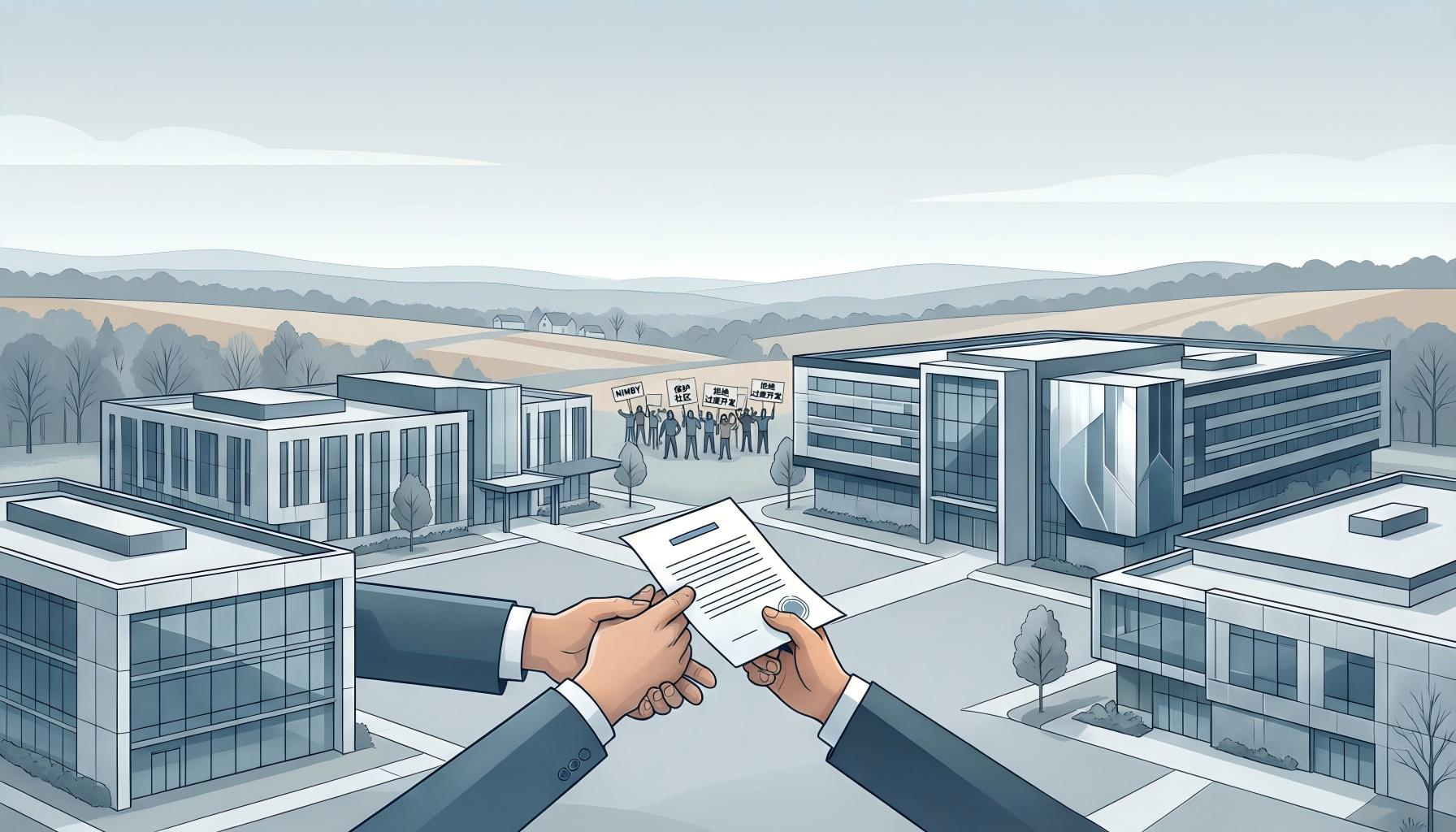
That response has grown combative. Residents in Prince William and Loudoun counties have packed public meetings to object to new campuses, citing noise, water use, diesel generators and the strain on the power grid. The Blackstone-Digital Realty project sits within a planned industrial corridor that envisions up to 37 data-center buildings on roughly 2,100 acres, a scale that has turned zoning hearings into the region’s most attended civic events. Local officials have imposed new conditions on construction, and some supervisors have called for moratoriums. The utility serving the region, Dominion Energy, has told developers that new interconnection requests face years of waiting, a constraint that has pushed some builders to pair campuses with their own power generation.
The companies, in announcing the deal, kept the tone cooperative. Greg Wright, Digital Realty’s chief investment officer, called the transaction the next phase of a partnership that continues across remaining joint-venture assets in Northern Virginia, Paris and Frankfurt. Blackstone’s digital-infrastructure heads, Mike Forman and Greg Blank, said demand for digital infrastructure is even stronger today than when the venture was created in 2023.
The structure of the payment matters. Paying partly in stock lets Digital Realty conserve cash while increasing its ownership of buildings that are already leased and generating revenue. Blackstone, for its part, receives shares in a publicly traded landlord with a large existing portfolio, a currency it can hold or sell as it recycles capital into newer projects. People familiar with the matter said Blackstone had fielded interest from multiple buyers and chose Digital Realty in part because the two firms plan to keep working together.
The deal is expected to close June 30, subject to customary conditions. The cap rate, a standard measure of return for real-estate investors, is expected to exceed 6.5 percent on a stabilized basis, a level that reflects both the strength of the leases and the risks attached to development. The leases carry a blended credit rating of roughly AA-minus, and the annual escalators of about 3.6 percent give the buildings inflation protection that investors prize in the current rate environment.
For the broader market, the sale offers a window into how the AI infrastructure boom is being financed. Capital has poured into data centers from private equity, pension funds and sovereign wealth, and prices for operating assets have risen sharply. Transactions like this one give investors a read on what those assets are worth, and the price Blackstone accepted will be studied by everyone pricing the next deal. A string of similar portfolio sales is expected over the next year as owners test how much AI-era real estate can fetch.
For the counties hosting the buildings, the change in ownership changes little. The construction continues, the power is still being secured, and the residents who opposed the campus will direct their objections at whichever company signs the next permit. The sale is a financial transaction; the friction it leaves behind is local, and it is not going anywhere.