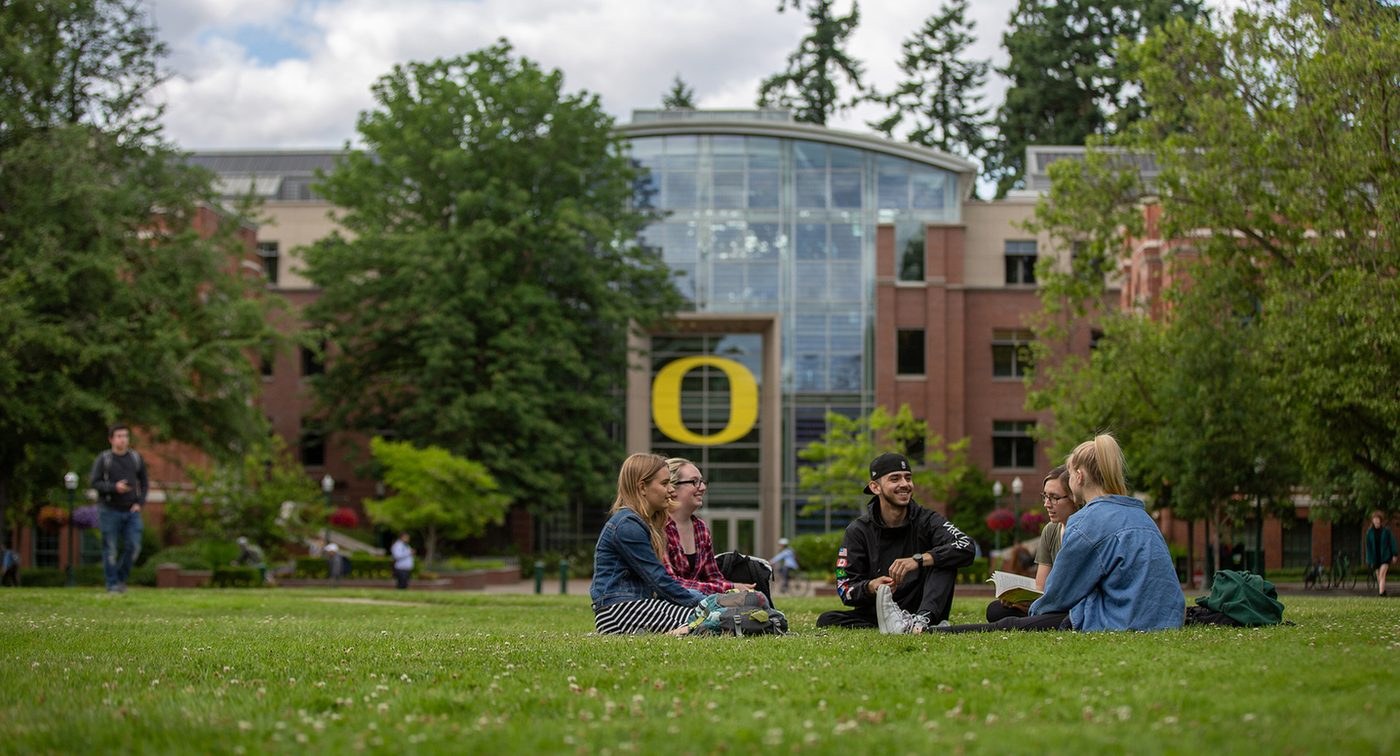
For most of its history, the University of Oregon has produced Olympic runners, a Nobel laureate and the co-founder of the world’s largest sportswear company — without ever having an engineering school of its own. That is about to change.
Phil Knight, the Nike co-founder who ran middle distance in Eugene before building a global footwear empire, and his wife Penny have committed $1 billion to establish a college of engineering at the university, the school said Tuesday. Oregon described the pledge as the largest gift ever made to a comprehensive public university in the United States.
Knight, 88, graduated from Oregon in 1959 after competing for the legendary coach Bill Bowerman, with whom he later started the company that became Nike. His fortune began with a class assignment: as a Stanford graduate student he wrote a paper arguing that Japanese running shoes could undercut German brands in the American market, and after returning to Oregon he began selling Onitsuka Tiger shoes out of the trunk of his car. The venture grew into Nike, and Knight became one of the richest people in the world.
The pledge lifts the Knight family’s known giving to the university above $2 billion and is the third gift of this scale in a decade. The couple gave $500 million in 2016 and another $500 million in 2021 to create and expand the Phil and Penny Knight Campus for Accelerating Scientific Impact, and the new school will be built there.
The university said the college will educate engineers and applied scientists in bioengineering and other high-demand fields, attract faculty to a growing campus, and speed the movement of discoveries out of the laboratory and into products, therapies and companies. The Knight Campus, opened in 2020, already runs research programs that link engineering and applied science to biology, so the college will build on an existing base rather than start from nothing.
“To make an audacious dream a reality requires more than a vivid imagination,” Knight said in the announcement. “Penny and I are grateful for the chance to invest in our most promising young people’s future in this important way.”
Oregon has long been an outlier among large public research universities in lacking a standalone engineering program, a role the state’s other research campus, Oregon State University in Corvallis, has traditionally filled. The gap left the flagship university on the sidelines of a field that has become central to the regional economy, anchored by Intel’s semiconductor operations in the Portland area and a growing cluster of life-sciences and technology employers.
Sen. Ron Wyden, an Oregon Democrat and university alumnus, called the gift “groundbreaking” and said the school would use it to “educate students who will meet the ongoing need for engineers so essential to the economy in our state and nationwide.” Bob Guldberg, who directs the Knight Campus, said the college builds on the original vision of faculty who persuaded the Knights to invest in turning research into real-world impact.
The donation extends a pattern for the Knights, who have directed some of the largest philanthropic gifts in the state’s history toward health and science. Earlier this month the couple announced a separate $1.1 billion gift to the Providence health system, and their known commitments to Oregon institutions now run well past $3 billion.
The couple’s giving also reaches beyond the state. In 2016 Knight pledged $400 million to Stanford University to create the Knight-Hennessy Scholars program, and the Knights have given hundreds of millions of dollars to the Knight Cancer Institute at Oregon Health & Science University. Nike remains anchored in nearby Beaverton, giving the family a direct stake in the economic health of a region that has watched manufacturing jobs drift away for decades.
Knight has long tied his giving to the idea that Oregon can compete for scientific talent. His earlier gifts built a research campus meant to close the distance between the university’s discoveries and the companies that could bring them to market, and the engineering college extends that logic to the state’s workforce. Oregon’s technology sector has grown steadily even as its timber and manufacturing base contracted, and employers have warned for years that they cannot hire engineers fast enough locally.
Higher-education analysts said the money arrives at a moment when public universities are competing fiercely for a limited pool of engineering faculty, students and research funding. A single gift of this size can underwrite years of hiring and laboratory construction, letting Oregon recruit researchers away from programs with far longer histories and deeper industry ties.
The gift also places Oregon among a small group of public universities that have drawn ten-figure commitments in recent years, as wealthy donors concentrate their giving on a handful of flagship campuses. Such gifts increasingly come with conditions about how the money is spent, and the Knights have made clear that theirs is earmarked for engineering, a discipline donors now treat as tied to economic competitiveness.
The immediate challenge is speed. Building a faculty, equipping laboratories and establishing a reputation takes years, and Oregon will be competing against institutions with decades of engineering tradition. The Knights have answered the money question. The next decade will decide whether the bet pays off.