SoftBank Group said on October 1 that it had delivered the third and final $10 billion installment of its investment in OpenAI, completing a $30 billion commitment it made in February and closing out one of the largest single-investor bets in the brief history of the AI boom.
The payment was made through SoftBank’s Vision Fund 2, the investment vehicle the Japanese conglomerate has used to back some of its highest-profile technology bets. Converted at 157.96 yen to the dollar, the tranche came to 1.5796 trillion yen, SoftBank said in its disclosure.
The $30 billion commitment was structured in three equal payments, on April 1, July 1 and October 1, each worth $10 billion. The schedule was part of the deal itself. Spreading the payments across three quarters let SoftBank manage a large cash outlay while locking in its stake in the company behind ChatGPT, and the rhythm meant OpenAI could count on a known inflow of capital at known dates.
The investment was made at a pre-money valuation of $730 billion, a figure that reflects how far OpenAI’s valuation has climbed in a few years and how much its backers have been willing to commit to stay in the round. The financing ranks among the largest private investments ever made in a single company.
SoftBank funded the payments partly through senior bonds it sold in September. One of those bonds carries a 9.25% coupon and matures in 2032, an expensive way to raise money that reflects both the scale of SoftBank’s ambitions and the debt it is willing to take on to pursue them. Borrowing at that rate to buy an equity stake is a bet that the stake will appreciate faster than the interest piles up.
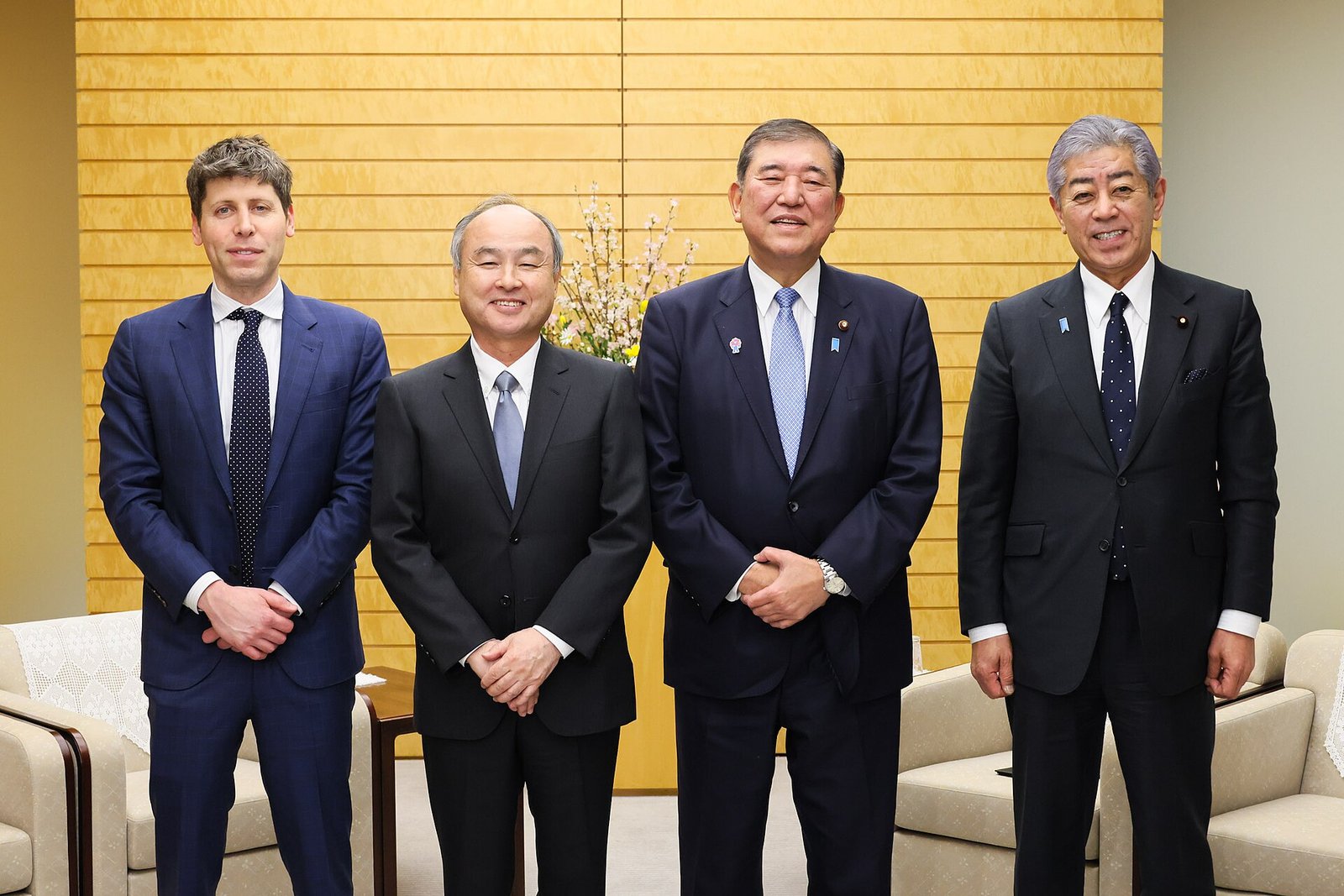
The completion of the plan cements SoftBank as one of OpenAI’s most important backers. SoftBank chief executive Masayoshi Son has made AI the centerpiece of his strategy, telling investors that the technology will reshape every industry the group touches. The OpenAI investment is the clearest expression of that conviction, and the company has treated it as the anchor of a broader push into artificial intelligence.
The relationship between the two companies extends beyond the equity itself. SoftBank and OpenAI have talked publicly about building data centers and computing infrastructure together, and Son has positioned SoftBank as a bridge between American AI companies and the Japanese market. The investment ties the two companies together at a moment when OpenAI’s capital needs are enormous.
OpenAI’s appetite for money is one reason the $30 billion mattered. The company is spending heavily on computing power to train and run its models, and the SoftBank commitment arrived as OpenAI was assembling capital from a group of investors. Completing the payments removes a piece of uncertainty about its funding and lets the company treat SoftBank’s money as settled rather than pending.
The payment also lands against the backdrop of OpenAI’s rapid climb. The company that began as a nonprofit research lab has become one of the most richly valued private firms in the world, and each successive funding round has set a new benchmark. SoftBank’s decision to pay the full $30 billion at the agreed valuation, rather than renegotiate as the company’s numbers moved, signals how much it wanted the stake in place.
The round’s size also speaks to the broader contest for the scarce resources behind AI. The companies that build frontier models are burning through cash faster than any software business has before, and the investors willing to write checks of this size are few. SoftBank’s willingness to put $30 billion into one company is a measure of how concentrated that contest has become, and of how few institutions can afford to sit at the table.
The Vision Fund’s role in the deal carries its own history. The vehicle was conceived to place enormous sums into technology companies, and its record has swung between spectacular gains and costly failures. Backing OpenAI at this scale suggests Son sees the AI boom as the opportunity the fund was built for, a conviction that overrides the caution its earlier losses might have counseled.
The yen conversion adds a further dimension. SoftBank borrows and reports in yen, and a dollar commitment of this size becomes a much larger number when translated, which is why the group disclosed the tranche at 1.5796 trillion yen. Currency swings between the signing of the deal and each payment date could shift the cost of the bet even after the headline dollar figure was fixed.
For SoftBank, the final payment closes a chapter that began in February. The group has now fully funded the stake it promised, at a valuation that will look either prescient or expensive depending on how OpenAI’s business develops. What is no longer in doubt is the size of the bet SoftBank has placed, and the fact that it has now paid for every dollar of it.